Tuesday, 20 December 2016

Cesare Pavese - La Bella Estate

A book that I stole from my high-school’s library. Needless to say, I am not proud of it (also because, as it turns out, I really didn’t enjoy the three novels it contains!), but with said high-school being on the Canadian West coast, I am afraid I am unlikely to have the chance to return it anytime soon.

Pavese is the most celebrated author from my area, but the consensus in my family is that he is no match for Fenoglio – primarily because the latter immersed himself in politics, the Resistance and the hard life of the locals, while the latter, well, ultimately did not (he flirted with the hard life of the locals, but really stirred clear of politics at a moment in time when this truly affected everyone, including pretty much all of his friends).


Of the three novels, Il Diavolo sulle Colline is the only one that I actually came to like, at least partially (possibly because it shows the mini culture-clash experience by provincial students moving to the big city), whereas Tre Donne Sole offers some interesting points about solitude and suicide (something which later on Pavese himself ended up committing), but little more, and La Bella Estate to me is just a short story about the small delusions of a young girl discovering the joys of her sexuality in a rather old-fashioned way. 

Tuesday, 6 December 2016

On Beauty – Zadie Smith

Well, at least to buy this book for 50p my mom had to go all the way to the Red House in Bexleyheath (disclaimer: she was going there to see the place, not to buy cheap second-hand books).

Much like with Franzen when he writes about things outside of Minnesota, I honestly think Zadie Smith loses her spark when she goes beyond (Northwest) London. On Beauty is undeniably well written (you don’t say…), but it’s simply not as witty as White Teeth or even NW (whose recent BBC adaptation I had to stop watching after 20 minutes as I found it excessively intense and humourless). Maybe it just doesn’t work as campus novel, or maybe I’ve had too much of the pettiness of some academics in real life, but to me so much of the book just reads like the script from an episode of Black-ish, a sit-com that I really don’t find particularly funny.

What probably disappointed me the most was the big faculty meeting towards the end of the book – I was expecting something as epic as the FutureMouse conference from White Teeth, but instead I actually got a bitchy, well, faculty meeting…

The Crossing – Cormac McCarthy

One of those authors whose books I have both loved (All the Pretty Horses, The Road) and thoroughly disliked (No Country for Old Men, Blood Meridian) – luckily The Crossing belongs to the first of the two categories. Also, and this is a huge plus, my daughter seemed to really enjoy the book – although I am not quite sure whether that was because of the blood, because I stammered so often as I tried to read it to her (damn punctuation, or lack thereof!) or because of the contrast of colours on the cover (the options are clearly given in order of increasing probability).

The Crossing is probably the most touching of the books by McCarthy that I have read, because it’s a wonderful story about defeated humble people and their attempts to, fundamentally, get what is legitimately theirs, overcome moments of sheer horror, and get by with a little help from their friends (or from complete strangers, as in the case of the truck-load of Mexican workers or the doctor). In addition, the two brothers somehow kept on reminding me of my two cousins (who do live in the countryside, but that’s pretty much where the similarities end objectively) and more than any other of his books, this novel made me think of my favourite (although not particularly celebrated) Italian spaghetti western, Quien Sabe?/A Bullet for the General.

So yes, one of the best reads of 2016 and possibly the book by McCarthy that I enjoyed the most. 

Treasure Island – Robert Louis Stevenson


One of the books I postponed reading for, well, about 19 years. The first 4 of those years were because I didn’t feel like reading anything anyway, the following 15 because why reading a book when you already know the story and you are afraid of getting Jethro Tull’s Mother Goose stuck in your head as you read it (“Four and twenty labourers were labouring, And digging up their gold, I don't believe they knew that I was Long John Silver”)?

Well, turns out that you should read this book despite the fact that you already know how it will end because it’s possibly the greatest novel ever written. It combines the sense of adventure of The Lost World or 20.000 Leagues under the Sea with a plot that is ever so slightly less improbable, and Stevenson’s prose is unparalleled – meaning that for me the book ranks up there with Around the World in 80 Days.

As far as bad guys that are actually (maybe possibly) not so-bad (and may have fallen on hard times so might deserve our understanding) Long John Silver is second to none, despite the fact that the narrator is a bit of a know-it-all.

I am not that familiar with contemporary fiction for young-adults, but I really don’t think there is anything that could come even remotely close to this. 

Monday, 5 December 2016

About a Boy - Nick Hornby

Not even 50p. This was actually 30p from the Barbican Library overstock shelves. Now, I do realize that, much like David Nicholls a decade later, Nick Hornby isn’t exactly great literature, but it’s very well written and funny, and its cultural pop references are still better than those of plenty of bestsellers. So go ahead, and look down on me for enjoying a read like this every once in a while.

For once I actually had a book that I could pick-up on a short train journey (not that I use trains often – I just happened to do a bit of parkrun tourism when I was reading About a Boy), while waiting in line at the post office and, erm, on the toilet.

And it was great.

Having watched the movie, most of the gags and jokes were unsurprising (that said, I did still giggle aloud a few times – the dead duck remains priceless) but the ending was much more meaningful than I expected (not that seeing Hugh Grant accompany Marcus’s version of Killing Me Softly isn’t meaningful). And reading about my old neighbourhood always makes me feel all warm inside.

So yeah – Great literature? Not even remotely. Great read? Absolutely. 

Hamlet's Dresser - Bob Smith

An extremely random book – a memoir rather than a novel really – that my parents bought for my wife ages ago (maybe when she moved to London and started to accompany me to see the Royal Shakespeare Company, first at the Novello Theatre, than at the fairly awful New London Theatre, and then finally at the Barbican?).

To me the book is fundamentally divided in three intertwined plots/narrative lines – the narrator’s troubled family past and his complex relationship with his sister and her mental illness, his personal experiences as a dresser/stagehand, and lastly his Shakespeare classes for elderly people in New York City.

The first narrative line is soft and touching, and Smith is actually remarkably good at portraying the situation for what it actually is/was (or at least, that’s the impression the reader gets) without any need to sweeten it, or to portray himself as better or worse than how he genuinely appears to be.

The second narrative line is intriguing – reading about Katherine Hepburn, Jessica Tandy, and all the other great actors who crossed the stage in Stratford CT is like watching a very good documentary with random comments and anecdotes by people who happen to have crossed paths with some of the greats of the 20th century.

The last narrative line is clearly the one that touches me the least, probably because I am one of those awful people who tend not to find too much poetry in the elderly and the remarkably problematic challenges they have to face on a daily basis – to me those are just painful and very possibly insurmountable. 

The Marriage Plot – Jeffrey Eugenides

Despite having loved Middlesex I resisted the urge to buy this book when I found it selling for 2.50£ at Fopp. And well I did, since it appeared (untouched obviously, because why would people open a book?) on the shelves of the loyal local farm for 2£ less*…

The Marriage Plot is in so many ways one of the best campus novels ever: the confused characters, their witty exchanges (possibly a bit too witty at times? I definitely wasn’t that smart and quick back in the day), their frequent crises, their complex relationships with their families – it’s all there. Then the characters leave college (a Brown that at times is sneered upon by Eugenides himself, although not as much as Lisa Simpson does), and sadly their lives become just a lot less interesting. They seemed smart beyond their years in college, and when they enter the real world they appear not only completely unprepared, which would be fine and understandable, but also surprisingly dull and ordinary if compared to their younger selves.

Or probably I have seen a few too many students with mental breakdowns to be really shocked by the way in which the second half of the book develops.


*Considering I am one of the last few avid readers left in the world, I am quite aware of the fact that if everyone did what I do publishing houses would close even more quickly. But what can I do? I do love a bargain. And also, there are enough books that I still want to read to already last me a lifetime anyway…

On Chesil Beach and In Between the Sheets – Ian McEwan

This time I’m tackling two books at a time, and I can do that because a) I have already talked about McEwan more than enough, and b) put together, the two books barely get over 300 pages. As usual, I got the first of the two from the local farm, and the second was from a wonderful Amnesty International book-sale in Blackheath.

In short: reading the two books quite simply confirmed what I already knew/felt/thought about McEwan. His early stuff (in this case In Between the Sheets) remains dark, incestuous, pornographic and overall – when he doesn’t completely lose the plot (in all senses) – those short stories are frantically interesting and well-written. Most of the books he published recently (in this case On Chesil Beach) read like the author’s celebration of his own talent as a writer: sure, McEwan’s prose remains great, but his plots just bore me these days (and I do realize that the big surprise in the end is meant to make the reader reconsider everything he initially thought about the couple’s troubled wedding night – but is it really that much of a surprise?!?).

So yeah, only a couple more books and then I’ll stop reading McEwan. Well, only a couple more books and I’ll have read everything he actually wrote. 

Wednesday, 30 November 2016

Youth – J.M. Coetzee


50p. Local farm bookshelves. All that.

Now, I would buy pretty much anything written by Coetzee (and pretty much anything that sells for 50p for that matter) so I couldn’t resist the temptation to buy Youth, but, objectively, this is just a very well-written story of (what was then a) fairly average young man trying to find his way in big and scary London. Sure, Coetzee writes impeccably, and the sections of the story set in the IT company at the outskirts of London have got the traits of a bizarre coming-of-age story (his nerdy  colleague who can’t feed himself is probably the best part here), but that’s about it.

All in all, its literary weight is probably inferior to that of Orwell’s Keep the Aspidistra Flying (which I found just about bearable a few months ago), but since I love Coetzee and I don’t really love Orwell, I’ll try to not say this too loudly…

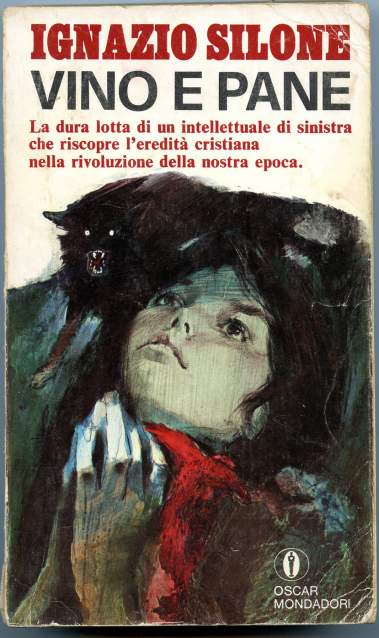
Vino e Pane – Ignazio Silone


One of the books that I got from my grandparents’ shelves (my granddad – despite oddly still remembering most of the first book of the Iliad by heart – is, well, rather “forgetful” these days, and a couple of years ago my grandma has made the rather commendable decision to only read newspapers).

Vino e Pane is a good book about Fascism and its impact on small secluded Italian hamlets. It’s also a book about Catholic piety and communist resistance (I favour one of the two, you can guess which one…) that is probably at its best when the two intertwine, like in the figure of the old Don Benedetto.

While the success that the book has enjoyed, in particular outside of Italy, is perfectly understandable, the quality of this work doesn’t match that of Silone's Fontamara or, for someone who has spent years reading books about Fascist Italy, of most of the works of Fenoglio, Vittorini, Malaparte, Levi, Revelli… So while I’m glad I’ve read it, Vino e Pane doesn’t really crack the top-10 of my favourite novels about the Italian resistance.  

A Heart so White – Javier Marías

For once a book that I bought at full price! Scary, I know – but Javier Marías was coming to give a lecture at the LSE and I really needed to give him something to sign (being the first in line for an autograph after the lecture, he actually even wrote a line about the book and its secrets on my copy – yay!).

Much like Tomorrow in the Battle Think on Me, A Heart so White is clearly written by a literally genius. And as it was also clear during the lecture, this is a genius who knows he is a genius, and makes no attempt to even pretend to hide it (which is actually fair enough, although Paul Preston – the greatest historian of modern Spain – did put up a really good fight with Marías when he disagreed with him from the podium).

Dare I say, I actually loved A Heart so White, despite the smugness of both his author and of a number of his characters, and although I hope that Marías doesn’t treat women in the same way as his characters do. And the secrets of the book, the twist of Juan’s father’s past, and for once even the philosophical reflections in the final chapter are respectively intriguing and, for once, surprising and deep (and I am saying “for once” because I am usually not surprised by big surprises, and tend to find pseudo-philosophical conclusions to be borderline unreadable). 

The Lovely Bones – Alice Sebold

Yet another book from the local farm – having read and really enjoyed The Almost Moon I had absolutely no doubts about buying The Lovely Bones, in particular considering it was a not-so-exorbitant 50p…

This is overall a very enjoyable read, though predictably at times fairly heart-breaking for a young father. When its magic tones are kept (relatively) in check it is really rather endearing – after all it reads like the daydream of a teenager who wishes she could be invisible in order to see how others behave without her. And the description of heaven is, for want of a better term, really “cute”.

The problem, for me, is when the aforementioned magic tones unleash their full power – I saw no need for Susie to come back to earth thanks to Ruth’s “gift”. Or maybe I’m just too much of a manly man: cause I don’t care about Susie being re-united in one way or another with Ray (I actually would have preferred for that not to happen) and I am kind of bothered by this mellow and romantic  scene, but man do I love seeing Shoeless Joe Jackson and his teammates come out of the corn in Field of Dreams

Tuesday, 29 November 2016

Never Let Me Go – Kazuo Ishiguro


One of the many books that I have picked up from the local (very urban) farm. Yet another solid 50p investment!

Being ultimately ignorant, I always assumed that Ishiguro just wrote novels like The Remains of the Day. As most literate people will be able to confirm, however, that’s not the case. Throughout the book I felt as if Hailsham was actually Homerton College in Cambridge – something that probably says a lot about my memories of the place!

I honestly can’t say that I loved the novel – I really enjoyed the parts about the relations between the clones (this felt mostly like a very dark and fundamentally humour-less campus novel), but when Ishiguro turns too science-fictionesque he starts to lose me (and my interest) a little bit. Never Let Me Go is a very well-written dystopian novel, but so are countless others (not McCarthy’s The Road – that’s a work of art!) 

A Late Divorce – Abraham B. Yehoshua


Ah, the joy of Israeli literature! Well, actually it’s not as if I loved all Israeli writers, but I do have a soft spot for Yehoshua and Oz (not to mention the fact that this was another book that I got from my grandma’s “collection”…).

Much like most of Yehoshua’s works, this book is magisterially written. The clash between the expat patriarch and pretty much all his family members is both intriguing and ironic, and the confused (and at times confusing) sexuality of one of his sons is so well and carefully presented. I must say I was happy the book wasn’t just a 250-page long stream of consciousness from a young boy, as it looked like at the beginning – I felt like I had read one The Sound and the Fury too many already. And it’s just wonderful to read about fairly normal but fairly unlikable people constantly bickering and gossiping about each other.

The ending is very much clear from the start of the last chapter – I was really hoping that the imposing presence of the man who reminded me so much of Big Chief from One Flew over the Cuckoo’s Nest was just a red herring, but it wasn’t…

The Cat Specialist – Mo Yan


An extremely random book that we salvaged from my grandma’s shelves (together with other cheap but worthy newsagent tomes) once she was moved to a home – I think this is possibly a collection published in this form only in Italy, but the stories themselves should be available individually and translated worldwide.

Having never really read any Chinese literature (Pearl S. Buck doesn’t count, I suppose) this felt like as good an introduction to it as any, coming from a Nobel laureate and all (although we live in the times of Bob Dylan and the EU receiving Nobel prizes…). I’m normally not a big fan of short stories, but so many of them are so tragically well-written that I was immediately sold on this collection. I know some people might find it blasphemous, but I really thought that Mo Yan shares plenty of stylistic and thematic similarities with the Italian Fenoglio.

These stories of poverty, love, and small dramas are some of the most moving I’ever read – I clearly thought about reading the whole of Mo Yan’s bibliography after this, but the heap of unread books in my flat actually takes precedence for the time being.