Showing posts with label Homosexuality. Show all posts

Saturday, 7 December 2024

The New Life - Tom Crewe


A novel I literally just stumbled upon by coincidence, as I was looking for something at least somewhat inspiring in the catalogue of my Italian e-library (and yes, I did read this in translation - shame on me, the things I do for convenience...). What attracted me of this book was its title, its cover (yes, I do judge books by their cover!) and the fact that the author and I came very close to studying together. 

It took me two weeks to read this book, but really only because life got in the way in a pretty major way and we moved to a new house (a whole 200 mt down the road, but the move felt transatlantic). 

I appreciated this book for a variety of reasons. Its didactic nature when tackling the theme - and the acts - of homosexuality (in a way that wasn't too dissimilar from some of the works of David Leavitt), its ability to re-visit, re-shape and re-create history (and here the most immediate comparison for me would be Pat Barker, most likely because I've just finished reading her), and the degree of honesty with which it discusses the double-standards that queer men and women had to deal with in the late 19th century, much like in the early 21st. 

That said, in a way that is typical of many first novels, I also felt that the author didn't quite know how to wrap up his book, and the last couple of chapters feel abruptly squeezed in at the very least. 

Saturday, 26 October 2024

Day - Michael Cunningham


It had been years since I had read anything by Cunningham and I was very excited to read this book. Too excited, as it turned out. 

I am now honestly wondering if The Hours and A Home at the End of the World were really so ground-breaking, or whether I had simply read them at a time in which gay American literature was a complete unknown to me. 

I found this book to be of a borderline astounding banality (hey, most likely I didn't get its meaning!), but I felt that the pandemic was just used a useful literary tool, the characters were not just unlikeable (which I can live with, we don't always need to love a novel's characters) but also unremarkable. And seriously, when the great idea is interrupting the narrative and only looking at one day in a number of consecutive year, there must be something wrong with your work (I mean, if David Nicholls, with his mass-appeal and lack of pretence, had done it better, you must really go back to the drawing board!). 

Tuesday, 7 May 2024

Flesh and Blood - Michael Cunningham


I read this book because I couldn't get my hands on Cunningham's latest novel. 

Surprisingly, it didn't make me think of the other Cunningham novels that I had read, but rather of a relatively unsuccessful Eugenides or Franzen book. I do realize that very often Cunningham looks at his characters' family background in order to explore the lives and actions of the younger generations, but this attempt felt particularly botched. 

The most problematic character of all for me was Constantine, whose gradually revealed flaws seem to be sprinkled throughout the book without much planning. All in all, this to me looks like a book that would have loved to be a great American novel but falls considerably short. 

Monday, 17 July 2023

La Verita' Su Tutto - Vanni Santoni


I find Santoni to be one of the few beacons of light in the desolate landscape of Italian contemporary literature. He knows how to write, and he does actually have something to write about, while most other celebrated authors appear only able to do one or the other. 

That said, while this book covers a number of topics that other readers might find fascinating, I find most things related to spirituality rather uninteresting (perhaps because I have no spirit in the first place?!?). This unfortunately meant that my reactions to the book were lukewarm. 

In addition, I didn't quite understand the premise (with a journalist interviewing the main character, a device that then gets dropped and picked up apparently at random in a couple of odd places in the book) and was rather surprised to see so many pages dedicated to the initial stages of the main character's "career" and then see her meteoric rise to stardom covered (and explained) oh ever so briefly.  

Wednesday, 24 May 2023

A Little Life - Hanya Yanagihara


I've read this novel from cover to cover. And I consider this an accomplishment. 

I found it pretentious, gratuitous, and self-absorbed. 

And whenever its author was short of ideas, guess what, she was ready to throw in some more violence. After a while, I was so inoculated to this escamotage that the only reaction it could elicit from me was a shrug. 

Also, priests and social care workers who abuse children. Now that's thinking outside the box, and not the oldest (and cheapest) trick in the book at all...

Luckily, when you are really scraping the bottom of the barrel, you can always kill off half of the characters in a road crash. On the plus side, they were all rather unlikeable in the first place, so I didn't really mourn their loss. 

Friday, 10 February 2023

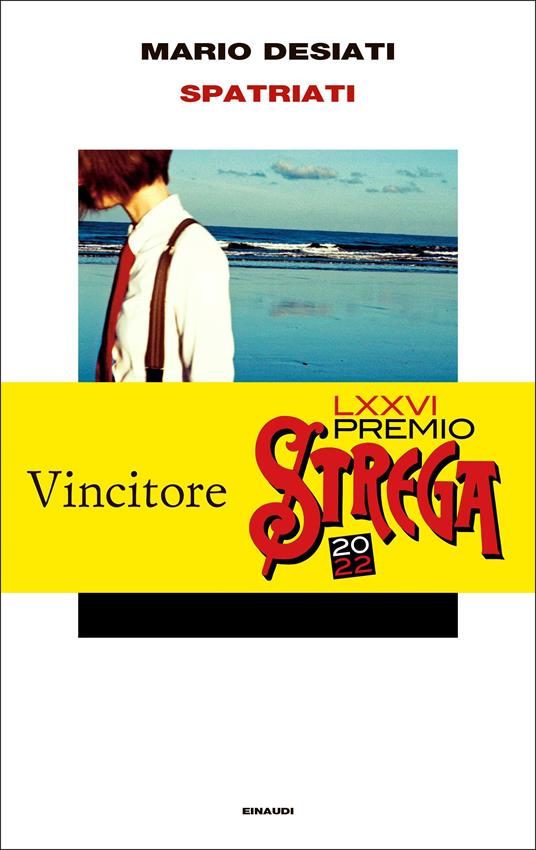
Spatriati - Mario Desiati

Spatriati - Mario Desiati - Libro - Einaudi - Supercoralli | IBS 

Another book that I read while trying to regain confidence with (and faith in) Italian literature. I honestly thought that starting with recent winners of the Premio Strega would have been a good move. After all, it's the biggest award one can win, and I'm not necessarily opposed to reading what the big publishing companies are deeming worthy of praise these days. In hindsight, it might not have been a great decision.

Spatriati is a little story of friendship (not particularly exciting), life in the province (been there, done that) and sexual transgression (which, for me, leaves a lot to be desired). To be frank, I would have probably been happy enough to read it if it was a book I had stumbled upon by chance in a second-hand bookshop, but to think that this is could be considered the high point of contemporary Italian queer literature leaves me somewhat perplexed.

Thursday, 5 September 2019

A Single Man - Christopher Isherwood


Isherwood is probably, well surely, one of those authors I should have approached way earlier but didn't. Hey, at least I did watch the movie version of A Single Man when it came out and, despite the fact that some critics had their doubts, I found it absolutely masterful (even when some scenes looked like modelling ads).

That said, there were elements in the novel that pleasantly surprised me (first and foremost the fact that the protagonist doesn't have suicidal ideas) and easily made this one of the best books I've read this year. I don't quite know whether that's because of the location, because of the depth of the characters, because of Jim's constant subtle presence, or simply because it's beautifully written.

Tuesday, 2 January 2018

A Place I’ve Never Been – David Leavitt


After months of inactivity, let’s start a recap of the books that I’ve read in the last weeks of 2017 – and let’s make a solemn promise that I’ll update the blog more frequently. Or at least that I’ll try.

A Place I’ve Never Been is a typical book from the surprising second-hand book shelves of my loyal local farm – I’m not quite sure how many people read Leavitt in the first place, but I’m surprised that the few who do decide to part from one of his good books (then again, considering it’s the second Penguin edition of a Leavitt book that I find at the farm, maybe someone local is trying to educate the masses and instead, sadly for him/her, ends up educating me).

This collection of short stories doesn’t have the same literary weight of The Secret Language of Cranes, but it’s clearly enjoyable nonetheless. The problem is that short stories are probably not Leavitt’s forte – their characters aren’t as nicely nuanced as the ones from his novels, and the stories don’t seem as deep (a fairly obvious comment for short stories, but then again writers like Alice Munro manage to really make the most out of 20 pages).

Maybe, though, I’m just a bit annoyed at the romantic portrayal of the Italian countryside and the Italian language – I outgrew it all some 15 years ago. Or maybe it just drives me mad to see the number of misspelled Italian words thrown in there – although I suspect that in the early 1990s it really was a big deal to know what a machiato (sic) was.

Thursday, 16 February 2017

1934 – Alberto Moravia

Well, after being left totally indifferent by Gli Indifferenti I had to read another book by one of Italy’s most famous writers. And after all I did love so many of the movies taken from his works (La Ciociara, Il Conformista and Ieri, Oggi, Domani).

1934 is undeniably interesting, but I still didn’t find it that great a read. While a good literary device, the trick that is played on Lucio makes me suffer (I always empathize too much in these cases!) and I also found it rather improbable. Not to mention the fact that the many scenes of a sexual nature to me read mostly like the unfulfilled desires of a 75-year old man.

I also could have done with fewer philosophical passages on the meaning of life and love and more on the nature of Fascism. Also, I find it interesting that Moravia considers the year 1934 to be the 7th of the Fascist stronghold on power, since most historians would make this start either in 1922 with the March on Rome or in 1926 with the “Leggi Fascistissime”, but maybe he referred to the Grand Council of Fascism becoming the Italian constitutional body in 1928. Pedantic, I know, but probably this is as close to a deep academic point I made in the last two years…

Thursday, 5 January 2017

The Lost Language of Cranes – David Leavitt

After reading The Page Turner and quickly sending it to the charity shop, I was delighted to find this book and read something of literary significance written by Leavitt.

The Lost Language of Cranes is, without a doubt, one of the best books I read in 2016. What I liked so much about it is that it can be read as a gay novel just as easily as it can be read as a novel on generational divides, family crises, and so many other things. As a pretty straight-forward heterosexual white reader, I found that I could empathize and sympathize with all the Benjamins, while I suspect that a gay audience would be – understandably – more critical of Rose.

The book allows non-gay readers to reach a better (although by no means full, clearly!) understanding of the AIDS scare of the 1980s, of the problems homosexuals face when growing up and coming out, and also of the practical and physical aspects of gay sex – my mom told me Leavitt openly declared that he wanted to educate people in his books, and The Lost Language of Cranes clearly proves this.

Also, the story made me long for New York – a city that I am afraid I won’t get to visit again for a little while, with the baby and all…

Monday, 5 December 2016

On Chesil Beach and In Between the Sheets – Ian McEwan

This time I’m tackling two books at a time, and I can do that because a) I have already talked about McEwan more than enough, and b) put together, the two books barely get over 300 pages. As usual, I got the first of the two from the local farm, and the second was from a wonderful Amnesty International book-sale in Blackheath.

In short: reading the two books quite simply confirmed what I already knew/felt/thought about McEwan. His early stuff (in this case In Between the Sheets) remains dark, incestuous, pornographic and overall – when he doesn’t completely lose the plot (in all senses) – those short stories are frantically interesting and well-written. Most of the books he published recently (in this case On Chesil Beach) read like the author’s celebration of his own talent as a writer: sure, McEwan’s prose remains great, but his plots just bore me these days (and I do realize that the big surprise in the end is meant to make the reader reconsider everything he initially thought about the couple’s troubled wedding night – but is it really that much of a surprise?!?).

So yeah, only a couple more books and then I’ll stop reading McEwan. Well, only a couple more books and I’ll have read everything he actually wrote. 

Tuesday, 29 November 2016

A Late Divorce – Abraham B. Yehoshua


Ah, the joy of Israeli literature! Well, actually it’s not as if I loved all Israeli writers, but I do have a soft spot for Yehoshua and Oz (not to mention the fact that this was another book that I got from my grandma’s “collection”…).

Much like most of Yehoshua’s works, this book is magisterially written. The clash between the expat patriarch and pretty much all his family members is both intriguing and ironic, and the confused (and at times confusing) sexuality of one of his sons is so well and carefully presented. I must say I was happy the book wasn’t just a 250-page long stream of consciousness from a young boy, as it looked like at the beginning – I felt like I had read one The Sound and the Fury too many already. And it’s just wonderful to read about fairly normal but fairly unlikable people constantly bickering and gossiping about each other.

The ending is very much clear from the start of the last chapter – I was really hoping that the imposing presence of the man who reminded me so much of Big Chief from One Flew over the Cuckoo’s Nest was just a red herring, but it wasn’t…

Wednesday, 10 February 2016

The Page Turner – David Leavitt


The random books one ends up reading when one (or one’s wife) picks up a large pile of novels primarily because they are free. My parents had been talking for years about While England Sleeps, so I figured I should give Leavitt a try.

It was an enjoyable and remarkably light read. The one issue, though, is that I really didn’t find much in the book that I could relate to: as an Italian expat with very little intention of ever going back to the country I didn’t really find anything too magic in the – rather standard – poetic and idyllic descriptions of Rome; as the stereotypical manly heterosexual man, I found little interest in the heady journey of sexual discovery of the main character; and as a spoiled only child who always got along rather well with his mother, I had very little interest in the relatively problematic relationship between the titular Page Turner and his mom.

So yeah, a good book to read on a Sunday afternoon while one is trying not to think of the state of his legs after running 18 miles (damn marathon training…), but that’s about it for me…

Sunday, 20 September 2015

A Home at the End of the World – Michael Cunningham


A book that the same girl who had given me The Hours lent me when I was 16 (kudos to her, she figured she could impress me with Michael Cunningham).

Three-way loves have been explored by countless authors, but Cunningham simply does it better (and it also throws in a bit of suburban life and a passage in New York City for good measure, just to make sure he can have me hooked). The scene of the death of Bobby’s brother in the first few pages, and the final one in the lake are, somehow, two of the most vivid images a book has ever left me with.

And I’d just like to copy and paste my final comment about The Hours since it clearly also applies here: “The book is written with such a soft touch that probably only gay writers can master without falling into plain sappy romanticism (although Cunningham himself doesn’t like being referred to as a gay writer). It’s a shame that, now, so many readers seem to have forgotten about Cunningham’s talent.”

Although it’s probably kind of sad when you start quoting yourself.

Thursday, 17 September 2015

Confessions of a Mask – Yukio Mishima

The first, and so far only, Japanese novel I’ve ever read. Somehow I don’t feel the need to read much from the Far East (yet another display of my limitations as a Euro/American-centred reader). That said, when I was six I did buy a book of Banana Yoshimoto for my mom for Christmas, but that was just because I liked her name (show me a six-year old who wouldn’t)…

I have read countless novels about homosexual identity, and loved a good bunch of them, but I probably struggled to find interesting a story about a society that is so far away from my own (despite the fact that Japan in the inter-war period obviously had some striking similarities with Fascist Italy).

Yes, I agree with Kochan that everyone wears a mask, at least in certain situations, but isn’t that, nowadays, something really rather trite and banal?!?

Friday, 11 September 2015

The Hours – Michael Cunningham

A book that was given to me by a girl who had a huge crush on me when I was 16, and with whom I was not particularly kind. She gave me this novel to impress me and, at that age when nobody around me actually read, she did.

It made me want to read something by Virginia Woolf (a desire that quickly vanished after reading To the Lighthouse). I have the feeling that most readers end up remembering mostly either the portrayal of Virginia Woolf, or that of Richard Brown, but to me Laura Brown is by far the most interesting character in this novel (probably also because of my undying love for Julianne Moore, who played her in the movie – a love that started in the early 2000s before the entire world was in love with her, by the way). Although it’s a reality that is really rather far from me, I somehow love depictions of American sub-urban life in the post-WWII period – in my mental imagery the era always has the most beautiful colours.

The book is written with such a soft touch that probably only gay writers can master without falling into plain sappy romanticism (although Cunningham himself doesn’t like being referred to as a gay writer). It’s a shame that, now, so many readers seem to have forgotten about Cunningham’s talent. 

Sunday, 6 September 2015

Death in Venice – Thomas Mann


I have a list of books that I intend to write something about. Just because I can’t decide where to start, each of these books is given a number, and then I pick which one I should write about next by using a random number generator (or ask my wife for a random number). Curiously enough, I now have to write about back-to-back Mann(s).

This book was recommended to us by our high-school teacher as a summer read. Her expectations were a bit too high – I’m quite positive I ended up being the only kid in the class to actually read the book, and surely the only one not to simply think of Gustav as a “perverted faggot” (in my classmates’ defence, it will probably take millennia to undo what good old Catholic morals have done to little Italian towns).

I was 15, and at the start I struggled mightily with Mann’s style. I re-started the book so many times that I had come to know the first page of the book by heart. But then I got started, and fell in love. In my mind, Tadzio had the exact traits of the young actor who played him in the Visconti movie. And this is one of the few books that I would consider re-reading (there are just too many great books to read, and I have the feeling that I simply won’t have time to re-read any, save a few exceptions).

I’m one of those people who think that Venice is the most fascinating and magical place in the world. Until I read the book, however, I never liked its Lido. I still don’t, but now I’ve gone there a bunch of times just because of the book.