Showing posts with label Death. Show all posts

Friday, 10 February 2023

La Solitudine dei Numeri Primi - Paolo Giordano

 La solitudine dei numeri primi - Recensione libro 

It all depends on how one approaches the book, I guess. 

Do you read it as the first work of an aspring young writer? In that case, it's full of promise, does an extremely good job of portraying aspects of the deep sorrows of the teenage years, and it is the kind of effortless read that deserves to be rewarded. 

Do you read it as one of the best books published in Italy? In that case you can't help but feel sorry for the state of Italian literature, wondering how on earth something so raw, with such a poor conclusion, and that focuses on feelings that the author (at 26) might not have experienced/understood can be received with such widespread acclaim.

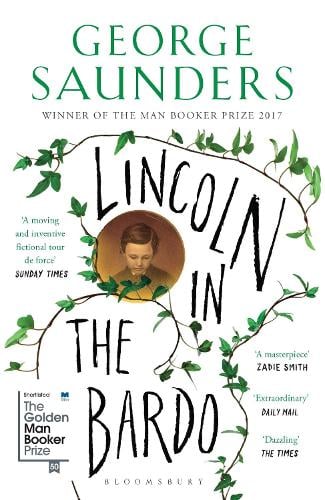
Lincoln in the Bardo - George Saunders

 Lincoln in the Bardo by George Saunders | Waterstones 

The good-old-times, when neighbours left good - or at the very least readable - books in our building's lobby. 

I picked up Lincoln in the Bardo because, well, it had recently won the Man Booker Prize at the time. I was also curious to see what linked Lincoln and one of the world's most known museums. I then found out it wasn't that kind of Bardo...

I was absolutely blown away by the depiction of President Lincoln, his grief and humanity in the days of his son's death. Way, way less so by the long sections dealing with young Lincoln's life (actually, can you really call it "life"?!?) in the Bardo - mystic fantasy is really not quite my genre.

Tuesday, 7 February 2023

The Comfort of Strangers - Ian McEwan

 The Comfort of Strangers - Wikipedia 

I often find myself surprised by how prolific a writer is Ian McEwan. And the more I read of his recent works, the more I am attracted to his more macabre past.

The Comfort of Strangers is bold, as it is ultimately a short novel about a death in Venice, but I believe Thomas Mann might have previously written something along those lines. 

Yet this Venice somehow appears even more plagued and insalubrious than Mann's, and despite knowing from the start that it's going to end badly, the reader is left caring for the main characters hoping that they make it out of their twisted predicament (though, as per the spoiler in the previous sentence, that doesn't quite happen).

Saturday, 8 September 2018

Sabrina - Nick Drnaso


A few weeks ago, IKEA in Wembley was giving out one free book from the 2018 longlist for the Booker Prize to its customers. I was happy to force my wife, her brother and his girlfriend to make it all the way there to get four free hardcover books that would have otherwise cost £64 (disclaimer – we were already in Green Park and my wife wanted to go to IKEA anyway, so it wasn’t that crazy…).

Of the four books, Sabrina was the only one that I had heard of before, given the attention that the press gave to the first graphic novel to be longlisted for the prize (attention here being really rather relative, as the mainstream press doesn’t really care that much about the longlist for the Booker, or literature in general).

At the cost of spoiling it for the readers, it was a huge relief to finish the book to realize that the build-up made of conspiracies and fake news did not result in further deaths. While the alienation and the agony of the novel make it a really good book, their continuous presence (for me) prevent it from being a great book – I really could have done with an occasional page of light relief.

Also, the stylized drawings are visually really pleasing, but am I the only one who found himself confused by characters that looked rather similar (though I suppose that was something done intentionally)?

Tuesday, 30 January 2018

Patrimony – Philip Roth


I’ve traded a copy of Dubliners, Pride and Prejudice and Our Man in Havana (of which I had more than one, otherwise I would have never parted with it!) for a copy of this autobiographical work by Roth that had clearly been in contact with quite a lot of water. I did it because Simon, the legendary owner of LSE’s second-hand bookshop Alpha Books recommended this, and he was right.

Patrimony reminded me in many ways, and for obvious reasons, of Alan Bennett’s A Life Like Other People’s, but this book being written by a Jewish author and dealing with his relation with his dad in the American suburbs definitely gives it an edge over Bennett’s memoirs.

The book alternates between the drama of losing a father, the meaning (and emotional and physical cost) of suffering and undergoing surgery, growing old as a son as one’s father grows even older, and finding a way to settle the score on a number of decisions that marked Roth’s own upbringing.

This is a work of genius and brilliance, and something that appears remarkably honest (including Roth’s own admission of thinking of his father’s death in literary and editorial terms from the beginning of his ordeal).

Thursday, 4 January 2018

A Spot of Bother - Mark Haddon


I very rarely read bestsellers, even more rarely fairly unsuccessful second books of bestselling authors, but mom told me to read this so I did!

After not having liked The Curious Incident of the Dog in the Night-Time (not the book, not the play, really nothing about it) I had extremely low expectations and, were it not for the fact that mom was insisting and that I am running out of paperbacks at home, I probably wouldn't have opened this book.

But A Spot of Bother turned out to be an extremely pleasant read, although not exactly one of particular literary significance. The story of George's family is greatly entertaining, and some passages err on the "laugh out loud" side (in particular the discovery of his wife's adultery), but others (like so many things around the wedding day) are a bit too caricatural and at the end of the book I'm honestly not sure what the reader is left with.

Tuesday, 20 December 2016

Cesare Pavese - La Bella Estate

A book that I stole from my high-school’s library. Needless to say, I am not proud of it (also because, as it turns out, I really didn’t enjoy the three novels it contains!), but with said high-school being on the Canadian West coast, I am afraid I am unlikely to have the chance to return it anytime soon.

Pavese is the most celebrated author from my area, but the consensus in my family is that he is no match for Fenoglio – primarily because the latter immersed himself in politics, the Resistance and the hard life of the locals, while the latter, well, ultimately did not (he flirted with the hard life of the locals, but really stirred clear of politics at a moment in time when this truly affected everyone, including pretty much all of his friends).


Of the three novels, Il Diavolo sulle Colline is the only one that I actually came to like, at least partially (possibly because it shows the mini culture-clash experience by provincial students moving to the big city), whereas Tre Donne Sole offers some interesting points about solitude and suicide (something which later on Pavese himself ended up committing), but little more, and La Bella Estate to me is just a short story about the small delusions of a young girl discovering the joys of her sexuality in a rather old-fashioned way. 

Tuesday, 6 December 2016

The Crossing – Cormac McCarthy

One of those authors whose books I have both loved (All the Pretty Horses, The Road) and thoroughly disliked (No Country for Old Men, Blood Meridian) – luckily The Crossing belongs to the first of the two categories. Also, and this is a huge plus, my daughter seemed to really enjoy the book – although I am not quite sure whether that was because of the blood, because I stammered so often as I tried to read it to her (damn punctuation, or lack thereof!) or because of the contrast of colours on the cover (the options are clearly given in order of increasing probability).

The Crossing is probably the most touching of the books by McCarthy that I have read, because it’s a wonderful story about defeated humble people and their attempts to, fundamentally, get what is legitimately theirs, overcome moments of sheer horror, and get by with a little help from their friends (or from complete strangers, as in the case of the truck-load of Mexican workers or the doctor). In addition, the two brothers somehow kept on reminding me of my two cousins (who do live in the countryside, but that’s pretty much where the similarities end objectively) and more than any other of his books, this novel made me think of my favourite (although not particularly celebrated) Italian spaghetti western, Quien Sabe?/A Bullet for the General.

So yes, one of the best reads of 2016 and possibly the book by McCarthy that I enjoyed the most. 

Wednesday, 30 November 2016

A Heart so White – Javier Marías

For once a book that I bought at full price! Scary, I know – but Javier Marías was coming to give a lecture at the LSE and I really needed to give him something to sign (being the first in line for an autograph after the lecture, he actually even wrote a line about the book and its secrets on my copy – yay!).

Much like Tomorrow in the Battle Think on Me, A Heart so White is clearly written by a literally genius. And as it was also clear during the lecture, this is a genius who knows he is a genius, and makes no attempt to even pretend to hide it (which is actually fair enough, although Paul Preston – the greatest historian of modern Spain – did put up a really good fight with Marías when he disagreed with him from the podium).

Dare I say, I actually loved A Heart so White, despite the smugness of both his author and of a number of his characters, and although I hope that Marías doesn’t treat women in the same way as his characters do. And the secrets of the book, the twist of Juan’s father’s past, and for once even the philosophical reflections in the final chapter are respectively intriguing and, for once, surprising and deep (and I am saying “for once” because I am usually not surprised by big surprises, and tend to find pseudo-philosophical conclusions to be borderline unreadable). 

The Lovely Bones – Alice Sebold

Yet another book from the local farm – having read and really enjoyed The Almost Moon I had absolutely no doubts about buying The Lovely Bones, in particular considering it was a not-so-exorbitant 50p…

This is overall a very enjoyable read, though predictably at times fairly heart-breaking for a young father. When its magic tones are kept (relatively) in check it is really rather endearing – after all it reads like the daydream of a teenager who wishes she could be invisible in order to see how others behave without her. And the description of heaven is, for want of a better term, really “cute”.

The problem, for me, is when the aforementioned magic tones unleash their full power – I saw no need for Susie to come back to earth thanks to Ruth’s “gift”. Or maybe I’m just too much of a manly man: cause I don’t care about Susie being re-united in one way or another with Ray (I actually would have preferred for that not to happen) and I am kind of bothered by this mellow and romantic  scene, but man do I love seeing Shoeless Joe Jackson and his teammates come out of the corn in Field of Dreams

Tuesday, 29 November 2016

The Cat Specialist – Mo Yan


An extremely random book that we salvaged from my grandma’s shelves (together with other cheap but worthy newsagent tomes) once she was moved to a home – I think this is possibly a collection published in this form only in Italy, but the stories themselves should be available individually and translated worldwide.

Having never really read any Chinese literature (Pearl S. Buck doesn’t count, I suppose) this felt like as good an introduction to it as any, coming from a Nobel laureate and all (although we live in the times of Bob Dylan and the EU receiving Nobel prizes…). I’m normally not a big fan of short stories, but so many of them are so tragically well-written that I was immediately sold on this collection. I know some people might find it blasphemous, but I really thought that Mo Yan shares plenty of stylistic and thematic similarities with the Italian Fenoglio.

These stories of poverty, love, and small dramas are some of the most moving I’ever read – I clearly thought about reading the whole of Mo Yan’s bibliography after this, but the heap of unread books in my flat actually takes precedence for the time being. 

Tuesday, 22 November 2016

Madame Bovary - Gustave Flaubert

Ok, so – as the handful of people who follow this blog will have probably figured out, something has happened. My wife and I are now the proud owners of an adorable little girl. As a result, my reading hours have gone down and my blogging hours have disappeared completely to be replaced by troubled nights and long staring contests with my daughter in the hope of a smile in return.

The week my wife went into labour, I decided that it was a good time to start reading Flaubert. Needless to say, I don’t think I have made the most of the passages that I read between contractions during the 72-hour labour. And after that it took me (unsurprisingly) a rather long time to finish the book as I learned to change nappies and to share my tiny little flat with a tiny little human being (and not-so-tiny grandparents for more than a month).

What I remember about this book is hazy, interesting chapters at the start before Emma actually appears, relatively boring ones as she quickly discovers the boredom of her own married life, and an ending that left me really quite satisfied (I wouldn’t use the word “happy” given what actually happens) and made me re-evaluate the strength of her character.

But the bottom line of all this is that I am back. Well. Sort of. 

Monday, 5 September 2016

Bliss – Peter Carey

And another book given to me by my colleague as he was moving flats (this time, however, one that I greatly enjoyed).

Bliss’s plot is hilarious (a term that I normally detest, but that I think describes the novel quite well) and its improbable twists all appear somehow believable. I just kind of wish the reader was told what happened to Lucy and her truck-driving boyfriend, but Carey’s novel remains for me a wonderfully entertaining and witty portrait of a clash between high-flying career-focused people and, erm, hippies.

And probably I also really enjoyed this because I know nothing about Australian literature (well, it depends on whether you consider Coetzee to be Australian…). 

Tuesday, 16 August 2016

The Crossing - Andrew Miller


I'm grateful to my old English teacher for introducing me to Golding, Orwell, Greene, Vonnegut and countless others.

I'm not so grateful to my old English teacher for introducing me to Andrew Miller.

Seriously, the book is an easy read, but it is also excruciatingly boring. And very implausible: sure, there are plenty of people who find it hard to relate to others, but Maud seems to me to be a tad bit excessive (much like her parents - who, with a daughter in ICU following a dreadful head injury, just drop by her hospital before vanishing into thin air, presumably to go home and watch telly).

And what is the solo crossing of the Atlantic meant to represent? Is it Maud looking for her true self, or the author showing off his nautical skills and knowledge of sailing terms (and yes, reading about mast and sterns is that exciting for someone who has never sailed).

Had she sunk it would have added a bit of depth to the novel, but luckily she survives, lands, meets the token noble savages who help her and are not helped in return, and then leaves in the night on a mysterious train - leaving behind her a trail of magic. And utter boredom.

Sunday, 20 March 2016

Caos Calmo – Sandro Veronesi


I found a hardback edition of this Italian best-seller in the foreign-language section of Waterstones for 1£ - a few more finds like these and my National Book Tokens will last me a lifetime...

This novel is beautifully banal. Obviously everyone has a different way of dealing with the death of a lover. Obviously children are extremely resourceful. Obviously all families, even the ones that look picture-perfect from the outside, are messed up in one way or another (well, except for mine!). Obviously corporate greed is evil. Obviously people have their secrets.

And yet, for all its banality (and the dullness of many of its cultural reference-points), this book is extremely well-written and remarkably enjoyable.

That said, I would have preferred if the main character hadn’t started thinking that his dead lover was sending him post-mortem messages through Thom Yorke’s voice...