Showing posts with label Catholicism. Show all posts

Sunday, 16 July 2023

Snow - John Banville


Running out of readable ebooks on the Southwark libraries app (add some new decent titles, please!) I decided to give Banville's attempt to write a detective story a go. 

And I spent most of my time thinking (and sometimes saying aloud) "John Banville, come on, since when have you become a banal author reverting to all the most obvious plot twists used in airport paperbacks?!?". 

Seriously, rarely a writer has disappointed me as much as Banville did with this book. It had them all: the detective with the troubled love life, the manipulated and mentally unstable black sheep of the family, the abusive Catholic priests (I'm really, really far from being even just remotely a fan of the Catholic Church, but this is one of the three easiest and most annoying tropes around), etc. 

And not a single actual surprising moment through the book. Never. 

Sunday, 10 June 2018

Monsignor Quixote - Graham Greene


And this is the reason why I was saying that I've probably read too many Graham Greene. Despite the quote from a review from The Spectator on the book's cover, the novel is not Greene's best, or the most absorbing, or adept - it is possibly his most effortless though, as it costs the reader nothing to read it, but I'm afraid it also cost Greene very little to write it.

I probably (well, surely actually) didn't like the picaresque tone of it, but with this I'll probably stop reading Greene novels no matter how much I've loved so many of them*

* That's a blatant lie, I might stop after reading The End of the Affair.

Tuesday, 21 February 2017

Una Vita Violenta – Pier Paolo Pasolini


My parents each had a copy of this book when they moved in together back in the 1980s and, thirty years later, realized they had no need for two copies in the same house so gave one of them to me (that said, they’re not even sure whether they read the novel or not!)

I did love Ragazzi di Vita, but I found Una Vita Violenta (which in many ways follows in its footsteps) to be of a whole other calibre. Whereas one grows to like the Riccetto in the former a bit less as the book goes on and he settles within “the system”, I actually fell in love with Tommaso more and more with each page (after feeling the intense desire to strangle him during his football match with kids half his size at the beginning of the book, I just felt the need to protect him from the evils of the world).

Sure, his political path is a bit too allegoric for me, but by the end of the book my nerves were completely shattered. I was glad he did not drown in the flood that hit his old neighbourhood, but the end is really no less devastating (and yet, it is the only way the book could/should have ended in order to be one of the great works of the Italian literature of the last century). 

Thursday, 5 January 2017

Brighton Rock – Graham Greene

Probably the last Graham Greene book that I still wanted to read (I’ve read plenty of others, it’s time to move on). And, as it’s often the case, this one was a good buy at Fopp.

I actually think it was the Greene book that I enjoyed the least, and that’s chiefly because Pinkie is so purely nasty that it made me actually quite uncomfortable. It’s bizarre, I have no issues with violence (I love McCarthy!), or with evil characters, but nastiness is just a bit much for me. Ida is a great counterpart, but her desire to do good was just not enough to make up for the goosebumps that Pinkie gave me.

Had it not been written so well, I think this book would have ended up at the charity shop with American Psycho.

And I also could have done without all the comments on Catholicism – I’m Italian, I have a feeling I know quite well the moral contradictions of Catholic guilt and repentance.  

Wednesday, 30 November 2016

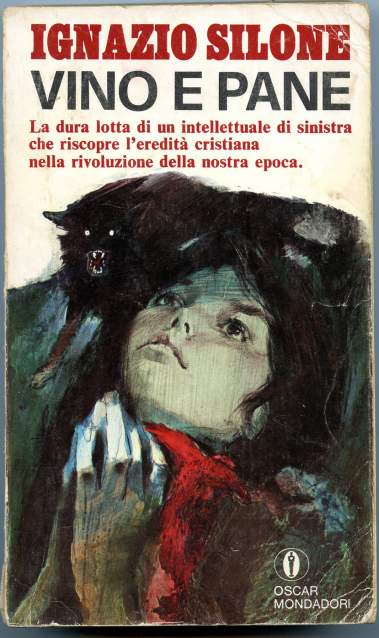
Vino e Pane – Ignazio Silone


One of the books that I got from my grandparents’ shelves (my granddad – despite oddly still remembering most of the first book of the Iliad by heart – is, well, rather “forgetful” these days, and a couple of years ago my grandma has made the rather commendable decision to only read newspapers).

Vino e Pane is a good book about Fascism and its impact on small secluded Italian hamlets. It’s also a book about Catholic piety and communist resistance (I favour one of the two, you can guess which one…) that is probably at its best when the two intertwine, like in the figure of the old Don Benedetto.

While the success that the book has enjoyed, in particular outside of Italy, is perfectly understandable, the quality of this work doesn’t match that of Silone's Fontamara or, for someone who has spent years reading books about Fascist Italy, of most of the works of Fenoglio, Vittorini, Malaparte, Levi, Revelli… So while I’m glad I’ve read it, Vino e Pane doesn’t really crack the top-10 of my favourite novels about the Italian resistance.  

Thursday, 25 August 2016

Chocolat – Joanne Harris


I found this old best-seller in a phone box turned book exchange in Lewisham and I’ve only really picked it up because once upon a time my mom won a literary award that was presented to her by Joanne Harris (I was more interested in the 10kg of chocolate that came with it though).

Unfortunately, the book is way more The Little Coffee Shop of Kabul (minus its underlying racism and a little less shallow) than Babette’s Feast. The characters are overall so dreadfully predictable, the attacks on the Catholic Church and on life in small villages not inventive, and the plot, well, borderline pathetic. The only remotely interesting part was the children story-esque ending, with the evil priest gorging on chocolate before fleeing.


Really not a wonder then that this book sold so many copies. 

Monday, 14 September 2015

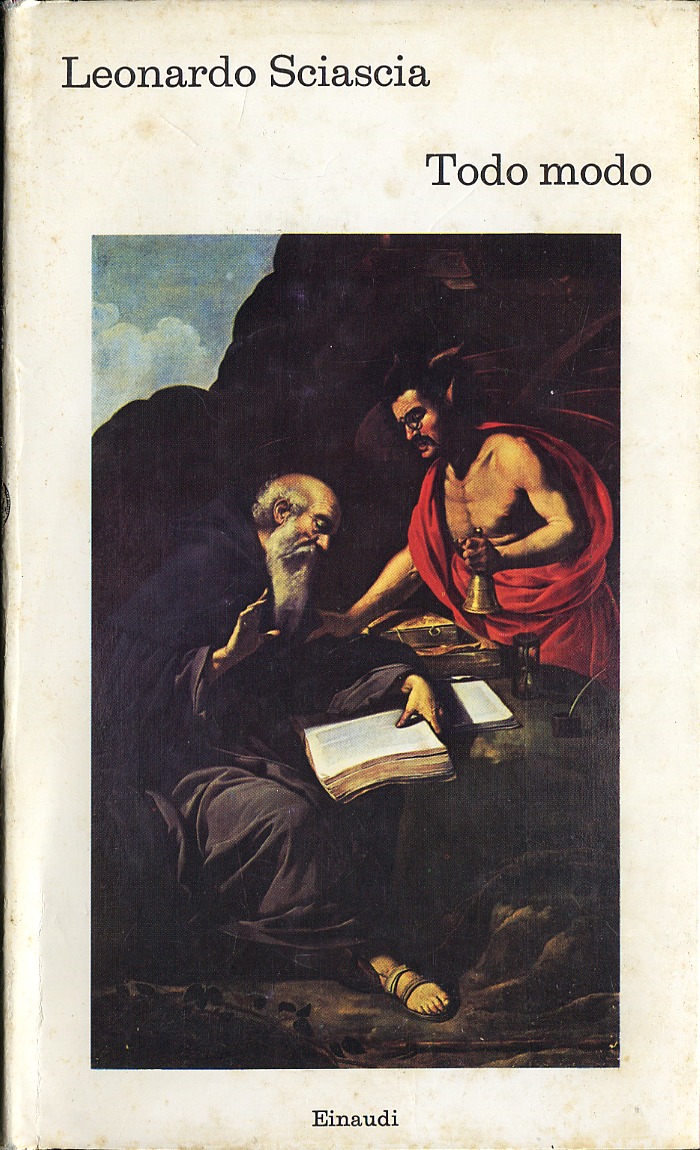
Todo Modo – Leonardo Sciascia


Leonardo Sciascia is a great author who, I am afraid, will soon run the risk of being forgotten (hopefully this is just because there is nothing further away from us than the recent past, but I’m afraid it is because we no longer care about novels on the social and political changes of the country in the mid-20th century – or is it even more worryingly that we don’t care about novels full stop?). If people are too lazy to read his books, they should at least watch the movie inspired by this book, directed by Francesco Rosi (who stood to cinema like Sciascia stood to literature), with probably the most famous Italian actor (Marcello Mastroianni, that Marcello), and with my personal favourite (Gian Maria Volonté).

This book criticized the Vatican at a time in which it was actually bold to do so, before the Catholic Church started running the risk of closing down and the Western world became increasingly secularized, a period in which popes were dying in rather mysterious circumstances and the sketchy Cardinal Marcinkus  was disposing of money (and probably people) with impressively suspicious nonchalance. The tension throughout the book is palpable, and it is alienating in a way that very few books of a hundred pages are.

I’d like to think that my generation fell in love with Dan Brown only because they weren’t exposed to Sciascia.

Saturday, 12 September 2015

A Portrait of the Artist as a Young Man – James Joyce


I have read somewhere that, alongside In Search of Lost Time, Joyce’s Ulysses is the book that most people claim to have read without actually having done so. Why reading Joyce is something meant to be so cool that you should lie about is just beyond me.

Portrait of the Artist as a Young Man is now a century old, and it feels that way. What do we need to read this book today for? Bore us to death? Possibly. Tell us Catholic life could be grim and miserable? Seriously overdone.

I’ve read this book less than a year ago, and all I seem to remember is (in alphabetical order): Apathy, Boredom, Catholicism. Maybe I’m not enough of an aesthete, but I wonder what’s the point of this book nowadays. In order to be considered one of the greatest writers ever, shouldn’t your masterpieces be, erm, readable?!?