Showing posts with label Ageing. Show all posts

Tuesday, 14 October 2025

La Gioia di Ieri - Elena Stancanelli


The kind of typical book that I read because I like its cover and trust its publisher. 


But one shouldn't judge a book by its cover, and publishers do need to sell books to a wider audience than me and people like me, I'm afraid. 


I was hoping for something bubbly and at times slightly unorthodox. Instead what I got was the story of an owner's love for her dog (in case, please refer to my comments to Heart of a Dog for my view on the previous dog-related book I had read) and ultimately her descent into spinsterhood (despite her possible lack of self-awareness). All in all, a bit of a waste of time, though at least not a particularly troubling one...

Wednesday, 18 June 2025

Embers - Sándor Márai


After reading The Door I felt that I should read another Hungarian book in the hope of striking gold again. 


What I struck, ultimately, wasn't gold, at least not for me. Yet, it was a pleasant read about friendship and love in front of a dying fire (and/or in front of a dying empire, despite the fact that by the book's publication Austria-Hungary had been dissolved for more than 20 years). 


It is one of those books whose plot I can't remember, but I do remember the sensations it evoked. Still, as far as authors covering (and celebrating) the decadence of a former glorious central European empire go, Joseph Roth wins, hands down. 


Tuesday, 4 March 2025

The Door - Magda Szabó


I was really grasping at straws as most of my e-libraries didn't seem to have anything particularly appealing on offer. Then my daughter's Hungarian BFF came over for a playdate and that made me realize that, other than The Paul Street Boys, I had never never a single Hungarian book, so I chanced upon this novel. 

The start was a bit of a slog, with the focus on female companionship and bickering not being something I found engaging, but then I got into the novel ("getting into a novel" - what an awful turn of phrase...) and I was left in awe of what I think can be considered a small masterpiece. 

Szabó's book is one of small secrets that are justifiably oh-so-important to her characters. It is one of love between people who at first glance have very little in common. And crucially is one in which the reader (or at least, that was the case for me) finds him/herself justifying most of the narrator's decisions and actions, while eventually accepting also Emerenc's viewpoint and, at the end of the day, wishing s/he was more like the cantankerous cleaning lady who appears to singlehandedly hold a small community together. 

Saturday, 7 December 2024

Lucy by the Sea - Elizabeth Strout


I feel like I have written this before, but while I very much love the writing of Elizabeth Strout and the atmosphere that she is able to create with her books, all of them - perhaps with the exception of the ones about Olive Kitteridge - blur into one. Lucy by the Sea was a clear demonstration of that, as I remembered having read My Name Is Lucy Barton, but in spite of its title I couldn't for the life of me recall who Lucy Barton actually was...

I have yet to find a book whose handling of the recent pandemic I find compelling, perhaps because it's something that we have all lived through. On the plus side, at least this book was a clear upgrade compared to the rather miserable Day by Michael Cunningham. 

What I did like about this book, though, was the narrative arch of William (Lucy's husband). I must confess I was rather ticked off by the brave "knight in shining armour" (who at the same time has the foresight of "the stoic man of science"), but in the last few chapters it was really interesting to see his own daughters discuss with Lucy the probable selfish reasons behind some of his actions, and Lucy recognizing them - perhaps having known that was the case all along, and reclaiming her own agency.  

Tuesday, 7 May 2024

Death in Her Hands - Ottessa Moshfegh


This is another book by Moshfegh that I've recently read. And this one I've actually liked, at the very least for the most part. 

At times it read a bit like Olive Kitteridge minus the humour, at times like The Lovely Bones with a smaller touch of paranormal. In general, it was compelling if not gripping. 

The novel is a nice exploration of solitude and ageing, but also of some people's innate yearning for adventure and thrills. Yet, by the end of it, the unreliability of the narrator made the novel unravel a bit too much for my (complete) liking. 

Wednesday, 24 April 2024

Something to Tell You - Hanif Kureishi


Like most of Kureishi's books, this was a pleasant read, in particular as it felt like an indirect reflection on his pretty unique life and relationships. 

Yet, the autobiographical and self-referential tones are also one of the book's main weaknesses, as I read it shortly after reading his short-story collection Midnight All Day, which already contained a number of the stories and plotlines developed in this book. 

All in all, though, this was one of the best recent works by Kureishi that I read as it gave me a sense of peace for characters - and authors - finally being at peace with themselves and with their own idiosyncrasies. 

Saturday, 10 February 2024

Baugmartner - Paul Auster


And thus one of my favourite authors got a book published just by virtue of being Paul Auster. 

This book has no redeeming features. It is a series of short(ish) chapters in the life of the titular character as he grows old. A lot of them look like they were put together haphazardly, and Auster most likely recycled bits and pieces of some of his previous unpublished work to put together the underwhelming story of an ageing academic. 

Auster can only be forgiven because of the tough times he's going through, but I doubt an up-and-coming writer would have been able to publish a book of this (low) calibre. 

Sunday, 17 December 2023

Olive, Again - Elizabeth Strout


After the disappointment of My Name Is Lucy Barton I had fairly low expectations from this sequel to Olive Kitteridge

Turns out, if anything this book is actually better. As Olive ages, some traits of her character become sharper while others turn more mellow, chickens come home to roost in terms of her family relations and post (first) widowhood love life, and in general the anecdotes and stories that are intertwined in the book are always extremely profound (despite being covered over just a handful of pages). 

I actually had to remind myself multiple times that Strout was still (relatively) young when she wrote Olive, Again since she writes about the ageing process with such tact and credibility. And to be honest I probably enjoyed this book so much because Olive reminds me more and more of my cantankerous grandmother. 

Friday, 26 May 2023

Il Colibrì - Sandro Veronesi


Granted, my parents had warned me (I had just forgotten about it, but hey...), yet I was expecting more from Veronesi. Not sooo much more, but at least a little more. 

This book is light as its titular hummingbird. And I don't mean that as a good thing. The long protracted story of a pretty uninteresting main character left me rather untouched. The sappy final scenes of love, forgiveness and hope openly annoyed me. 

At most, this is the sort of book that I think one should read over the span of a couple of afternoons at the beach. Except that I don't like beaches, so I don't think this book really has any space in my life, and will have very little space in my memory. 

Friday, 10 February 2023

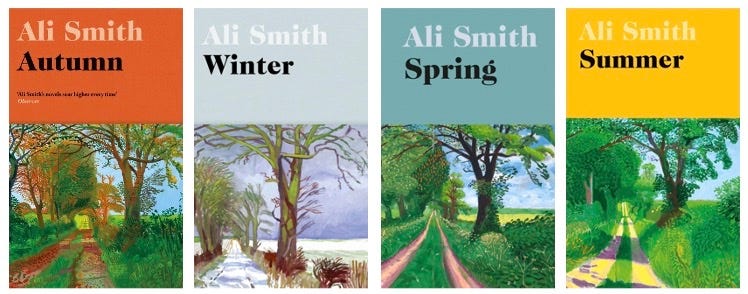
Seasonal Quartet - Ali Smith

Ali Smith's Four Seasons. Writing through time, real and… | by James  Mustich | Curious | Medium 

Funnily enough, the Southwark electronic library has a e-copy of the first two books of the series, but I had to go to the actual library (exotic!) to get the hard copies of the last two. 

With hindsight, that was somewhat fitting, as I fell in love with Autumn and Winter, thinking of ways to write to Ali Smith to tell her how impressed I was with her decision to tackle events "in real time", take such a clear stand on so many social issues, and express (yet again) her love for Italy and Italian culture. 

Said love started to subside by Spring, and ultimately Summer left me rather unsatisfied. Much like had happened with Jonathan Coe's Middle England I felt that Smith couldn't quite manage to finish with a "bang" so, to avoid finishing with a "thud", she decided to finish with something that is safe and whose vibe (though - in her defense - not its details) is largely predictable. 

Also, that should teach me about reading four books from the same author in quick succession. I had grown tired of her writing style by the end, and I really wish that hadn't happened.

Tuesday, 7 February 2023

The Thursday Murder Club - Richard Osman

 The Thursday Murder Club: (The Thursday Murder Club 1): Amazon.co.uk:  Osman, Richard: 9780241425442: Books 

Yes, I occasionally read contemporary best-sellers. They have their positives in general, chief among them they are so very easy to read. And this one has a positive in particular: I find its authors really extremely funny. 

As for the book, it was entertaining enough and funny enough, but nothing more. I guess I've been around - or heard my mom tell stories of - enough old-people homes and communities to be largely inocluated against these "endearing elderly". Even if they were belieavable, I surely wouldn't find them likeable. 

The one character I honestly do find endearing is Bogdan. Who would have thought: hard-working European builder who moved to the country ages ago and still feels like an outsider, and I liked him eh...

Monday, 6 February 2023

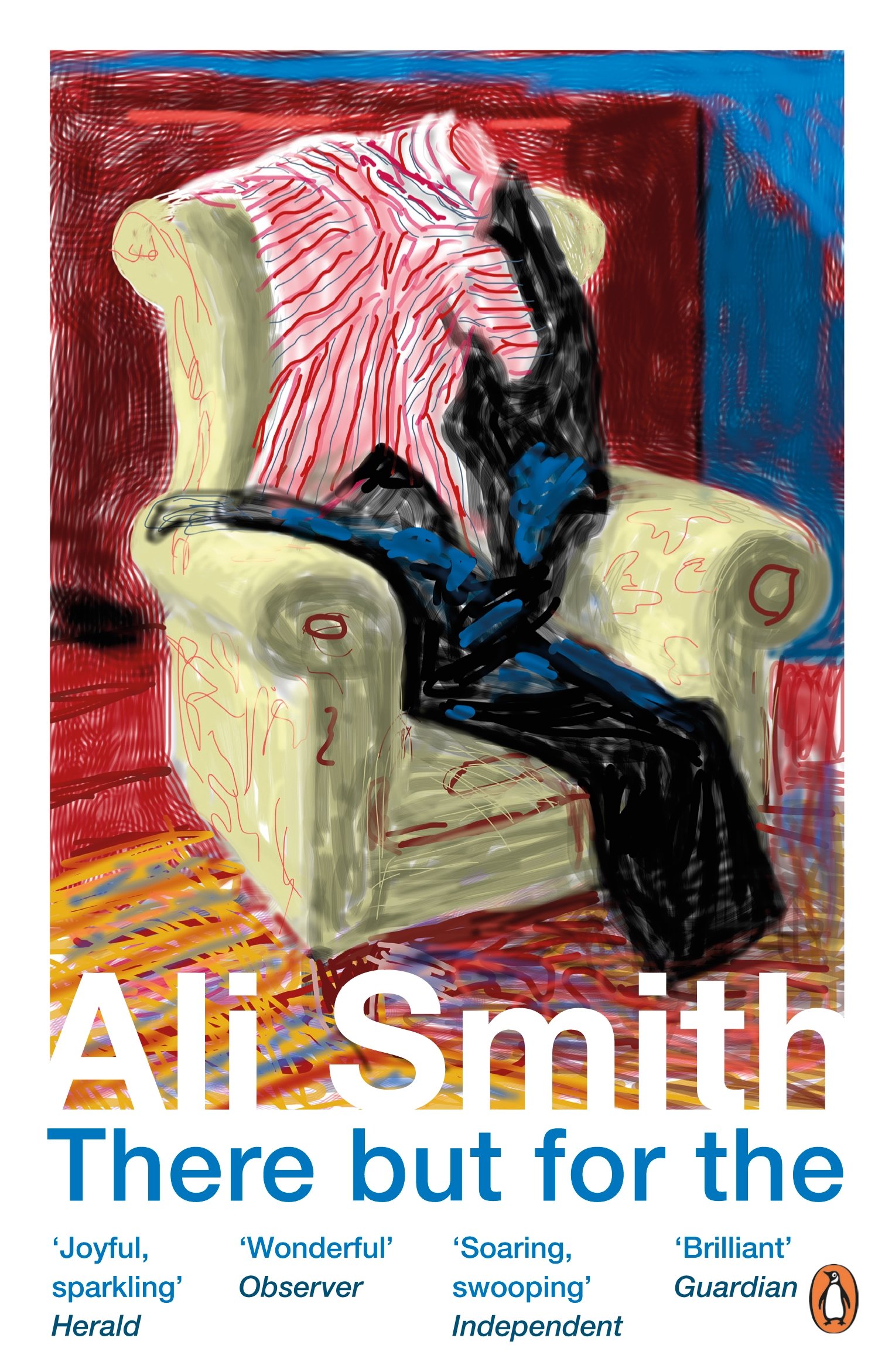
There but for the - Ali Smith

There but for the: Amazon.co.uk: Smith, Ali: 9780141025193: Books

A novel that I started to read on my return journey from Bolivia this Christmas.

I highly doubt that one can appreciate a novel, or a movie, or anything really, while on an intercontinental flight in economy class on New Year's Eve while travelling with two young daughters. Also, I've probably read too many Ali Smith novels recently (more on those later, as I work my way backwards through the list of the books that I've read over the last three years).

There but for the is a typical Ali Smith novel for me, but its witticisms fell flat for me, and I've probably started to have enough of some of her likeable smart misfits. Yet, the book is set in Greenwich and along roads and buildings that I can see from my flat, and I now won't be able to enter the foot tunnel without thinking about Ali Smith, so after all it was worth the read.

And obviously there's a really good chance that if I hadn't read this book while on a flight, or if this was my first Ali Smith novel, I would have found it wonderful. Sadly, I read this book while on a flight, and it was the latest in a long list of Ali Smith novels for me.

Thursday, 5 September 2019

Lanzarote - Michel Houellebecq


Ah, Houellebecq - sure, he's an arrogant ass who uses his real or supposed insecurities to spit venom on half of the world, but he writes so very well.

Lanzarote is the sort of book that you read during a single bus ride (or at least that's what I did, the one time I didn't run or cycle back from work this summer). Possibly because of its short size, it has way less nastiness than the other books by the same author that I've read so far. And for once, at least some of the groups that Houellebecq attacks are made up of people that I don't feel the desperate need to defend.

Add to that the fact that I believe Houellebecq picks the perfect location for this book, an almost lunar island that manages to attract hordes of tourists nonetheless, and you have a really good read for an hour or so. It won't take much longer than that, and it won't stay with you for much longer than that either, but it will allow you to overcome the boredom of being stuck on a bus in rush-hour traffic. 

Monday, 10 June 2019

Middle England - Jonathan Coe


A rare Jonathan Coe book that I didn't enjoy, and yet one that I think serves an educational purpose (at least for non-British writers).

The characters that I loved so much in The Rotters' Club, and that I still enjoyed in The Closed Circle are back for a third time and, at this point, it's just a bit much: with age they've lost a lot of their charm and too many of them have turned into allegoric representations of the sections of society they belong to.

While some of the new characters that are introduced are interesting enough, most of them are rather one-dimensional. The themes discussed are so widely covered in the media these days, and in rather similar ways, that they don't really add anything new. And the ending of the book is not one of the typical chaotic and rocambolesque ones that Coe usually goes for, but rather a flat one that reminds the reader of a cheap romance.

Yet, for someone who doesn't live in the UK and knows little about the current political landscape, this book can be a really good introduction to Brexit and the awfulness of the current political discourse in Britain.

Tuesday, 27 June 2017

Winter Journal – Paul Auster


A book that I had often seen in bookshops but avoided because, let’s face it, I don’t really like self-celebrating memoirs/reflections on an author’s life etc. Like a child, I only read it because my mom said so. And clearly my mom knows best – sure, it’s a self-celebrating reflection on the author’s life, but if the author in question is Paul Auster, then the book is bound to be extremely well written and, at the very least, the mirror of a very interesting life.

What this book has left me with are chiefly two things: the love and profound respect Auster feels for his wife Siri Hustvedt, and the fact that that he is, or at least he portrays himself to be, rather happy at the prospect of growing old.

At times there are passages I didn’t feel particularly interested in (some stories about his youth, for instance, left me quite untouched), but overall the book is at the very least quite thought-provoking. I never thought Paul Auster would have played pick-up basketball growing up, as pretty much all of his sports references in his other books seem to be about baseball, but reading about that made me happy, as did seeing him go through all the houses he lived in and what these meant to him. 

Thursday, 16 February 2017

Mr Sammler’s Planet – Saul Bellow

Saul Bellow is probably as underrated a Nobel Prize winner as any, and the fact that my second-hand bookshops very rarely have his books is undeniably a sad sign! But hey, luckily my parents had two copies of this novel (and Skoob near Russell Square had Humboldt’s Gift, which I will hopefully read soon).

Mr Sammler’s Planet is wonderful, witty and deep. It is also typically Jewish and New Yorker, which makes it an instant sell with me. For all the depth and likability of the protagonist, however, the two most interesting characters are the dying Elya (a perfect patient, and surely a very good doctor – if uninterested in his profession) and the stylish and mysterious pickpocket, whose bizarre decision to impress Sammler by showing him his member is for me one of the great creations of American literature. Speaking of great creations of American literature, though, it’s important to remember that nothing here matches Herzog’s graphomania…

And I could talk about Sammler’s experiences in WWII, but the book is ultimately about overcoming those (at least to me), so I won’t. Instead, I’ll say that this book mentions Ferdinand the Bull, without a doubt my favourite story between the ages of 3 and 6. 

Monday, 5 December 2016

Hamlet's Dresser - Bob Smith

An extremely random book – a memoir rather than a novel really – that my parents bought for my wife ages ago (maybe when she moved to London and started to accompany me to see the Royal Shakespeare Company, first at the Novello Theatre, than at the fairly awful New London Theatre, and then finally at the Barbican?).

To me the book is fundamentally divided in three intertwined plots/narrative lines – the narrator’s troubled family past and his complex relationship with his sister and her mental illness, his personal experiences as a dresser/stagehand, and lastly his Shakespeare classes for elderly people in New York City.

The first narrative line is soft and touching, and Smith is actually remarkably good at portraying the situation for what it actually is/was (or at least, that’s the impression the reader gets) without any need to sweeten it, or to portray himself as better or worse than how he genuinely appears to be.

The second narrative line is intriguing – reading about Katherine Hepburn, Jessica Tandy, and all the other great actors who crossed the stage in Stratford CT is like watching a very good documentary with random comments and anecdotes by people who happen to have crossed paths with some of the greats of the 20th century.

The last narrative line is clearly the one that touches me the least, probably because I am one of those awful people who tend not to find too much poetry in the elderly and the remarkably problematic challenges they have to face on a daily basis – to me those are just painful and very possibly insurmountable. 

Tuesday, 21 June 2016

The Closed Circle – Jonathan Coe


And for once a book that my aunt gave me in 2001 and that it took me 15 years to read.

And for once a book by Jonathan Coe that I liked, but not so much.

Probably the events described by Coe were just too recent to be observed with his normally hilarious humour, but I found The Closed Circle to be a bit too sad and bleak. Also, too much of the action takes place in London (it’s just more interesting when Coe talks about the Midlands). And lastly, even though the book has a number of Coe’s customarily dramatic plot-twists, these are just a bid bland (if not stale) if compared to the ones of The Rotters’ Club and What a Carve Up!

The Closed Circle is ultimately an interesting portrayal of Britain’s recent history and the problems of Blair’s (and the former director of my school’s!) Third Way, but it’s just not Coe at his best (or maybe the 70s were a lot more fun than the 90s, or maybe 18-year olds are a lot more fun than 40-year olds, or all of the above!)

Tuesday, 19 April 2016

The Almost Moon – Alice Sebold

A book that my mum bought for 1£ at the Red House in Bexleyheath, I’m so very proud of her…

Like most critics, I found the novel’s opening sentence to be nothing short of awesome. Unlike a number of critics, however, I did think the novel was really good. As far as I could see, the portrayal of Helen, the main character (and parricide), was criticized for being morally and intellectually incoherent – but that’s what I thought was great, as I suppose the mind of a daughter who has just killed her mother must be at least slightly shaken.

I also found the characterization of the love-hate relationship between daughter and mother to be rather believable (and, I assume, accurate), and, in all honesty, I sort of justified Helen (does that make me an awful person or a psychopath? I hope not, and I actually think I’m rather sane, much like Helen’s former husband thinks of her).

Most of all, the novel raises all sorts of questions about the need in our society to work so terribly hard to keep the elderly alive – I wish we could just let them go (although if we think they need a push, admittedly this can be done in a better way!). 

Sunday, 13 September 2015

Across the River and into the Trees – Ernest Hemingway


The philosophy teacher in my Italian high-school used to frequently ask us about our readings. Between Paulo Coelhos, Dan Browns, Khaled Hosseinis etc. I like to think that he often turned to me in the hope of talking about something that could pass as literature of some sort. I am also pretty sure I impressed him when I told him that I thought that The Old Man and the Sea was a very average book and that Hemingway’s real masterpiece was Across the River and into the Trees.

Probably that had a lot to do with the desire of a 17-year old to go against the established order (disclaimer: I still think The Old Man and the Sea is really mediocre, but probably A Farwell to Arms is Hemingway’s best work). And it surely had a relation to my love for Venice and to the fact that I pictured Renata to look like my love at the time.

This is the most sentimental of the Hemingway books that I’ve read (i.e. most of them, with the exception of – ironically given the title of this blog – A Moveable Feast and a couple of others) and also one that inspired me, at age 17, to go to Harry’s Bar in Venice for a coffee (alcohol would have been illegal) – standing at the bar, clearly, in order not to get ripped off. Funny thing is: I actually don’t really drink coffee, except before races, when I have a cup half an hour before the start and I gulp it almost like a medicine.