Sunday, 16 July 2023

Blonde Roots - Bernardine Evaristo


In all honesty, I wouldn't have read this book had it not been for the fact that the Southwark libraries app grants access to many of Evaristo's books since she won the Booker Prize. 

On the plus side, it made me realize that the "good" but not "one in a generation" kind of authors very rarely invent something from scratch and that, in this case, Colson Whitehead must have borrowed quite a bit from Blonde Roots for his The Underground Railroad (or maybe it's an incredible coincidence that both main characters take an actual underground railroad to try to escape slavery?). 

On the down side, I never really found myself gripped by this book. 

One interesting thing though: despite the frequent reminders that the slaves are white and the slave-owners black, I struggled to picture them as such and my mental image of Doris often switched between that of a white and a black woman. Talk about the power of ingrained perceptions and experience...

Snow - John Banville


Running out of readable ebooks on the Southwark libraries app (add some new decent titles, please!) I decided to give Banville's attempt to write a detective story a go. 

And I spent most of my time thinking (and sometimes saying aloud) "John Banville, come on, since when have you become a banal author reverting to all the most obvious plot twists used in airport paperbacks?!?". 

Seriously, rarely a writer has disappointed me as much as Banville did with this book. It had them all: the detective with the troubled love life, the manipulated and mentally unstable black sheep of the family, the abusive Catholic priests (I'm really, really far from being even just remotely a fan of the Catholic Church, but this is one of the three easiest and most annoying tropes around), etc. 

And not a single actual surprising moment through the book. Never. 

Le Perfezioni - Vincenzo Latronico


This was one of my frequent attempts to engage with Italian literature by going through the shortlists of the country's biggest literary prizes. 

As usual, I despair for the present and future of (just?) Italian literature. I can  picture authors stopping to re-read a sentence and spending 10 self-congratulatory minutes to remind themselves of how wonderful their prose is, and how imaginative their plot twists are, when in reality they are "meh" at the very, very best. 

But this is a book that I absolutely loved to detest. The main characters are obnoxious, the kind of Italians abroad that I hate with passion, those who leave the country but can't think of learning a new language besides basic rudiments, who are completely unable to break the umbilical chord that links them to the motherland, who anyway will always be able to count upon family wealth as and when needed and who only really have meaningful interactions - no matter where they are - with people born within 500 km of their native village. 

If Latronico's book is an ironic critique of this kind of people, I might read something else by him, but I actually doubt he had any intention of criticizing his characters or their way to see the world. 

Agent Running in the Field - John le Carré


A book that I read in part in digital form, and in part as a hard copy at our local library while my younger daughter was busy reading (well, actually just leafing through, she's three!) dozens of Bluey, Spot and - much to my chagrin - Peppa Pig books. 

Le Carré is one of those authors who make me wonder whether one can be both a great writer and have near universal reach. Very few can, and I believe le Carré belongs in that list. 

Sure, the ending of the book feels rushed and underexplored, but we're talking about an author who, at the tender age of 88, was probably feeling the pressure of time more than others (and he might have a point, as he died soon after the publication of this book). 

Apparently Agent Running in the Field has been described by many as le Carré's Brexit novel, which is obviously reductive, but I did love his decision to air out his anger and frustration with that whole bonkers project: while the likes of Ali Smith and Ian McEwan are preaching to the choir when they criticize Brexit, I suspect le Carré's readership covers a much broader socio-political spectrum and so his move was a lot bolder and riskier (though again, at 88 he probably didn't have too much to lose). 

Friday, 26 May 2023

Leviathan - Paul Auster


With my most sincere apologies to 4 3 2 1 , I think this is the Paul Auster novel to end all Paul Auster novels. 

It is the first Auster's novel I had heard of (possibly the first that my parents read?), but, not being as ubiquitous in all second-hand bookshops as The New York Trilogy, also one that I hadn't touched until the Westminster library kindly gave me access to the e-book. 

Besides the traditional Auster trademarks (chance, mystery, fortuitous crossings of metaphorical paths) what particularly struck me of this novel is how relevant to today's world it still feels. Perhaps, after all, America and its identity (crisis) hasn't changed that much since the end of the Cold War...

Il Colibrì - Sandro Veronesi


Granted, my parents had warned me (I had just forgotten about it, but hey...), yet I was expecting more from Veronesi. Not sooo much more, but at least a little more. 

This book is light as its titular hummingbird. And I don't mean that as a good thing. The long protracted story of a pretty uninteresting main character left me rather untouched. The sappy final scenes of love, forgiveness and hope openly annoyed me. 

At most, this is the sort of book that I think one should read over the span of a couple of afternoons at the beach. Except that I don't like beaches, so I don't think this book really has any space in my life, and will have very little space in my memory. 

La Traversata Notturna - Andrea Canobbio


I guess that when you don't have many ideas, you can write an autobiographical book. 

I guess that when you aren't the best of writers, you can borrow from other authors' approaches and styles (hello Perec!). 

And I guess that when you have interesting sources and artefacts (the family heirlooms pictured in the book are often the most interesting parts), you might as well use them. 

This is actually an OK book; I'm glad I've read it as it's an interesting perspective on a city - Turin - that I know quite well. I just think that it really shouldn't be considered one of the best Italian books of 2022, but since that's apparently the case, mala tempora currunt, 

Cassandra - Christa Wolf

Why did I have to spend years being taught - and being made to absolutely hate - ancient Greek grammar, instead of spending more time actually learning their (hi)stories?

Seriously, had a teacher ever thought of making me read this book (instead of memorizing μῆνιν ἄειδε θεὰ Πηληϊάδεω Ἀχιλῆος and repeating it like a parrot!) I would have actually quickly grown to like - and later most likely to love - Greek mythology. 

Instead, it took my 36 years to get closer to the life, troubles, thoughts and loves of some of the most fascinating characters ever produced by the human imagination. My daughters (aged 3 and 6 now) ask to be read stories from a children's version of The Odyssey before bed and won't have to study ancient Greek unless they really, really want to - who knows how that will work out!


Life: A User's Manual - Georges Perec


One of my dad's favourite books, and one that he has re-read recently. 

While I can understand why it was popular "back then", I really don't think it has aged that well. The idea of short stories and anecdotes held together by a red thread (in this case the building itself and some of the people who live/have lived there) has been done a lot, and I find many contemporary authors' approaches (Strout above all) much better. 

Style above everything - much like with many French writers of the period - works wonders for many readers, just not me in this case. 


Moon Palace - Paul Auster


The one time in my life I had to request a renewal of a library book loan (it took me more than two weeks to read it!) and it was a Paul Auster novel...

Testament to the fact that we had a lot going on (family holidays, in part, and a huge kitchen refurb waiting for us back home), but also to the fact that this wasn't my favourite Auster book. 

Had it not been for the fact that I've read most of his other works, I would have probably enjoyed Moon Palace a lot more, but (un?)fortunately I have read most of his other works, and had already come across much better renditions of his traditional "cultured and troubled Columbia student is confused and tossed around by chance and mysterious fortuitous encounters". 

Wednesday, 24 May 2023

Lessons - Ian McEwan


Now here's an author (like Ali Smith) who seems more unable than me to let Brexit go, and this is saying a lot. 

And here's an author (like Ali Smith) who probably tries to pack too much in too few pages. The story of Roland and Miss Cornell, for me, would have been enough. The persistence of his memory of her throughout his life, and her unexpected brief return, would have made this a great novel. 

Turning the book into a brief history of Britain from WWII to today as seen through the eyes of one person, on the other hand, was stretching it a bit. Even when I find myself agreeing with most of McEwan's points about British politics and society, I don't really see the need to read about them. They are not surprising, they are not particularly engaging. Not for me at the very least. 

A shorter novel on the frenzy, trauma, and confusion caused (?) by Miss Cornell would have ranked among McEwan's finest. Instead, I consider this a great "intro to the current British divisions" for my mum, along the lines of some of Ali Smith's recent books and Jonathan Coe's Middle England. With the added bonus of having large passages set in Suffolk (where we were coincidentally holidaying as I was reading the book) and mentioning Mick Jagger's stint as an LSE student. 

A Little Life - Hanya Yanagihara


I've read this novel from cover to cover. And I consider this an accomplishment. 

I found it pretentious, gratuitous, and self-absorbed. 

And whenever its author was short of ideas, guess what, she was ready to throw in some more violence. After a while, I was so inoculated to this escamotage that the only reaction it could elicit from me was a shrug. 

Also, priests and social care workers who abuse children. Now that's thinking outside the box, and not the oldest (and cheapest) trick in the book at all...

Luckily, when you are really scraping the bottom of the barrel, you can always kill off half of the characters in a road crash. On the plus side, they were all rather unlikeable in the first place, so I didn't really mourn their loss. 

Tuesday, 21 February 2023

Summertime - J.M. Coetzee

 SummertimeCoetzee.jpg 

I was in need of a wonderful Coetzee book after the disappointment of the two "Jesus" books, and I got exactly what I needed thanks to the (limited) offer of the Southwark e-library. 

I don't think there is anything wrong with a bit of self-celebration, in particular for an author as famously reclusive as Coetzee, and the idea of telling a fictionalized story of his own life through the eyes of people he interacted with is just great. 

What's a bit more (well, more than a bit) on the bizarre/morbid side of things is that in the novel John Coetzee is supposed to have died, and that's the reason why the story of his life is being put together with the help of other people and extracts from his writings. But hey, possibly a bit creepy to be writing while thinking about yourself as dead, but it seems to have worked for him!

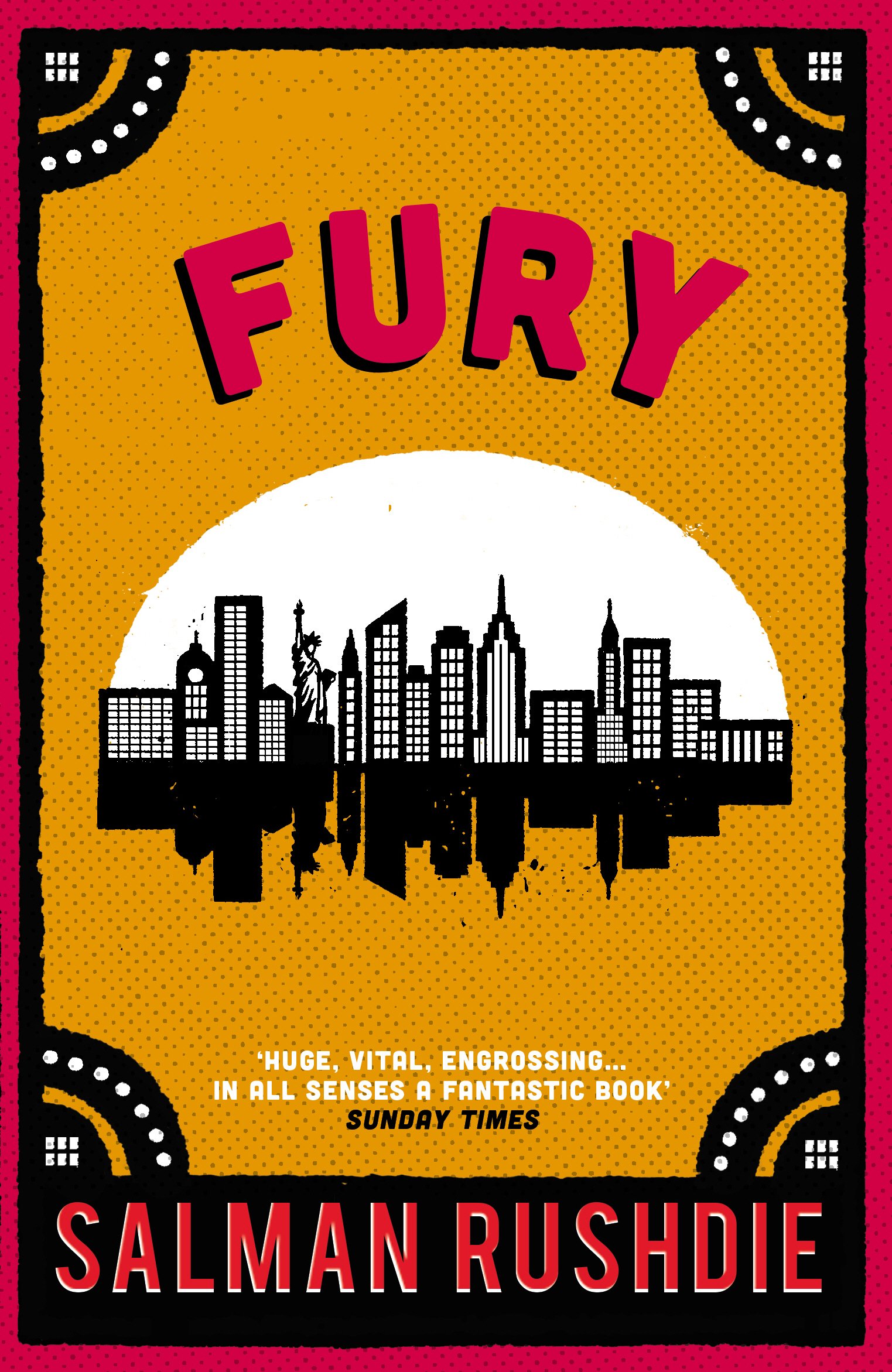
Fury - Salman Rushdie

 Fury: Amazon.co.uk: Rushdie, Salman: 9780099421863: Books 

Another one of those books that I don't remember well (just a few weeks after having read it) and that have left me more with a vague feeling than with any specific recollections. This can't be a good sign, either for the book or for my growing forgetfulness...

Out of the few images that I can recall are the terrifying picture of a father looking at his wife and child sleeping with a knife in his hand, the creation of a doll called Little Brain (that I kept on mis-reading as Little Britain, probably another not-so-good sign), and a series of more and more problematic intercontinental phone calls. 

I actually don't even remember whether the main character ends up returning home or not, which again can't be a good thing. And I've by now decided that it's a problem with the book, and not with my memory.

The Porcupine - Julian Barnes

 The Porcupine: Amazon.co.uk: Barnes, Julian: 9780099540144: Books 

More enjoyable than Flaubert's Parrot, less enjoyable than most other books by Julian Barnes; for me, at the very least. 

This is another book with which there's nothing wrong: it's well-written, it's interesting (if not excessively original) and it's an easy (though perhaps verging too closely towards the effortless) read. 

But there are plenty of other books dealing with the Soviet bloc and its systems, often written by authors who were on the other side of the Iron Courtain for long parts of the Cold War, a I generally like them better (except for Kundera's novels, but I've already professed my dislike for him).