Showing posts with label Identity. Show all posts

Tuesday, 28 January 2025

Look at Me - Jennifer Egan


After liking-without-loving A Visit from the Goon Squad I decided to read another Egan novel as I had just read a couple of books by Rachel Kushner and felt that I might as well read something more by the another widely acclaimed American female author. 

And this one absolutely blew me away. It had all the markers of a "great American novel" for me. Part suburbia, part big city. A healthy dose of criticism of systemic flaws. A main characters who is complex, multifaceted and, ultimately, oddly relatable. 

Yet, the novel's greatest accomplishment is probably its being ahead of the times, with a character in Z who just about predates the drama of 9/11 and whose life shares so many similarities with what we know of those of many other terrorists who have emerged ever since. 

Tuesday, 21 February 2023

Summertime - J.M. Coetzee

 SummertimeCoetzee.jpg 

I was in need of a wonderful Coetzee book after the disappointment of the two "Jesus" books, and I got exactly what I needed thanks to the (limited) offer of the Southwark e-library. 

I don't think there is anything wrong with a bit of self-celebration, in particular for an author as famously reclusive as Coetzee, and the idea of telling a fictionalized story of his own life through the eyes of people he interacted with is just great. 

What's a bit more (well, more than a bit) on the bizarre/morbid side of things is that in the novel John Coetzee is supposed to have died, and that's the reason why the story of his life is being put together with the help of other people and extracts from his writings. But hey, possibly a bit creepy to be writing while thinking about yourself as dead, but it seems to have worked for him!

Il Coraggio del Pettirosso - Maurizio Maggiani

 Il coraggio del pettirosso (Italian Edition) eBook : Maggiani, Maurizio:  Amazon.co.uk: Kindle Store 

A book that I had tried to read as a teenager but that I had originally failed to get into. I had another go this summer, and I really enjoyed about half of it, the other half was too allegorical for me. 

The half that I loved was the main character's story in the present time, in a melting pot of anarcho-misfits, with an illegal journey to retrace his Italian roots and a meeting with the poet Giuseppe Ungaretti, the (literal) deep dives in the port of Alexandria, and the erratic research into his past and his identity agains the backdrop of the Six-Day War. 

The half that I didn't like was the dreamlike section drawing parallels with medieval love and persecution, community and ideals. I'm just not built for stuff like that I'm afraid...

Friday, 10 February 2023

I Know Why the Caged Bird Sings - Maya Angelou

 I Know Why The Caged Bird Sings: The international Classic and Sunday Times  Top Ten Bestseller: Amazon.co.uk: Angelou, Dr Maya: 9780860685111: Books 

A book that I had clearly meant to read for a long, long time. Until one day I found a copy of it in our building's lobby...

It's a hauntingly beautiful, heartfelt and heartbreaking childhood tale that sadly still rings true in the context of 2023. A book that one can't put down and that can be finished in one intense sitting. 

Yet, after reading it I didn't feel the need to read the following six books in the series. I'd like to think that it's because I was intimidated by the size of the seven tomes put together and not becuase I'm a bad person who has no time for books that deal with racism, poverty and struggle, but I can't be sure.

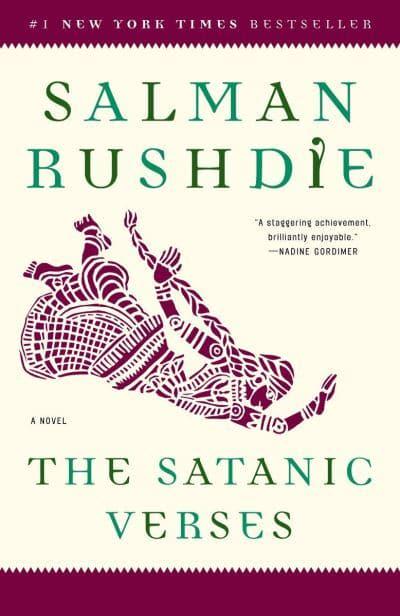
The Satanic Verses - Salman Rushdie

 The Satanic Verses : Salman Rushdie : 9780812976717 : Blackwell's 

If I was to just write about this as, well, a book, I'd mention the wonderful opening scene and how it made me appreciate magical realism for the first time since I was a teenager. And then I'd talk about how that magical realism grows stale with the passing chapters. 

I'd also talk about how the novel is a sign of an author whose life and allegiance is deeply divided between countries and cultures. 

I'd also say that, ultimately, I don't consider the book a masterwork. 

Yet, one cannot talk about The Satanic Verses without talking about how the novel changed our world and, most of all, Rushdie's own world. This was true before 2022, and it has only become more true now. We are not talking about a tasteless Italian politician showing off his t-shirt with a cartoon of Muhammad. We are talking about an author who wrote (and wrote well) dream sequences in a novel, but that also happened to criticize Khomeini in the process. And we're talking about an author whose life was then turned upside-down and threatened time and again by people who most likely didn't even read his novel.

Thursday, 5 September 2019

A Single Man - Christopher Isherwood


Isherwood is probably, well surely, one of those authors I should have approached way earlier but didn't. Hey, at least I did watch the movie version of A Single Man when it came out and, despite the fact that some critics had their doubts, I found it absolutely masterful (even when some scenes looked like modelling ads).

That said, there were elements in the novel that pleasantly surprised me (first and foremost the fact that the protagonist doesn't have suicidal ideas) and easily made this one of the best books I've read this year. I don't quite know whether that's because of the location, because of the depth of the characters, because of Jim's constant subtle presence, or simply because it's beautifully written.

Wednesday, 29 May 2019

The Blazing World - Siri Hustvedt


Oh, Halcyon books and its wonderful finds...For a change, my mom read this book before I did and liked it despite struggling a bit with it. Possibly because of my greater familiarity with academic writing (sigh?!?) I actually found it really quite accessible.

The book has absolutely everything from my point of view - art, mystery, bizarre love plots, a number of different writing styles and registers, tricky gender dynamics and a wonderful setting in Brooklyn.

Of all the questions the book raised for me, the biggest ones probably regard Siri Hustvedt herself: how does it feel to be considered the wife of a creative genius, when you yourself are an incredibly talented writer (possibly more than your better half)? And is there any chance Siri Hustvedt might have written chapters, if not whole books, for which Paul Auster got credit?

Wednesday, 3 August 2016

Uno, Nessuno e Centomila – Luigi Pirandello

How dreadfully boring! Seriously, I understand this book is meant to be one of the greatest Italian 20th century novels, but can we all just agree that it’s a 150-page yawn in the 21st century?

So, Vitangelo Moscarda (even his name is dreadful) is a loan shark and is having second thoughts about his life and his identity. So what? 90 years after the book’s publication all its brilliant points are just so utterly trite. I got really happy when towards the end he got mortally wounded – knowing that there were still a few pages to go I was hoping that the first-person narrator would then start telling some bizarre after-life tale that could add a bit of flair to this novel. Sadly, Pirandello just seemed to use the term “mortally wounded” rather inappropriately, as Vitangelo survives…


Or maybe I’m just being harsh because Pirandello was fundamentally a Fascist?!?

Thursday, 24 September 2015

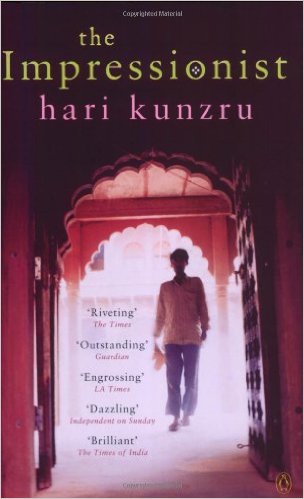
The Impressionist – Hari Kunzru


Another 30p surplus copy that my wife bought at the Barbican library, and a novel that I later took on a research trip to Rome, where I would hit the archives in the early morning, hit the city in the late afternoon, and hit the bed of a centrally located convent (yes, I wasn’t swimming in money as a Ph.D. student!) with a book or a movie in the (very) early evening.

I’m not quite sure if I was upset with myself for not liking a book by Kunzru, or kind of upset with him for writing a book that I couldn’t like. I had very high expectations from the book right after reading of Pran’s conception (in its biological rather than literary meaning) and getting ideas about the kinds of reactions that his complexion could cause.

But, sadly, the novel was a bit vacuous (like Pran himself) and never really won me over with its description of idealized and glorified places (which, to me, remain very much idealized and glorified even when they are deprecated in the novel). I just felt like Woody Allen’s Zelig was a much more interesting (and likeable) chameleonic character...

Monday, 21 September 2015

Nati Due Volte – Giuseppe Pontiggia


Just like one can’t really write anything critical about works on the Holocaust (something I already said when discussing Primo Levi’s Se Questo E’ Un Uomo) one also can’t write anything critical about a book on disability, in particular if written by the father of a severely disabled child.

Pontiggia surely made the right decision by writing the book as a collection of short anecdotes rather than as a normal novel – probably the best way to lighten up something that could have run the risk of being too intense and inaccessible, both things that needed to be avoided at all costs. He wrote it with the light touch of a father who has been through so much with his own child that it all seems (probably) normal to him and is also able to often see a humorous side to the challenges that his child has to face.

Everyone who reads this book is bound to ponder for a while about many of the issues it discusses. Unfortunately most people, however, will forget about it after a few days.

The Buddha of Suburbia – Hanif Kureishi


This was the first novel by Kureishi that I read, as I prepared to meet him for the literary festival I already mentioned in one of my previous posts. I already knew him as the excellent scriptwriter of My Beautiful Laundrette, and also because of the giant picture of him on the walls of King’s College London, but this novel made me discover him as one of the great writers of his generation.

The Buddha of Suburbia is a wonderful rock’n’roll bildungsroman, with Karim (the main character) finding his way as well as his identity (he is “an Englishman born and bred, almost”). I’m not quite sure how much this novel can appeal to someone not from London (my few Italian friends who read the book have mixed opinions about it), but for someone like me (divided between cultures, in love with the city, and constantly looking for new musical and literary input) this novel is simply great.

And it’s not just about Karim, the actual Buddha of Suburbia (Karim’s father) is as good a minor character as it gets, profiting financially from the mystic thirst of vacuous rich Brits – something that just makes me so very happy.   

Thursday, 17 September 2015

Confessions of a Mask – Yukio Mishima

The first, and so far only, Japanese novel I’ve ever read. Somehow I don’t feel the need to read much from the Far East (yet another display of my limitations as a Euro/American-centred reader). That said, when I was six I did buy a book of Banana Yoshimoto for my mom for Christmas, but that was just because I liked her name (show me a six-year old who wouldn’t)…

I have read countless novels about homosexual identity, and loved a good bunch of them, but I probably struggled to find interesting a story about a society that is so far away from my own (despite the fact that Japan in the inter-war period obviously had some striking similarities with Fascist Italy).

Yes, I agree with Kochan that everyone wears a mask, at least in certain situations, but isn’t that, nowadays, something really rather trite and banal?!?

The Immoralist – André Gide

The Immoralist is still disturbingly fascinating even after more than a hundred years since its publication. It remains (obviously) a very quick read, but it’s sufficiently disquieting to leave a mark on the reader.

I read it right after reading Lolita, and I am not quite sure whether I was more disturbed by this novel than by Nabokov’s one because the sources of Michel’s interest are even younger than Humber’s nymphets, or whether it was more shocking because it was set in a more distant past, and some of its key pages set in a more distant culture (with all the patronizing aspects of colonialism, by the way).

Despite having read the book now more than a year ago, I am still unsure of my opinion of Michel: on the one hand, I kind of want his happiness and want him to be able to find a place in society for what he really is (and not for what he has to pretend to be), on the other hand I have the feeling that – no matter how open-minded I consider myself to be – I would still be a member of that society that would actually condemn Michel’s true personality.

And I very much wonder why I liked this novel and just got bored of A Portrait of the Artist as a Young Man

Sunday, 13 September 2015

Novecento – Alessandro Baricco


Either at some point in his career Baricco could really write, or maybe this book was actually written by his neighbour, his brother-in-law, or a random dude he bumped into one day.

Novecento is a delightful theatrical monologue. The implausible story of its main character is an endearing depiction of everyone’s desire for security and the fear of the unknown (ironic for a protagonist who has spent his entire life at sea). The piano duel with Jelly Roll Morton is a work of art, as is the idea of naming the main character Danny Boodman T.D. Lemon Novecento. Unlike the book, Tornatore’s movie – despite remaining very faithful to Baricco’s work – is just a bit too much (not the first time for the director, in my opinion).

It’s just a big shame that something so well-written wasn’t followed by anything of a remotely similar calibre.

Saturday, 12 September 2015

Middlesex – Jeffrey Eugenides


To all those who are quick to judge what male and female boundaries are and what gender roles have to be (no conditionals, clearly) : I so wish I could force you to read this book.

There is just so much in this novel: history (a great portrayal of the conflict between Turks and Greeks, but also of hippie culture in San Francisco), identity, race, growing-up and, clearly, gender. I loved reading, for once, a book with remarkably lofty ambitions that doesn’t just manage to fulfil those, but remains readable in the process.

Eugenides manages to write about this journey of self-discovery with delicate irony even in its most delicate pages.

And then why haven’t I read Eugenides’s two other novels? I have no idea...