Showing posts with label Violence. Show all posts

Sunday, 8 December 2024

Tutta la Vita che Resta - Roberta Recchia


One of the Italian books that I just have to read every now and again. Melodramatic to the ninth degree - with somehow managed crisis after somehow managed crisis and the very occasional brief interlude of something resembling calm. 


Yet, this is not the utterly unbearable A Little Life. I actually got to feel something for the characters, and in all this drama I didn't think that the author was simply riding on the readers' emotions (and their manipulation), but was actually telling a genuinely compelling story and touching on a variety of themes with skills. 


Obviously, a number of plot twists were rather predictable - ranging from the family eventually finding a way to patch things up, to the solution of the initial crime, to the disappearance of central yet ultimately expendable characters. Still, this remain a book that I enjoyed way more than what I had expected.  


Wednesday, 24 April 2024

L'Eta' Fragile - Donatella Di Pietrantonio


One of my customary attempts to read books shortlisted for Italy's most famous literary award. 


And one of my customary underwhelmed reactions. Obviously, we need to talk about women and the challenges they face, and how often they can mirror the trauma experienced by previous generations, but I really did struggle with the eternal bleakness of this book. 


This is a novel in which (some) women show resilience and independence, and (some) women protect other women, whereas the few men who appear are at best menacing and behind the times and, at worst, openly dangerous. Luckily there is also one stereotypical knight in shining armour who will allow one of the characters to have a moment of peace before, rather predictably, disappearing from the scene and from her life (while still maintaining a Darth Vader-esque presence in the air). Needless to say, I found that the characterization of men (and women too!) in this book left a lot to be desired. 

Thursday, 14 September 2023

La Malnata - Beatrice Salvioni


And - finally! - a recent Italian book that I actually enjoyed. 

Maybe (actually, surely) not a work of art that is going to land its young author the Nobel prize, but hey at least it's a ray of light in the rather dark landscape of Italian literature. 

La Malnata is the story of two young girls in Fascist Italy. Written in a dry style that at times reminds one of Fenoglio, it features a plethora of secondary characters that are more or less developed (and more or less monolithic), but the two protagonists are neatly thought-out and brought to life. 

It is all a bit predictable, but I can live with that as Salvioni, unlike many of her contemporaries who know how to write (and just don't have any interesting ideas), doesn't seem to be madly in love with herself and allows her prose to roll quite freely. 

Wednesday, 24 May 2023

A Little Life - Hanya Yanagihara


I've read this novel from cover to cover. And I consider this an accomplishment. 

I found it pretentious, gratuitous, and self-absorbed. 

And whenever its author was short of ideas, guess what, she was ready to throw in some more violence. After a while, I was so inoculated to this escamotage that the only reaction it could elicit from me was a shrug. 

Also, priests and social care workers who abuse children. Now that's thinking outside the box, and not the oldest (and cheapest) trick in the book at all...

Luckily, when you are really scraping the bottom of the barrel, you can always kill off half of the characters in a road crash. On the plus side, they were all rather unlikeable in the first place, so I didn't really mourn their loss. 

Monday, 20 February 2023

Native Son - Richard Wright

 Native Son: Richard Wright: Amazon.co.uk: Wright, Richard: 9780099282938:  Books 

I do understand, or at least I think I do understand, that so many aspects of this book and of the characterization of Bigger Thomas are problematic. 

Baldwin considered the main character as stereotypical, and that's sadly an undisputable fact. He also wrote about him being unsympathetic. Again, I agree, but could he have been otherwise?

He also wrote about Bigger Thomas as being unrealistic. And here I disagree. I know nothing about the lives of a black youth in Chicago at the time, but I did not doubt the verisimilitude of Bigger's living conditions with his family, his uneasiness being transported into the reality of a wealthy white family, his dubiousness of their intentions, a crime committed out of panic, and the selfish fight to save his own life, arguably the only thing he was ever in possession of. And if someone like me still finds an account like this realistic, there's probably still a lot of work to do.

Sunday, 12 February 2023

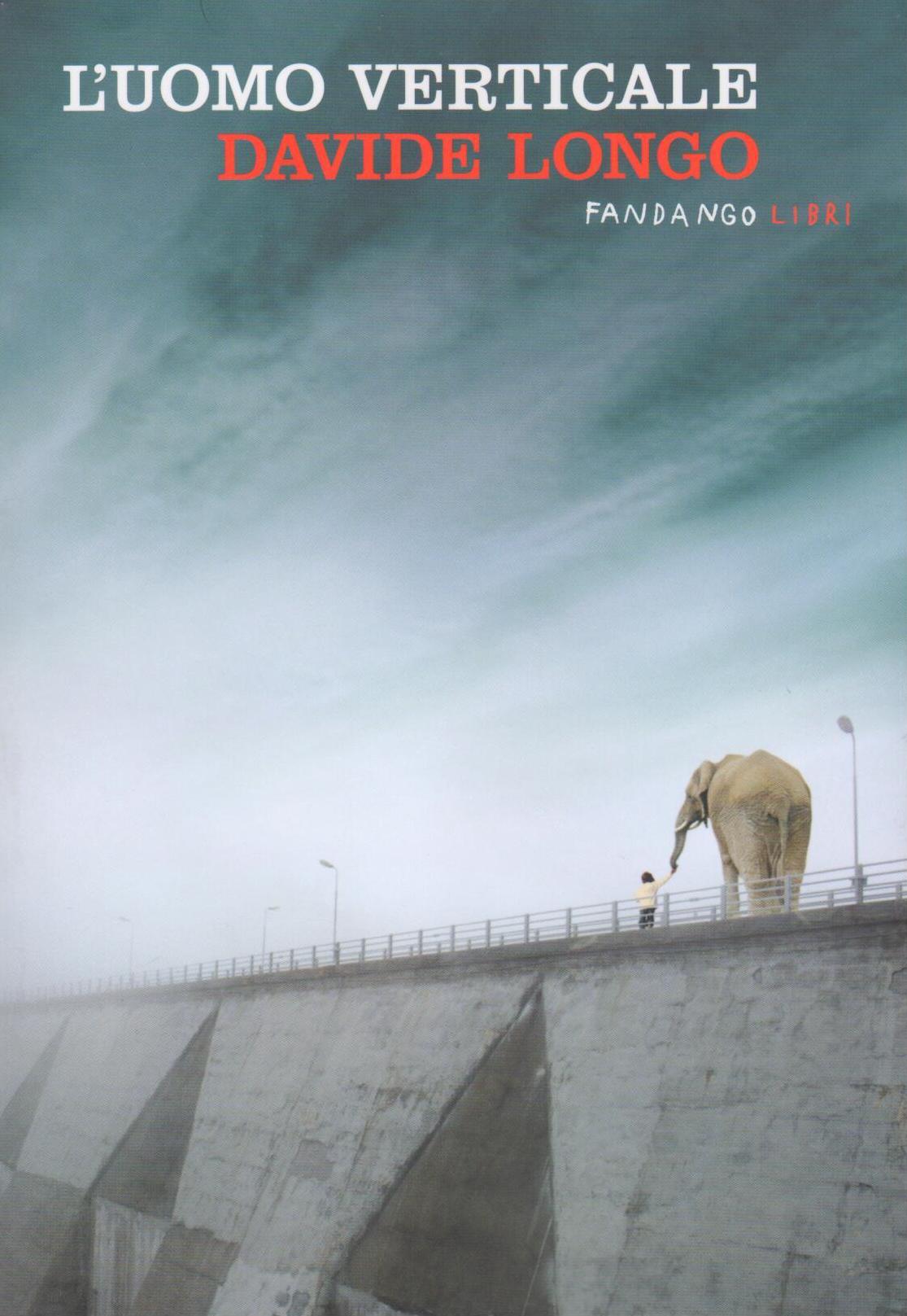
L'Uomo Verticale - Davide Longo

 L'uomo verticale - Davide Longo

What a great dystopian novel. I'm increasingly persuaded that Davide Longo is one of the very few Italian writers able to both write well and actually interest me. L'Uomo Verticale shows us a country literally going to the dogs (unlike many other similar novels that seem to start in a setting already looking post-apocalyptic) and the quest for survival of a father and his improbable extended family. 

Or, if you are familiar with McCarthy and The Road: been there, done that. Half of the ideas of this book are more ore less openly borrowed (and/or they are a tribute from Longo to one of his favourite authors), including the relationship between a father and his child and the desperate attempts to get to the sea at all costs. 

A really good read though. Just not an original one after all.

Monday, 16 December 2019

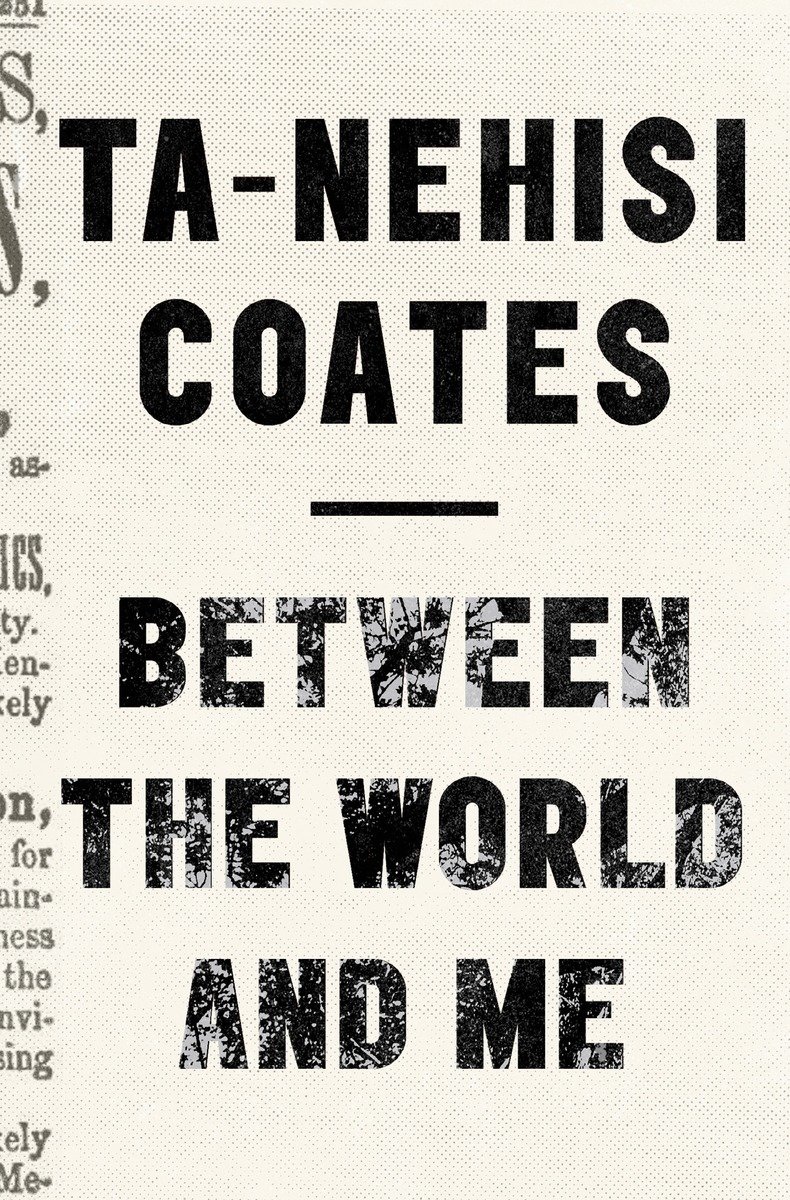
Between the World and Me - Ta-Nehisi Coates

Risultati immagini per Between the World and Me - Ta-Nehisi Coates 

A book that was given to me by two good friends before they moved all the way to Australia. A book I had unsurprisingly never heard of (which happens with plenty of works of fiction, but with the very vast majority of the works of non-fiction). 

This was a painful read, and not a cathartic one. It makes the reader think deeply about the plague that is discrimination (racial or of any kind), and also about the role of parents as educators. Yet, for all the reflections that this book causes, I don't think it will result in me taking any drastic action to change my behaviour or, worse, others'. And that is a big problem. Much like the fact that the audiences who would benefit the most from reading this book and entering the discussion are probably not going to read it.

Friday, 24 May 2019

In Our Mad and Furious City - Guy Gunaratne


I'm kind of surprised I even remember the password to my account. Well, the positive is that, despite the months of hiatus, I don't have a pointlessly crazy amount of books to catch up on because I didn't read that much (not quite sure that's a positive actually, but hey!).

Life, in the shape of an upcoming second child, is getting in the way. And I'm also helping my father-in-law translate his book from Portuguese (a language I don't speak) into English (a language that is not my first).

Anyway, back to a book I remember relatively little about, except that I got it at the IKEA Booker Prize event, and that I thought it was a Northwest London story that was well-written and interesting, but little more than that (if both the plot and the location remind one of Zadie Smith, then your work is really quite likely to pale in comparison). Also, I got it because its author had actually worked at the IKEA in Neasden...

So the overall rating would be "good enough": I liked the kid hoping to turn his life around by running for Brunel (a long shot, but I have great memories of playing basketball there and of their sports centre), and the depiction of the riots in the estate was quite compelling (but even here, nothing too new when one thinks of some of the biggest British books of the last few decades).

Wednesday, 24 May 2017

The Human Stain – Philip Roth

A book that I picked up for a small donation from 1LoveCommunity in Canary Wharf – absolutely lovely place and a really, really, really good book. I saw the cinematic version of The Human Stain when I was still a teenager trying to woo my high-school crush with my intellectual profile. I thought the movie was average at best, and so was the high-school crush at the time.

The novel is objectively a very easy sell with me: an odd kind of “campus novel”, written by one of the greatest American Jewish writers of the 20th century, with a fair bit of racial problems, Vietnam, family violence and mysterious pasts. It also has a lot of sex. Actually, a bit too much of that and of related overconfidence (or overcompensation?).

The Human Stain is probably as good an “American” novel as American Pastoral. At times Dean Silk appears a bit too eloquent and articulate, but then again he probably wouldn’t have been able to live a life like his without exceptional intellectual dexterity. The one thing that bothers me, though, is that I couldn’t picture Faunia as anyone other than Nicole Kidman (the actress who portrayed her in the movie) and I really don’t think she should have had her face. 

Tuesday, 23 May 2017

The House on Mango Street – Sandra Cisneros

I originally had no idea how this random book made its way onto my bookshelves. Turns out it was an old book my wife bought during her college days in the US, then brought down with her to Bolivia, was boxed and shipped to Brazil after her family moved there, and finally found its way to London after she went down to South America on an extended visit. The book has been around, and it shows – it’s covered with foxing stains and its pages seem to hold together by pure coincidence.

I had never heard of it (my bad, as usual, as a self-critical white European male) and had no expectations. Given its size, I figured I could read it during one of my daughters’ rare naps and, for once, did it without reading “around it” on the web beforehand. Judging by its cover, synopsis and vignette structure, I assumed the book would be raw, unpolished and rough, and the read would feel scattered and intermittent. And it was. But the book was also intriguing, well-written and, in a way, eye-opening.

So I’m really glad I invested little more than hour reading this. I have read very little non-white North American literature and this book was a very welcome change – I wouldn’t go as far as saying that it’s one of my favourite books, but, despite its frequent violence, it felt like a nice bit of fresh air. Oddly enough, I also think that some of its stylistic shortcomings (I’m not quite sure vignettes can make for great literature, for instance) were simultaneously some of its most interesting tracts. 

Thursday, 16 February 2017

Cities of the Plain – Cormac McCarthy

Up until a couple of weeks ago, I only disliked McCarthy’s books when I found them too gratuitously violent (Blood Meridian and No Country for Old Men). Sadly enough Cities of the Plain proved that on some rare occasions I might not fall in love with McCarthy’s novels because they can also be, well, average.

The prose is still great and the characters interesting if a bit boring in their stubbornness, but I have two problems with this book.

1. Was it all just about capitalizing on the success of All the Pretty Horses and The Crossing? Cause I really saw no need to bring back John Grady and Billy (despite the fact that they are two of the characters that I loved most in history!) and pair them together – I want my cowboys to be allowed to ride on in the sunset and never be seen again at the end of books

2. John Grady survived countless attacks in the Mexican prisons in All the Pretty Horses and then gets essentially destroyed in a knife-fight by his dead lover’s pimp. Now, I understand hating your enemy affects your judgement (thanks Godfather II), but I seriously would have expected more from one of the coolest men ever…

Wednesday, 27 January 2016

A Brief History of Seven Killings – Marlon James

A book that my boss lent to me to re-establish my faith in the Men Booker Prize after I was forced to read an absolutely pathetic novel – Anne Tyler’s A Spool of Blue Thread, which had been shortlisted for the prize last year – for my office’s book club.

I read the first 100 pages of this book with the same ease with which I had read the opening chapter of The Sound and the Fury (i.e. not a lot, being constantly lost in a prose that was simply too challenging for me), but after that rough start Jamaican Patois started to make sense, at least relatively.

Two characters stood out for me: the girl who runs away from Kingston (whose internal monologues felt like they had been written by Zadie Smith, despite the fact that the very end of her story is rather predictable) and the deceased politician who concludes most sections of the book (his description of the Singer’s illness and death is one of the most beautiful pieces of literature that I’ve read in a while). I didn’t find the book’s violence to be as Tarantino-esque as many reviewers presented it to be. Actually, I found the book violent, but not that violent.

Being nearly 700 pages, at times I felt that James could have got to the point more quickly, but then again he was probably doing it on purpose to offer a more vivid picture of the modus operandi (or vivendi?!?) of Jamaican gangs.

Most of all, the book is a wonderful display of how much impact one musician (the Singer is – surprise! – actually Bob Marley) has had on the life of his own country. It’s also kind of funny to see Marley always mentioned as “the Singer” while Peter Tosh and Jimmy Cliff are called by their names.

Also, because of this book I’ve spent the last 24 hours listening non-stop to the soundtrack of The Harder they Come

Wednesday, 25 November 2015

American Psycho – Bret Easton Ellis


Firstly a sad note: the Books for Free space in Stratford, which gave me faith in mankind just a week ago, is now about to close down. Needless to say, my faith in mankind is vacillating (probably also because the rules for my application for British naturalization are changing, and that means that I have to again start the process essentially from zero).

Moving on to American Psycho: I was reading this book on the tube and feeling really rather ashamed (not embarrassed, ashamed). One thing is the glorification and  aestheticization of violence, but this is just gratuitous (and fairly disgusting). And when the author isn’t talking about chopped limbs and tortured people, he is talking about matching his Fratelli Rossetti shoes with Ermenegildo Zegna trousers – not exactly the most exciting topic of discussion for a guy who would love to spend his life in jeans and t-shirt. Bateman is meant to be Psycho’s Norman Bates's heir, but falls so very short (and also lacks any kind of self-criticism: how can a guy who despises homeless people so much love Phil Collins, the author of Another Day in Paradise?!?)…

Most of all, I am not quite sure if Ellis meant to highlight the protagonist’s mental self-destruction or if he just has no idea what he is talking about, but reading about the Beatles’ You Can’t Always Get What You Want is just too painful to describe. Because of The Big Chill I often say I’d like that song played at my funeral, but I’d like to think that, no matter how old and senile I will get, I will never think that Lennon and McCartney wrote the song. 

Sunday, 20 September 2015

No Country for Old Men – Cormac McCarthy


This was the first novel by McCarthy that I read, and I did so a few months after the movie came out. I read it on one of my trips to the US to visit my then-girlfriend-now-wife as she was studying in Pennsylvania (not at UPenn like most people think, but still at a pretty good college, by the way, and on a massive scholarship – so take that).

I remember not being impressed, and having a fierce discussion about this with a friend of a friend I was visiting in Princeton. He essentially told me I was an idiot and that No Country for Old Men was far from being one of McCarthy’s best works and that I had no right to speak cause I hadn't read any of his other books. He was partially right. He was also a massive jerk (funny how those specimen often seem to congregate at great universities).

I guess I just didn’t see much of a point in the book. The deep reflections of the sheriff are just a bit stale for me. And Chigurh is just a bit (?!?) much. On the way back from that trip I tried watching the Coen brothers’ movie. Granted I was on a plane and purists will say that’s no way to watch a movie, but I lasted until Chigurh stole the car in the first 15 minutes of the film before deciding it was better to stop it and to snooze for a while trying to prevent jet-lag (something which I fully knew you can’t really do anyway).

Thursday, 17 September 2015

La Pelle – Curzio Malaparte

There is an autograph in my copy of Malaparte’s masterpiece. Not his, it’s actually John Mayall. Random, I know, but after a concert at Ronnie Scott’s this was the only thing I had that could be autographed by the living legend.

This is a book about, well, not exactly Fascism, but the effects of the Second World War and the fight alongside the Americans against Fascism. The funny thing, however, is that Malaparte himself – a wild anarchic character – was a Fascist of the first hour before becoming disillusioned with the regime.

This is, essentially, a book about suffering. About a country that has been “erased like a blackboard, rebuilt erased again” (thanks James Earl Jones) and is written by someone who, quite clearly, still loves it and, most of all, still loves its people. It’s written with a piercing style that shows the sorrow of a man for the plague that has hit society around him and who has given up on the souls of his people and can only hope that they will manage to save their skin (“la pelle”). 

Sunday, 13 September 2015

Disgrace – J.M. Coetzzee


I somehow have the feeling that this book is about actual life in South Africa much more than any of the works by Nadine Gordimer.

No matter how far he has fallen, David always seems to find a way to reach new lows. Despite the fact that so many of his actions are condemnable, the reader (or at least, in my case, the white reader with a sheltered life) wants his misery to end well before the invasion of Lucy’s farm. And the depiction of Lucy’s apathy after the robbery and rape is absolutely paralyzing. I am not quite sure whether things will improve for David after the end of the book, I’m afraid not – and surely things are going to spiral downwards for Lucy.

Notwithstanding its uncontainable grimness and harshness, or possibly because of that, this is one of the best novels I’ve ever read.

Friday, 11 September 2015

Beloved – Toni Morrison

A book that was left behind by a neighbour. Had it not been for this fortuitous find, I would have probably read Song of Solomon or Jazz before reading Beloved.

For once, I don’t quite know what to say about this book, as I have the feeling that, being a white European, all my comments would be out of place. But let’s try anyway (after all, if Spike Lee allowed himself to presumptuously direct an awful movie about the Italian Resistance, I can write a few lousy lines on a book about slavery, after my little disclaimer).

Beloved is undoubtedly very touching, but, as has been happening for years with me, I have my problems with magical realism. To put it simply, I just want realism, in particular when what is being described is a reality that I’m not familiar with. I’m probably too set in my ways and analytical, but I want to know who Beloved actually is (I want Sethe to believe she is her daughter, but I want an omniscient narrator telling me where she’s actually coming from), more details about the schoolteacher, and a clearer description of Paul D’s long walk.

I am really glad I’ve read this book, I just don’t think I’ve made the most it. 

Sunday, 6 September 2015

All the Pretty Horses – Cormac McCarthy


It’s like a good Western movie from start to finish. The hero leaves town to find his true self, others get the hero in trouble, he narrowly escapes, he gets himself in trouble because of a woman, he narrowly escapes, he then looks back at his life, learns his lessons, and rides on.

Despite being really rather predictable overall, this is a great book. The section set in the prison is as good, impressive, and nerve-wracking as it gets. Yet, in spite of all this, I pretty much refuse to read the other books of the Border Trilogy, at least for the time being, and why? Simply because I am afraid they’ll be virtually identical to All the Pretty Horses, and the magic of this book for me will be lost.

Lord of the Flies – William Golding


The daring teacher of my English B IB course (i.e. English for the linguistically impaired) had us read Golding’s book for her class. Granted, it did take most of us a couple of months to finish it, but we did manage to get some interesting class debates going – despite the fact that our English at the time left a lot to be desired.

The book has every right to be considered one of the greatest ones of the last century, it’s just not one of my favourites. I’m not a fan of allegories depicting the darkest aspects of human nature (I am pretty aware of the fact that mankind is awful without needing authors to tell me that). I am even less of a fan of works that seem to draw a bit too much inspiration from Christianity...

And, in all honesty, I would rather see a book like this end with total and utter destruction, rather than the – relatively speaking – happy ending.