Books I've read. Books that have had an impact on me. Books that didn't, but that many believe should have.
Wednesday, 10 September 2025
The Stolen Bicycle - Wu Ming-Yi
Tuesday, 7 May 2024
Flesh and Blood - Michael Cunningham
I read this book because I couldn't get my hands on Cunningham's latest novel.
Sunday, 17 December 2023
Portrait in Sepia - Isabel Allende
Tuesday, 17 October 2023
The World According to Garp - John Irving
Sunday, 16 July 2023
Snow - John Banville
Friday, 26 May 2023
Il Colibrì - Sandro Veronesi
La Traversata Notturna - Andrea Canobbio
I guess that when you don't have many ideas, you can write an autobiographical book.
I guess that when you aren't the best of writers, you can borrow from other authors' approaches and styles (hello Perec!).
And I guess that when you have interesting sources and artefacts (the family heirlooms pictured in the book are often the most interesting parts), you might as well use them.
This is actually an OK book; I'm glad I've read it as it's an interesting perspective on a city - Turin - that I know quite well. I just think that it really shouldn't be considered one of the best Italian books of 2022, but since that's apparently the case, mala tempora currunt,
Wednesday, 24 May 2023
Lessons - Ian McEwan
Friday, 10 February 2023
Absalom, Absalom - William Faulkner
At a time in which I only had a few books left on my bedside table, I picked this one up. After all, Faulkner did win a Nobel prize and I couldn't just dismiss it on the basis of having struggled with The Sound and the Fury.
Well, I struggled just as much with Absalom, Absalom!. Though I remember its plot vaguely more (most likely just because I've read it more recently) I found again the charm of the American South to be lost on me and, even more, the prose to be often completely inaccessible.
In the end, I've decided that Faulkner is an author that makes me feel silly as, no matter how fluent and articulate I think I am, his brand of English remains largely impenetrable for me.
Il Tempo Migliore della Nostra Vita - Antonio Scurati
The typical book that my family keeps aside for me because "it's on Italian Fascism".
Problem is: half of this book is pretty much my PhD thesis (which I wrote - but not published - way before, by the way). Better written, with much more literary fluorish (though with no historical embellishment) than my work, and ultimately read by a lot more people than the dozen unlucky academics and friends who had to read my dissertation. Still, the overlap was a bit too signifcant for me to find much pleasure in the sections on Leone Ginzburg.
And the other half was a beautiful portrayal of family life in Fascist Italy. Problem is: there are so many of them around, and I'd always pick the family lives of unknown peasants over the family lives of people who just happened to be lucky enough to have a grandson who would go on to become one of the most acclaimed Italian writers and one who (unlike me!) has actually managed to re-ignite the interest of many Italians in their country's own past.
So, this is arguably a vanity project, but one that is extremely well-written and worthy of a read, even when half of the book doesn't reserve any surprises (for me, at the very least).
A Tale of Love and Darkness - Amos Oz
I like Oz's novels, I like Oz's children books, and I was clearly bound to like his own autobiography.
It's long, and that's undeniable. It also often repeats itself, but that's to be expected with a non-linear timeline for some 500-odd pages. Yet, it's fabulously written, and the history (both the capitalized version, and the family history) depicted in the book is obviously fascinating. I don't think I could have coped with 100 more finely printed pages, but man I'm glad that I've read this book.
And perhaps I should watch Natalie Portman's movie version too...
Tuesday, 7 February 2023
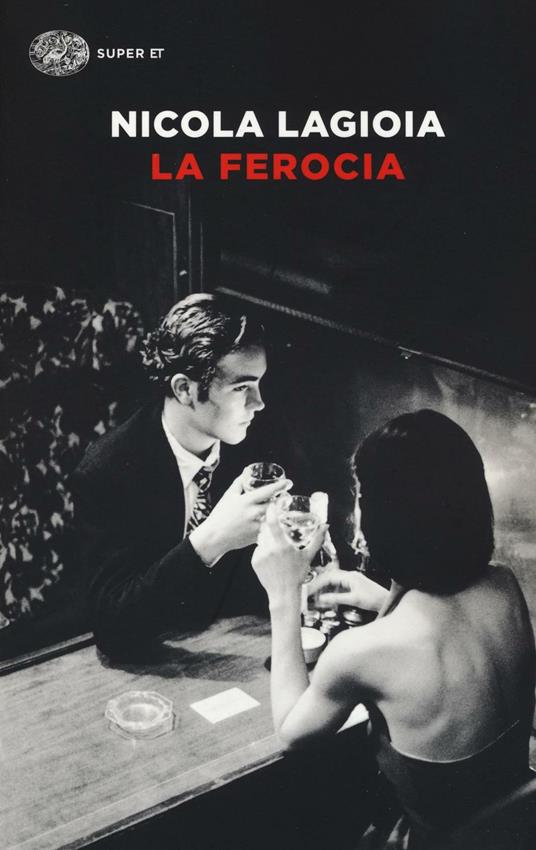
La Ferocia - Nicola Lagioia
Well, let's be honest: I was bound to hate this book and to find reasons to hate it from the start, as I first heard it mentioned on the pointlessly pretentious podcast of a kid from my hometown, who was salivating at the thought of Lagioia's talent with words.
Yes, Lagioia writes well. Yes, Lagioia knows it. But does he need to remind the reader about it with countless pages of heavy-handed metaphors?
This book left me with nothing. I would have probably liked the story had it been written by someone not so completely in love with himself. Instead, I only have very vague recollections of the plot.
Yet, I'm sure there'll be plenty of people who'll praise this novel because they feel like they have to. And the wonderful local podcaster is probably one of those. Here's to you "Radical Nik", may the world of vanity publishing allow you to establish yourself as the great author you are (but possibly next time you compare yourself to Don DeLillo, do it with a bit of irony...)!
I Fratelli Michelangelo - Vanni Santoni
Apparently there are still authors in Italy who a) know how to write, b) have something to say, c) don't spend every other page congratulating themselves for being "oh so very good and look how elaborate are my metaphors" (more on that, and on Nicola Lagioia, later). Seriosuly, the overlap between a) b) and c) is really rather minimal.
This is a book that my wise mother suggested, and it was - as often happens - a really good piece of advice. At the time I hadn't read such an enjoyable Italian book since Piperno's Il Fuoco Amico dei Ricordi, and I Fratelli Michelangelo might be partially responsible for my decision to have a road trip of sorts around Tuscany with my family in a few weeks.
I loved it because of the depth of the characters and the breadth of interests that Santoni quite clearly has, but it's also a book written by an author who is still a bit raw, or at least someone who quite clearly didn't know how to end an ohterwise remarkable novel.
Then again, when I was young an Italian rap band used to sing "who cares about being Zucchero [Italian singer with raspy voice, btw] when Joe Cocker is already around?", and one can definitely ask the same in this case: is there a point to a novel like this, when Franzen wrote The Corrections way before? I'd say there is, but plenty of people would probably disagree.
Sunday, 29 December 2019
Purity - Jonathan Franzen
Saturday, 8 September 2018
East of Eden - John Steinbeck
One of the best swaps I've ever made at Alpha Books - getting rid of three paperbacks for which I had little time and getting a copy of East of Eden that at most had been flicked through by its previous owner (despite a lovely message from a friend on its first page).
I hadn't yet read this novel, despite of my passionate love for Steinbeck, because I was really rather sceptical of its biblical allegories. Granted, I could have done without that, but this book remains so very beautiful.
For me East of Eden doesn’t have the literary significance of The Grapes of Wrath, and Adam Trask cannot compete with Tom Joad (chiefly because he’s just way, way too good). However, it is not too far behind, thanks to its epic family (hi)story and, crucially, the utterly fascinating secondary characters – the evil Cathy Ames, Samuel Hamilton (who, as far as old wise men go, is really second to none), and also Charles, who I was really sorry to see disappear completely after Adam moves west.
And then there is Lee, who might be the best character Steinbeck ever created and who encapsulates so many of Steinbeck’s defining features as a writer – his dry humour, his wisdom, his awareness of the struggles of common people and their desire to do well thanks to their intelligence and skills.
Having finished the book, I really asked myself why my generation (at least in Italy) was raised thinking of Hemingway as the greatest American writer of the 20th century…
Sunday, 10 June 2018
St Urbain's Horseman - Mordecai Richler
Oh, how long since I had last read a Richler novel. Sure, my former Canadian teachers presented him as an awful human being (years before my time there, he came to give a guest lecture at our school and left everyone rather unimpressed), but in terms of North American Jewish writers for me he's right up there with Roth and Bellow.
St Urbain's Horseman doesn't have the epicness of Solomon Gursky Was Here or the comedy and mystery of Barney's Version, but it remains an impressive book. Large sections of the book are set in a London that I don't find too drastically changed in nearly 50 years. The parts about the legendary horseman are wonderful portraits of Canadian life in the first half of the 20th century, and the idea of him looking for Mengele (though not even the narrator actually believes that, probably) are the work of a genius.
Without the Jewish elements I probably wouldn't have enjoyed this book this much. But the fact is, the Jewish elements are very much there and so, unsurprisingly, this book is a winner for me.
Friday, 29 September 2017
Mother’s Milk – Edward St Aubyn
Friday, 3 March 2017
The House of Spirits – Isabel Allende
Tuesday, 16 August 2016
Radetzky March - Joseph Roth
Ah, Joseph Roth and the finis Austriae! Does it get any better than that? Well, in a way it does, considering that my favourite Roth novel (or rather a short story - The Legend of the Holy Drinker) is actually set in Paris...
Radetzky March is a wonderful novel (despite the fact that it took me a week to finish it because of the impending fatherhood and, erm, the Olympics...) and one of those books that I wish I could persuade my students to read.
Interestingly, Roth ultimately seems to love his characters despite the fact that more often than not these have to be bailed out by the Emperor, and that their careless actions lead directly or indirectly to the death of a number of people throughout the book (then again, the atmosphere surrounding the duel in the first half of the book reminded me of Ridley Scott's The Duellists so those deaths are justified!).
Speaking of the Emperor and his powers - the chapters directly related to his ageing are possibly the best-written of the book, but (speaking as a historian...) Roth seems to conveniently forget the fact that by 1914 the Austrian one was ultimately an empire hell bent on starting a war with Serbia (although not with the whole of Europe).