Showing posts with label Parallel Plots. Show all posts

Tuesday, 14 October 2025

Deluge - Stephen Markley


Wowzer. 


One, at the very least, has to appreciate the audacity of Markley in even contemplating writing a book like this. I had to renew my library loan, as I couldn't quite finish it within the canonical two-week loan period. 

What makes this book different from so many other dystopian novels (and then again, is the best term really "dystopian"? the reality of the book feels like an increasingly possible near future) is that it doesn't start with the world being in a state of absolute chaos recognizable even by the most distracted readers; rather, it starts with our current world and our utter inability to understand how badly we are messing it up, and the descent into absolute disaster is gradually described by Markley. 

Of the various plots that run in parallel, some are obviously more compelling than others, and some are more original than others (and within them, there are some passages that are not particularly surprising, and others in which you see the author and humanity unleashing their creative and destructive potential at its finest - the Weathermen being a perfectly fitting example). 

It would have been an almost perfect book had it not been for the almost Hollywoodesque ending. I understand the author needed to sell a few more copies, but the final chapter felt a bit too hopeful and optimistic after all the drama of the previous 1000+ pages. 

Tuesday, 16 September 2025

Unsheltered - Barbara Kingsolver


Yet another author that I read because of my mother's recommendation (though admittedly she did win the Pulitzer, so I don't think my mom can be credited with discovering Barbara Kinsgolver!). 

Despite the fact that some of the more romanticized passages about the house and the locations of the novel bored me a bit, this was a truly pleasant read. 

Surprisingly, even the 19th century part of the plot kept me entertained, and brought to life the scientific debate of the time in a much more persuasive way than many other works of fiction. The optimism in the face of uncertainty that transpires through much of the contemporary part of the plot was at times a bit overdone for me, but hey, I acknowledge that the author might need to sell some books (and that she might feel optimistic about life in general...). 

Sunday, 11 February 2024

Anxious People - Frederik Backman


This is the second Scandinavian humorous novel revolving around suicide and loneliness that I've read. 

I'm willing to believe that the theme can be given a humorous twist, but I'm not willing to concede that this particular novel is funny (or maybe I just don't get Scandinavian pseudo-dark humour), or deep (it is the sort of novel that might satisfy an urge for people who want to feel that "life is beautiful after all" and watch the Netflix series afterwards). 

Even in this case, the long series of very short chapters might work for the busy people who read a book in 5-minute instalments while sipping on a flat-white, but not for snobs who consider themselves semi-serious readers (like me...). 

Also, my mom doesn't quite hit all her book recommendations. In particular when she starts them with "I haven't read it, but the critics are saying...". Don't trust the critics!

Tuesday, 7 November 2023

Perspective(s) - Laurent Binet

My boss gave me this book as she believes I can read French well and easily. That's a lie, at least partially. It had been years since I had last read anything more than a page in the language, and being able to read a whole book was a great ego-boost. Sure, being familiar with the setting helped, but I’m still rather happy to have read a whole novel in my (non-existing) fourth language.

Before moving on to what I liked about it, let me mention two things that I wasn’t entirely sold on, in the most classic of “feedback sandwiches”.

1. The premise: I cannot suspend my belief enough to buy into the author finding these letters in an antiques shop. They wouldn’t be just “yellowed” with time, they would be falling to pieces. They also wouldn’t offer so complete an account (also: what conspirators save their entire correspondence?!?). I do realize it’s a bit unfair of me to compare a good book like this one to one of the greatest works of the 20th century, but in Il Nome della Rosa Umberto Eco frames everything so much better, openly admitting that he had to do a lot of further research and put in much guesswork in order to fill the huge gaps left by the sources he had stumbled upon.
2. Anachronisms: a lot of things went over my head because my French is what it is, but at times I felt like 16th century Italians wouldn’t really talk/write like that. Often this was just a feeling of mine, but at times it felt more tangible (like when Maria writes that she wouldn’t want to run away from Florence like a “bohémienne”)

Having said that, I loved the characterization of Vasari. I find him unlikeable, but he steals the show. And the many snide comments about other artists perfectly highlight how he (and his biases – positive and negative) influenced the way in which I, and the world in general, think about the art of the period. Michelangelo is the one I could have done without, as I think it’s a bit of an easy escamotage to have the most known name in the story act as the Deus ex machina pretty much raiding Florence from Rome.

The book’s biggest success for me is the way in which it made me long for Florence. It perfectly captures the spirit of the city (and often of the time) in what is probably the most sincere declaration of literary love for the Italian Renaissance that I’ve come across since reading Ali Smith’s How To Be Both almost a decade ago.

Friday, 26 May 2023

Life: A User's Manual - Georges Perec


One of my dad's favourite books, and one that he has re-read recently. 

While I can understand why it was popular "back then", I really don't think it has aged that well. The idea of short stories and anecdotes held together by a red thread (in this case the building itself and some of the people who live/have lived there) has been done a lot, and I find many contemporary authors' approaches (Strout above all) much better. 

Style above everything - much like with many French writers of the period - works wonders for many readers, just not me in this case. 


Tuesday, 21 February 2023

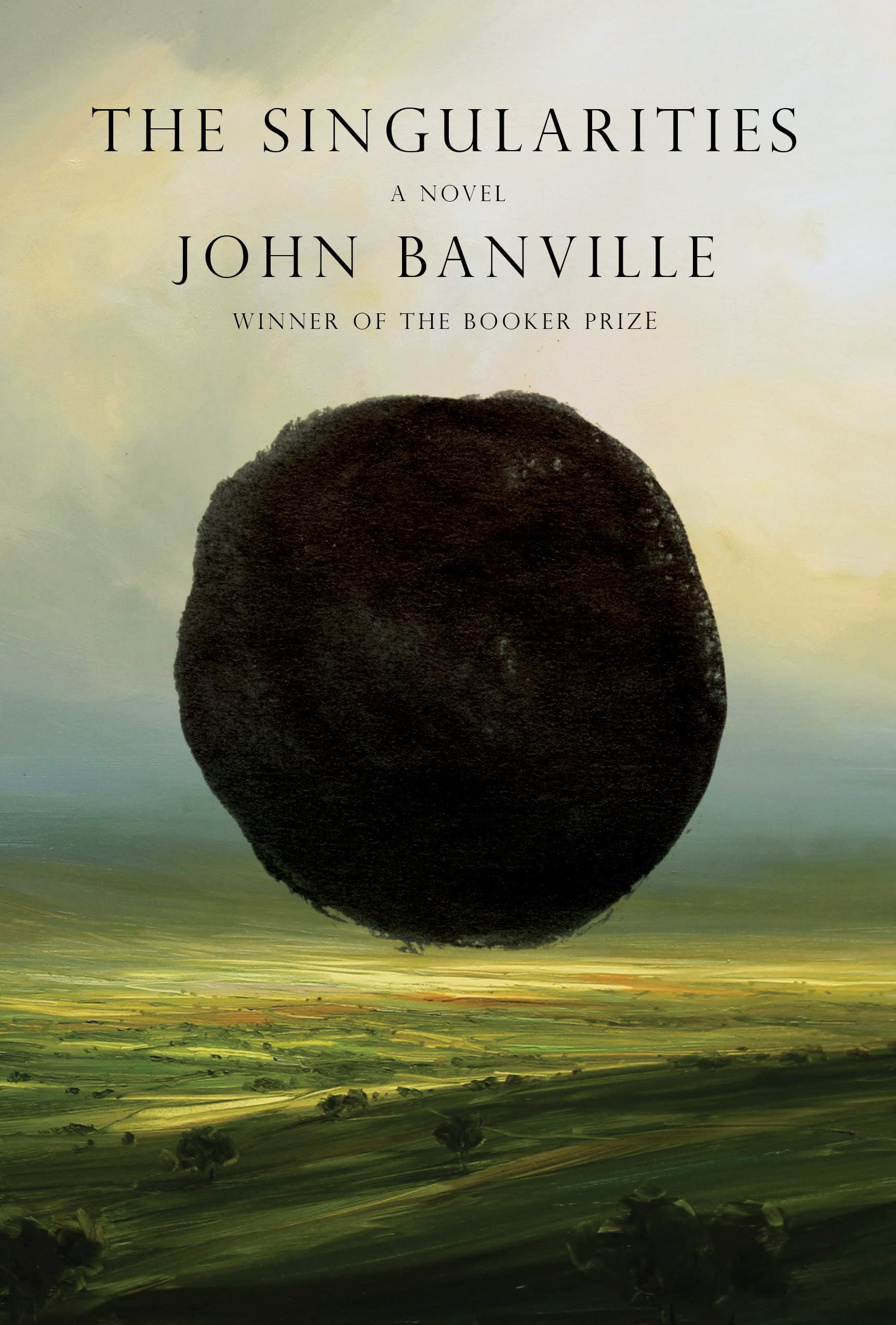
The Singularities - John Banville

 The Singularities: John Banville: Amazon.co.uk: Banville, John:  9780525655176: Books 

I've only read a couple of Banville's books, and I think that to make the most of this novel one ought to be much more familiar with the author's body of work (with apologies to Alex Clark of The Guardian who claims that neophytes will enjoy the book just as much). 

I did catch the allusions to Shroud, and those pages made my interest peak, but besides that I struggled with a book where beautiful prose is omnipresent but action is ultimately lacking (particularly surprising considering the criminal past of the first character to enter the novel). 

And I was also left wondering if having a novel ending without answering (m)any of its open-handed questions is a deliberate choice or a sign of an author not at his absolute best (though, to be fair, Banville has set the bar quite high for himself!).

Friday, 10 February 2023

Olive Ketteridge - Elizabeth Strout

 Olive Kitteridge: A Novel in Stories: Elisabeth Strout: Amazon.co.uk:  Elizabeth Strout: 9781849831550: Books 

Before reading my first book by Elizabeth Strout, every time I looked at the cover page of one of her works I would immediately mentally dismiss it as "most likely well-written chick-lit". Yes, I'm a macho macho man, and like many of us I'm very often wrong. In this case, I terribly, hopelessly, so very deeply wrong...

Strout is not just good, she's great. The way in which her short stories combine to make a touching novel is superb. And the fact that she makes the reader grow fond of an idiosyncratic and in many ways unlikeable character like Olive is impressive. 

And whoever decided to cast Frances McDormand for the TV series is an absolute genius, as she was born to play that role.

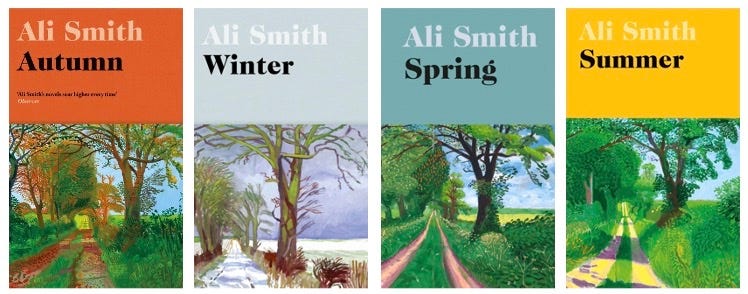
Seasonal Quartet - Ali Smith

Ali Smith's Four Seasons. Writing through time, real and… | by James  Mustich | Curious | Medium 

Funnily enough, the Southwark electronic library has a e-copy of the first two books of the series, but I had to go to the actual library (exotic!) to get the hard copies of the last two. 

With hindsight, that was somewhat fitting, as I fell in love with Autumn and Winter, thinking of ways to write to Ali Smith to tell her how impressed I was with her decision to tackle events "in real time", take such a clear stand on so many social issues, and express (yet again) her love for Italy and Italian culture. 

Said love started to subside by Spring, and ultimately Summer left me rather unsatisfied. Much like had happened with Jonathan Coe's Middle England I felt that Smith couldn't quite manage to finish with a "bang" so, to avoid finishing with a "thud", she decided to finish with something that is safe and whose vibe (though - in her defense - not its details) is largely predictable. 

Also, that should teach me about reading four books from the same author in quick succession. I had grown tired of her writing style by the end, and I really wish that hadn't happened.

Tuesday, 7 February 2023

54 - Wu Ming

 54: Amazon.co.uk: Various authors, Ming, Wu: 9788806220754: Books 

Dad doesn't read as much as mum, and as such doesn't recommend nearly as much. Of the two books I read on his advice, I found one borderline unreadable and the other an incredible work that gave me a little bit of faith in Italian literature. This is the latter of the two. 

Wu Ming is a writing collective that doesn't seek celebrity. It seeks good writing, and man do they achieve it with 54. 

I was skeptical of a story involving Cary Grant (I didn't have a great experience with Stan Laurel in Triste, Solitario y Final and I think that affected me), but his plot was beautifully woven into the other parallel stories. Plus, I got enough hidden references to feel smug. 

And the stories of former partisans, fighters and comrades trying to come to terms with the post-war Italy they had contributed to create were full of pathos and unusual insights. 

Easily one of the best books I've read in 2022, and one that lifted my mood this last Christmas break.

Tuesday, 29 October 2019

London Belongs to Me - Norman Collins

Image result for London Belongs to Me - Norman Collins


One of the last few novels that I had bought with my job's "book allowance" two years ago. And one that had remained on my bedside table for a long, long time because of its scary size. And yet a novel that, once started, I was able to read in a few days as the prose flows so effortlessly, and the South London setting makes the plot immediately interesting for me.

London Belongs to Me is a wonderfully ordinary story. It tells of the various families inhabiting a house and their daily challenges. It tells, ultimately, of London. There is (British) humour aplenty, there is drama and there is love.

Who knows, maybe if it had been published in 2017 I would have simply written it off as banal, but the WWII aura around London always goes a long way with me, just as it did when I read The End of the Affair.

Tuesday, 30 January 2018

Cloud Atlas – David Mitchell


A 30p investment at the Barbican library worth – at the very least – every penny!

Jokes aside, Cloud Atlas was a rather enjoyable read, but also a very uneven one. Some of its chapters were brilliant (Timothy Cavendish and his misadventures in the nursing home, Massa Ewing sailing in the Pacific and facing death, Robert Frobisher writing the Cloud Atlas Sextet), while others were, well, not so brilliant.

Luisa Rey’s story reads like little more than a Tom Clancy novel (if you are looking for Californian greed and corporate aggression I think you are much better off opening a token Ellroy novel), the interview to Sonmi-451 would probably leave Vonnegut of Dick rather unimpressed, and I’m not exactly sure of where I stand on Sloosha Crossing as, despite me being a pseudo-bilingual (if not trilingual) reader, I really struggled with the imagined dialect of the future…

It is a best-seller after all, but one that I’m really glad to have read (although it’s not going to enter my list of favourite books anytime soon).

Friday, 29 September 2017

Fragrant Harbour – John Lanchester


A book that I got from the book swap shelf at Stratford Station – the only one I’ve ever managed to pick up from there, but it was worth it! I originally grabbed it for my mom, as she had liked Capital more than I did, and only read it after she did and because of her very strong recommendations.

Fragrant Harbour has many of the traits of the standard best-seller: an “unusual” love story, international intrigue, a look at the blurred lines between orgranized crime and top-level impresarios and plenty of others. The thing for me was that, being set in Hong Kong, it was both interesting from an historical point of view and very different from a standard best-seller.

Predictably, the book’s bottom line is that there are colonialists with a heart (and also a sense of humour and self-criticism) and entrepreneurs who are far from being evil capitalists. This is not exactly the most unusual of messages, but it is delivered with grace. And the appearance of Tom’s nephew is something that really makes one hopeful that good people can overcome drunken British hooligans…

With Capital I had the feeling that Lanchester could have made so much more given the rough material he had at his disposal, but I think that with Fragrant Harbour he managed to get the most out of his plot and research – or maybe I’m just way less familiar with Hong Kong that I am with London!

Wednesday, 29 June 2016

Freedom – Jonathan Franzen

One of those books that have been with me for quite some time – to be precise since June 2011, when a student living in my dorm left it behind.

Much like with The Corrections, Franzen does life in Minnesota (in particular the life of frantic women in Minnesota) oh so very well. The problem for me, however, is that I somewhat feel like he doesn’t do life in NY for a cool musician or life in DC for an environmentalist nearly as well.

The chapters authored by Patty are wonderful, the others slightly less so. But going back to Minnesota, the clash between most of the locals and the Berglunds reminded me of the Brexit debates that we are seeing pretty much all over England right now (except in London, because, you know, people kind of like us continentals over here!).

Maybe I wouldn’t have enjoyed reading about Patty so much had she not been a basketball player, but the hypothermia trick is pure genius and is something that I should definitely try out if I ever screw up quite badly with my adored wife. 

Tuesday, 21 June 2016

The Closed Circle – Jonathan Coe


And for once a book that my aunt gave me in 2001 and that it took me 15 years to read.

And for once a book by Jonathan Coe that I liked, but not so much.

Probably the events described by Coe were just too recent to be observed with his normally hilarious humour, but I found The Closed Circle to be a bit too sad and bleak. Also, too much of the action takes place in London (it’s just more interesting when Coe talks about the Midlands). And lastly, even though the book has a number of Coe’s customarily dramatic plot-twists, these are just a bid bland (if not stale) if compared to the ones of The Rotters’ Club and What a Carve Up!

The Closed Circle is ultimately an interesting portrayal of Britain’s recent history and the problems of Blair’s (and the former director of my school’s!) Third Way, but it’s just not Coe at his best (or maybe the 70s were a lot more fun than the 90s, or maybe 18-year olds are a lot more fun than 40-year olds, or all of the above!)

Monday, 23 May 2016

Suite Francaise - Irène Némirovsky

Bad historian (yet again) I had never read anything by Irène Némirovsky until my mother decided to invest a cheeky pound at Oxfam and buy me a copy of this novel.

Which, in my view, is actually two novels of extremely uneven quality. On the one hand, Tempête en Juin is an unusual portrayal of a defeated nation and its weaknesses, but on the other hand Dolce is a fairly boring and uneventful description of life in the countryside in occupied France with romantic overtones (seriously, ask Fenoglio how to write a novel about Nazi occupation and its impact on the countryside).

Of all the parallel plots that interlink in Tempête en Juin, the story of Philippe Péricands and “his” kids is breathtakingly beautiful in a way that only French stories about children of the 40s and 50s can be (Les Choristes, Au revoir les enfants), and is a reminder of how unstable the lives of troubled youth at the time could be, very much like in Les Quatre Cents Coups.

The one thing I struggle to understand though, is how Némirovsky managed to have an early draft of the two pieces of the Suite that was already so polished – had I been fighting against time like she was, I think I would have desperately tried to finish a very messy first draft of the whole book before allowing myself to re-read it even once. But then again, I’m not a great writer…

Monday, 16 May 2016

The Casual Vacancy – J.K. Rowling

I’ve only read one Harry Potter. That makes me an awful human being in the eyes of many, but that also means that I’m not disappointed at the lack of magic in this book by J.K. Rowling.

The Casual Vacancy is daring but enjoyable. Its characters for one reason or another are mostly unlikable (maybe with the exception of the Walls and of Andrew?) but remain interesting. The plot is not something that leaves the reader on the edge of the seat – I mean, these are local elections after all… – but the novel is quite an acute portrayal of contemporary Britain.

So in all fairness I think J.K. Rowling should be given credit for writing this book (and for making a number of points that are surprisingly and commendably political). It was really quite good. Had it had a bit more irony or humour in it (nothing really brought a smile to my face, except maybe for old and drunken Samantha snogging teenage Andrew) perhaps it would have even been “really” good…

Wednesday, 27 January 2016

A Brief History of Seven Killings – Marlon James

A book that my boss lent to me to re-establish my faith in the Men Booker Prize after I was forced to read an absolutely pathetic novel – Anne Tyler’s A Spool of Blue Thread, which had been shortlisted for the prize last year – for my office’s book club.

I read the first 100 pages of this book with the same ease with which I had read the opening chapter of The Sound and the Fury (i.e. not a lot, being constantly lost in a prose that was simply too challenging for me), but after that rough start Jamaican Patois started to make sense, at least relatively.

Two characters stood out for me: the girl who runs away from Kingston (whose internal monologues felt like they had been written by Zadie Smith, despite the fact that the very end of her story is rather predictable) and the deceased politician who concludes most sections of the book (his description of the Singer’s illness and death is one of the most beautiful pieces of literature that I’ve read in a while). I didn’t find the book’s violence to be as Tarantino-esque as many reviewers presented it to be. Actually, I found the book violent, but not that violent.

Being nearly 700 pages, at times I felt that James could have got to the point more quickly, but then again he was probably doing it on purpose to offer a more vivid picture of the modus operandi (or vivendi?!?) of Jamaican gangs.

Most of all, the book is a wonderful display of how much impact one musician (the Singer is – surprise! – actually Bob Marley) has had on the life of his own country. It’s also kind of funny to see Marley always mentioned as “the Singer” while Peter Tosh and Jimmy Cliff are called by their names.

Also, because of this book I’ve spent the last 24 hours listening non-stop to the soundtrack of The Harder they Come

Monday, 2 November 2015

Capital – John Lanchester


A book that my mom read in translation, than found among the remainders in a London bookshop and bought for me. I rarely read contemporary best-sellers – partly because I enjoy feeling different, partly because when they are good (as in this case) they can be captivating, entertaining, and pleasant enough to read, but very rarely great.

Capital is, much like so many recent British novels, about the lives of a number of urban individuals and families from the most diverse backgrounds and how they are brought together by an event or another. Problem is: Lanchester is not Zadie Smith and his story – for catching that it is – ultimately lacks the kind of irony and acuteness that Smith normally has.

Capital hits all the right notes in a way that is so perfect that it looks staged: of course the reader feels warmed by Freddy Kamo’s enthusiasm, Smitty’s memories of his youth with his grandmother, or Zbigniew/Bogdan’s pursuit of Matya – but it often reads as if Lanchester is only ticking boxes and going through the motions. Also, to make sure that the majority of the readers feels happy by the end, all stories either have positive finales or at least finales with a significant hint of hope (the possibility of a post-Mugabe Zimbabwe and redemption for former City alpha-male), maybe with the sole exception of Smitty’s former assistant (quite a secondary and dislikable figure anyway). However, I do hate siding with the majority on anything (and books in particular!) so I will say that I have been entertained by Capital, but was left with little more than that.

That said, maybe, my impressions would have been different had I read this book as we were house-hunting last year and trying to understand the market value of the places we were looking at…

Sunday, 27 September 2015

Ti Prendo e Ti Porto Via – Niccolò Ammaniti


My biggest high-school crush, the one who, quite literally, crushed my heart, gave me this book. It wasn’t even my birthday. I thought it meant she was mine. I was clearly wrong.

Probably because of the mood I was in as I read the book, this is my favourite Ammaniti novel. It does have some gory pulpy sections (like the idea of throwing a radio in a bathtub to electrocute a teacher – something not even the most sociopathic bully would dream of doing, hopefully), but they are few and far between so actually end up being just funny interludes.

Of the two main male characters, one is clearly a jerk, but the other is absolutely adorable in his sadness and his desire to change his life around despite his very young age. Back when I read the novel, it gave me hope for both Italy and Italian literature. Worry not, in both cases I’ve lost most of it by now.