Thursday, 2 June 2016

Norwegian Wood – Haruki Murakami

The first book from my office’s book club that I actually bother writing about. And why is that? Because over the years I’ve heard a few people too many talking about Murakami as if he was a writing god.

With every passing chapter of Norwegian Wood I kept on thinking about Irwin (from Alan Bennet’s The History Boys) handing essays back to his students: “Dull. Dull. Abysmally dull. A triumph… the dullest of the lot… I didn’t say it was wrong. I said it was dull. Its sheer competence was staggering. Interest nil. Oddity nil. Singularity nowhere.

Seriously, despite a very impressive suicides/pages ratio, the book’s most noticeable characteristic is the author’s ability to express feelings, impressions, and thoughts with the vacuity (not to mention limited vocabulary, since at least in my translation everyone is “special” and has complex “issues”) of a teenager.

I’m also not quite sure why pretty much every cultural reference (with the exceptions of a few books, and one song) is actually linked to the Western world. Has Japan not produced a single musician or actor of note, does Murakami hate Japanese culture, or was he desperately trying to appeal to Western audiences? I can rule out the first option, not sure about the other two.

And for all the respect that the main character shows for the complex “issues” of the women he sleeps with, can I point out that the way in which he uses his roommate’s autistic traits as a conversation starter is just not funny?

But maybe Murakami is a genius (and if the book is even remotely autobiographical I’m impressed by the ease with which he used to get laid as a teenager!) and I’m hating on the book only because I’ve always liked The Rolling Stones so much better than the Beatles…

Tuesday, 31 May 2016

Sweet Tooth – Ian McEwan

This is my sixth McEwan novel. Two I thought were magnificent (The Cement Garden and The Child in Time), one was great but had a misleading title (in Atonement Briony doesn’t atone!), and three (Saturday, Amsterdam, and now Sweet Tooth) were just very mediocre.

And why is Sweet Tooth mediocre? Because McEwan has too much sympathy for an awful character (Serena is very much like Briony in Atonement), because it takes for freaking ever to get to the actual core of the plot, because the actual lives of interesting Cambridge spies (just ask Alan Bennett) unlike Serena’s are actually, well, interesting, and most of all because – unsurprisingly – everyone is again so posh that it gets to be really rather unnerving.

Like Briony, Serena is completely self-centred, and even in this case McEwan seems to defend her (the comments the narrator makes about the University of Sussex – where McEwan himself studied – are absolutely awful and yet appear to be justified even when they are unjustifiable). And the plot twist at the very end is just not that ground-breaking or mind-blowing (plus, the letter that constitutes the final chapter is simply way too long). 

Thursday, 26 May 2016

The Russia House – John le Carré

On my very first trip to Books for Free I faced a dilemma: with Group Portrait with Lady and What a Carve Up! already in my bag I had to pick my third (and last) free book for the day. On the one hand I had The Russia House, on the other Brighton Rock by Graham Greene. Much like Donovan in Indiana Jones and the Last Crusade, I chose poorly, picking up le Carré’s novel and leaving behind Greene’s (never to be seen again, at least not for free!).

The Russia House is actually ok, but that’s about it. I was expecting something as exciting as Gorky Park, but instead found a fairly slow book in which, ultimately, very little happens. It probably was thrilling back in the time of Glasnost and Perestroika, but for someone who has to teach about those times (and who has grown to take a number of the comments made by Goethe as rather obvious in the late stages of the Cold War) it just wasn’t that interesting.

The love-story behind the old washed-up anti-hero and the beautiful Russian is just a bit too cliché. And the most interesting character in the novel (Landau) just disappears after two chapters.

Also, can somebody explain to me how a spy (like the narrator) who has access to tapes but not to video recordings of the meetings described can know how the characters he is spying upon are sitting and how the light reflects in their eyes?!?

Monday, 23 May 2016

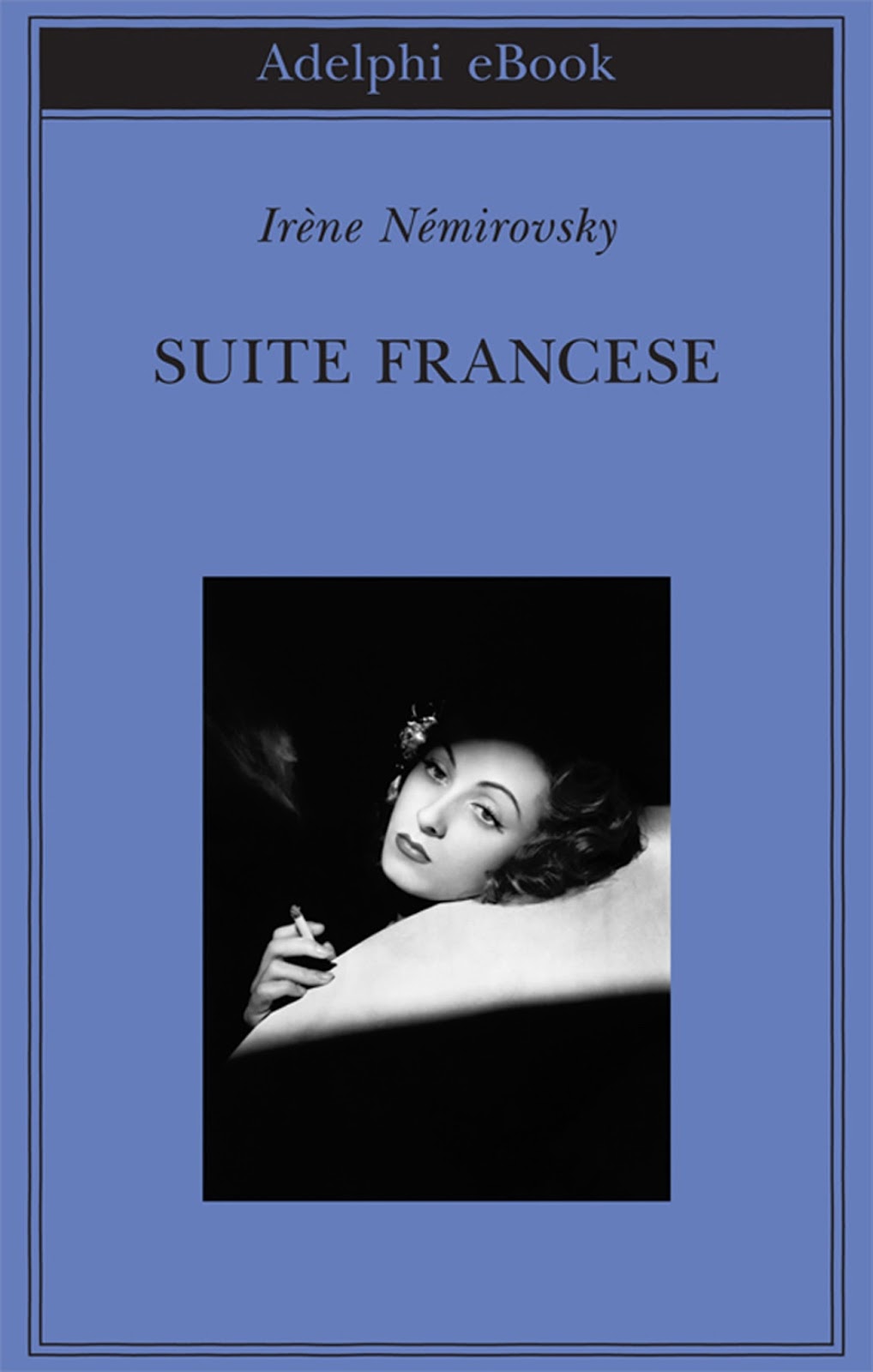
Suite Francaise - Irène Némirovsky

Bad historian (yet again) I had never read anything by Irène Némirovsky until my mother decided to invest a cheeky pound at Oxfam and buy me a copy of this novel.

Which, in my view, is actually two novels of extremely uneven quality. On the one hand, Tempête en Juin is an unusual portrayal of a defeated nation and its weaknesses, but on the other hand Dolce is a fairly boring and uneventful description of life in the countryside in occupied France with romantic overtones (seriously, ask Fenoglio how to write a novel about Nazi occupation and its impact on the countryside).

Of all the parallel plots that interlink in Tempête en Juin, the story of Philippe Péricands and “his” kids is breathtakingly beautiful in a way that only French stories about children of the 40s and 50s can be (Les Choristes, Au revoir les enfants), and is a reminder of how unstable the lives of troubled youth at the time could be, very much like in Les Quatre Cents Coups.

The one thing I struggle to understand though, is how Némirovsky managed to have an early draft of the two pieces of the Suite that was already so polished – had I been fighting against time like she was, I think I would have desperately tried to finish a very messy first draft of the whole book before allowing myself to re-read it even once. But then again, I’m not a great writer…

Tuesday, 17 May 2016

Master Georgie – Beryl Bainbridge

It’s always reassuring to know that, if I’m looking for a quick quality read, I can always find a book by Beryl Bainbridge (and all my key second-hand shops, Fopp, Books for Free etc. seem to have copies of them somehow). This one in particular was probably coming from Books for Free.

While I didn’t like it as much as An Awfully Big Adventure or Harriet Said… (which I’ve only just realized I never wrote about in this blog – silly me! As it’s an outstanding, thought-provoking and disturbing read) I still enjoyed Master Georgie. More than anything, I think Bainbridge deserves to be praised for looking at the Crimean War (a war about which I know next to nothing – in case anyone needed further proof that I’m a bad historian).

The one issue I had with this book, however, was that I found it rather “uneven”: of the six chapters narrated by three characters (but never by Georgie himself), Myrtle’s two are absolutely beautiful and touching (after all, Bainbridge has always been an absolute master at describing the lives of troubled girls with their hopes, fantasies, and realities), Pompey’s ones are cute and endearing in an Oliver Twistesque kind of way, but Potter’s ones are just a bit too plain (I do realize Bainbridge needed to have a more mature – although not necessarily reliable – narrator, in particular in Crimea, but I just didn’t find his chapters to be at the same level as the others’). 

Monday, 16 May 2016

The Casual Vacancy – J.K. Rowling

I’ve only read one Harry Potter. That makes me an awful human being in the eyes of many, but that also means that I’m not disappointed at the lack of magic in this book by J.K. Rowling.

The Casual Vacancy is daring but enjoyable. Its characters for one reason or another are mostly unlikable (maybe with the exception of the Walls and of Andrew?) but remain interesting. The plot is not something that leaves the reader on the edge of the seat – I mean, these are local elections after all… – but the novel is quite an acute portrayal of contemporary Britain.

So in all fairness I think J.K. Rowling should be given credit for writing this book (and for making a number of points that are surprisingly and commendably political). It was really quite good. Had it had a bit more irony or humour in it (nothing really brought a smile to my face, except maybe for old and drunken Samantha snogging teenage Andrew) perhaps it would have even been “really” good…

Wednesday, 11 May 2016

What a Carve Up! – Jonathan Coe

One of the many books I snatched from Books for Free in Stratford before it closed (the reserves, unfortunately, are starting to slowly run out…). A few months ago I read – and really enjoyed – The Rotters’ Club, but found this novel to be on another level.

What a Carve Up is a cross between epic family novels (Solomon Gursky Was Here is the first one that comes to mind, because of the nature of the Winshaw family and the mischievousness of some of its older members – often more interesting than their kids), cheesy mysteries (Ten Little Indians) and the most enjoyable and ironic Alan Bennett works.

The constant alternation of styles, narrators and registers is obviously yet again a display of Coe’s considerable talent. And the fact that so much of the novel is set in Northern England is again a welcome departure from London-centred British literature.

Much like in The Rotters’ Club with Malcolm, even in What a Carve Up Coe kills off one of my favourite characters (Fiona) relatively early (I mean, not super-early, but the writing is on the wall from the start, so I don’t feel like I’m spoiling too much). Yet I don’t hate him for that. Although I really wish I knew what happened to Phoebe and Graham…

Tuesday, 3 May 2016

Cartongesso – Francesco Maino

A book that I’ve read over the weekend as I found myself in the Italian north-east (where the novel is set) for a wedding.

Maino’s first novel has been fairly widely acclaimed (I mean, as widely acclaimed as an Italian novel can be…) and with this the author won the Italo Calvino Award. To me, that’s definite proof of the desperate scarcity of young Italian literary talent.

The novel is interesting for about 30 pages, then the stream of consciousness grows predictably stagnant (seriously, isn’t it outdated as a literary device/style at this point?!?) and the reader realizes that the book doesn’t even have a hint of a storyline (and as a rant against the system it gets to be fairly boring fairly quickly).

That said, I have to give credit where credit is due, and I have to admit that I really enjoyed Maino’s cultural references (Hemingway’s Across the River and Into the Trees, Thelonious Monk, Giorgio Morandi – an artist who has to be “respected” if not necessarily “loved” – and, most of all, Drazen Petrovic). Yet, this is not enough to make me say that I liked the book.

Plenty of Italian readers will disagree and tell me that I don’t understand the subtlety and the actuality of this novel. Maybe that’s true, but I also think that most of them read about 3 books a year. 

Tuesday, 19 April 2016

The Almost Moon – Alice Sebold

A book that my mum bought for 1£ at the Red House in Bexleyheath, I’m so very proud of her…

Like most critics, I found the novel’s opening sentence to be nothing short of awesome. Unlike a number of critics, however, I did think the novel was really good. As far as I could see, the portrayal of Helen, the main character (and parricide), was criticized for being morally and intellectually incoherent – but that’s what I thought was great, as I suppose the mind of a daughter who has just killed her mother must be at least slightly shaken.

I also found the characterization of the love-hate relationship between daughter and mother to be rather believable (and, I assume, accurate), and, in all honesty, I sort of justified Helen (does that make me an awful person or a psychopath? I hope not, and I actually think I’m rather sane, much like Helen’s former husband thinks of her).

Most of all, the novel raises all sorts of questions about the need in our society to work so terribly hard to keep the elderly alive – I wish we could just let them go (although if we think they need a push, admittedly this can be done in a better way!). 

Thursday, 14 April 2016

The Goldfinch – Donna Tartt


There is nothing wrong with reading a best-seller every now and again. In particular one that has won the Pulitzer Prize. In particular one that was bought for 2 cheeky pounds.

However, there are plenty of things that I think are wrong with this particular book: it’s long; Donna Tartt spends the first 400 pages of it essentially trying to persuade the reader of how good-natured the main character is before making his dramatic entry into the criminal underworld (and the fact that it essentially jumps from Theo’s return from Vegas straight into his shady dealings makes you wonder what he has actually done in the meantime – it’s not quite like what’s happened to Jesus between the age of 12 and 30, but almost…), and most of all the ending, with its banal comments about life, its meaning, and its shortness, is so trite that I actually really struggled to read that final chapter.

On the plus side, though, the art comments are really interesting, but probably that’s because I’m Italian and, never having had much time for Dutch and Flemish art, most of those were actually new to me…

Still, I have to recognize that this is a book that has to be read. And, at least in my case, one that should be pretty much forgotten once it’s over. 

Tuesday, 5 April 2016

Crime and Punishment - Fyodor Dostoevsky


I figured my best chance of reading (and understanding) Crime and Punishment was to power through it over the long Easter weekend. I thought my mind was going to be blown away. Much to my surprise, it wasn't. 

The problem was that I didn't care about what happened to Raskolnikov. He could turn himself in, he could be found, he could run away - it just didn't matter to me. His mental lapses, his guilt (or lack thereof), his rants left me rather unmoved. And - to make matters worse - I also kept on thinking about Martin Cruz Smith's Arkady Renko (yes, I know I'm linking one of the universally recognized greatest novels ever written to a 1980s trashy - but oh so good - best-seller!) and his comments about the triviality of Russian murders... And the epilogue - with the promised redemption - upset me a fair bit with its cheesiness. 

The only moments in which I actually liked Raskolnikov where the ones in which he came to the realization that he is not a Übermensch (where he appeared not just like a human being, but like one who might deserve some sympathy). And I felt that my favourite character - Svidrigailov - was not given the attention (and the space) he deserved - his story was the one that deserved to be told in minute detail, in my humble opinion...

Thursday, 24 March 2016

Song of Solomon – Toni Morrison


Not quite sure why I read Beloved before reading Song of Solomon. Well, not true. I read Beloved first because somebody left it in by building’s reception while I actually had to buy Song of Solomon…

I do realize that what I’m about to write is ground-breaking and has never been thought (let alone said) before, but Song of Solomon is an absolutely outstanding book. Sure, looking for material wealth and finding one’s true roots instead is the oldest literary topos, but this novel explores it so very well.

And, much like in all (very good) epic family stories, the anecdotes that are passed down from generation to generation are truly wonderful. And, much like in all (very good) epic family stories, wisdom is dispensed by old characters who have understood everything in life (here Pilate reminds me in part of Marquez’s Pilar Tenera and in part of Richler’s Ephraim Gursky).

And when Milkman thinks of his people and includes Jelly Roll, Bo Diddley, Fats and B.B. it’s very much like in Good Morning Babylon the two brothers tell some Hollywood types that they are the sons of the sons of the sons of Michelangelo and Leonardo (https://www.youtube.com/watch?v=4ISEw_yf8-o apologies, the audio is only in Italian). 

Tuesday, 22 March 2016

Oracle Night – Paul Auster


Another solid 30p buy from the Barbican Library’s overstock titles. On its cover it has a line from its Herald’s review saying “If you have never read Auster before … this is the place to start”. True that. The issue, however, is that if you have read plenty of Auster before, this is quite far from being a particularly original work.

Sure, it’s beautifully written like all of Auster’s novels, and it’s also gripping and nerve-wrecking as only his stories can be, but everything in it has already been seen: the Sisyphean task of reorganizing phone books reminds the reader of the wall of The Music of Chance, the inability of a writer to proceed with his work is, well, just like pretty much every other novel Auster has ever written, the importance of colours (like team Blue) echoes The New York Trilogy, and both the in-house aggression and Nick’s story within the story and his slow but inevitable death look very much like scenes and anecdotes taken from Smoke.

This remains a really good read, and, I agree, it would be a great introduction to Auster’s world, but it’s not exactly ground-breaking. To give credit where credit is due, however, the little side-stories that the author develops in his page-long footnotes are truly great. 

Sunday, 20 March 2016

Caos Calmo – Sandro Veronesi


I found a hardback edition of this Italian best-seller in the foreign-language section of Waterstones for 1£ - a few more finds like these and my National Book Tokens will last me a lifetime...

This novel is beautifully banal. Obviously everyone has a different way of dealing with the death of a lover. Obviously children are extremely resourceful. Obviously all families, even the ones that look picture-perfect from the outside, are messed up in one way or another (well, except for mine!). Obviously corporate greed is evil. Obviously people have their secrets.

And yet, for all its banality (and the dullness of many of its cultural reference-points), this book is extremely well-written and remarkably enjoyable.

That said, I would have preferred if the main character hadn’t started thinking that his dead lover was sending him post-mortem messages through Thom Yorke’s voice...

Saturday, 19 March 2016

The Master of Petersburg – J.M. Coetzee


A book I had never heard of and that I picked up among the remainders in the holy Waterstones on Torrington Place because a) it was cheap, b) I have plenty of money from the National Book Tokens to spend (thanks to a particularly thoughtful boss), c) I loved Disgrace by Coetzee, d) I loved Dostoevsky’s Demons.

The thing is, I liked the idea of the novel way more than I liked the novel itself. I found Coetzee’s usually wonderful prose too cumbersome here (of course, he has to give voice to Dostoevsky!), felt that all the characters (including Dostoevsky himself) were rather uninteresting, and just struggled with those 200-odd pages of divagations on life and death.

Clearly this book has made me want to read more Dostoevsky (which I probably will during the Easter holiday – I need to do it outside of term-time otherwise I won’t be able to focus sufficiently to understand his deep message, or even just the Russian names!), but to me it was just a novel with great premises and a (predictably) underwhelming development.