Showing posts with label Writing. Show all posts

Saturday, 7 December 2024

Lucy by the Sea - Elizabeth Strout


I feel like I have written this before, but while I very much love the writing of Elizabeth Strout and the atmosphere that she is able to create with her books, all of them - perhaps with the exception of the ones about Olive Kitteridge - blur into one. Lucy by the Sea was a clear demonstration of that, as I remembered having read My Name Is Lucy Barton, but in spite of its title I couldn't for the life of me recall who Lucy Barton actually was...

I have yet to find a book whose handling of the recent pandemic I find compelling, perhaps because it's something that we have all lived through. On the plus side, at least this book was a clear upgrade compared to the rather miserable Day by Michael Cunningham. 

What I did like about this book, though, was the narrative arch of William (Lucy's husband). I must confess I was rather ticked off by the brave "knight in shining armour" (who at the same time has the foresight of "the stoic man of science"), but in the last few chapters it was really interesting to see his own daughters discuss with Lucy the probable selfish reasons behind some of his actions, and Lucy recognizing them - perhaps having known that was the case all along, and reclaiming her own agency.  

Sunday, 17 December 2023

Last Night in Twister River - John Irving


Reading three hefty books by the same author over the span of a couple of months is too much, and it's probably partly because of that that Last Night in Twisted River is my least favourite John Irving book so far. 

In part, it's also because the main character (Danny) is ultimately quite dull if compared to the plethora of interesting people he is surrounded by (obviously his dad and Ketchum, but also Six-pack Pam, Jane, and his mother). He's an observer, overly-attached to his father, and doesn't really seem particularly able to take decisions and make things happen (rather, things happen to him). 

Also, I didn't quite buy into his becoming a great writer - too much of his writing is too auto-biographical and not inventive enough to suggest that he's someone who can encounter worldwide success. In addition, once the "cowboy" finds the two Baciagalupo, the story immediately loses momentum, and the long wait for Lady Sky is not enough to prop up multiple flat chapters. 

Friday, 10 November 2023

Red Pill - Hari Kunzru


For once, I actually picked up a hard copy book from the Southwark Library (mostly out of surprise for seeing a couple of Kunzru titles in a library that is otherwise not crazily well-stocked, and that's obviously an understatement). 


Unfortunately this was my least-favourite Hari Kunzru novel. The dystopian present setting plus mental breakdown reminded me a bit too much of a relatively disappointing Paul Auster novel. 


I also thought that the autobiographical writing was one of the great problems with wanna-be writers, but ultimately there are too many aspects of Red Pill that appear too reflective of Kunrzu's life. I just hope for his own sake he's a bit happier than this literary alter-ego of his. 

Friday, 10 February 2023

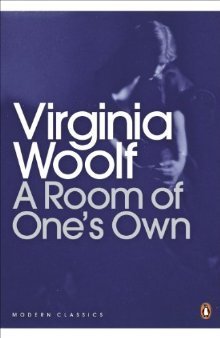
A Room of One's Own - Virginia Woolf

 A Room of One's Own by Virginia Woolf | Goodreads 

I actually read an Italian edition of this book, left behind by a neighbour in London. Its cover page didn't have the moody blue tones of this Penguin Modern Classic. Instead, it was all very pink and flowery. How very fitting. 

Having previously read (or, more appropriately, struggled to read) To the Lighthouse, my expectations were suitably low, not out of dislike for Woolf, but rather out of my own problems following her prose. I'm happy to report that said low expectations were widely exceeded, chiefly because in this essay Woolf appears more accessible, self-aware and still relevant to today's contest than what I would have ever imagined.

Monday, 16 December 2019

4 3 2 1 - Paul Auster

Risultati immagini per 4321 auster 


Self-indulging. Obscenely long. Repetitive. 

And yet. 

Beautiful. (Not overly) ambitious. Surprisingly readable. 

After investing the classic £2.50 at Fopp, this book was used to stop any door in the flat (even the heaviest ones) from slamming. Then I was left with only this and some other long-unread tomes, and decided to give it a chance. 

Sure, 4321 is a stylstic exercise if there ever was one, but because Auster is such a superb writer, and because he has so much to write about, the countless pages actually flow quite seamlessly. The reader actually grows to like every single one of the Archies, and actually fall in love with every single version of Amy. 

If this was anybody without Auster's skills (or without the life-experience that he can draw upon for the autobiographical passages) this book would be absolutely unreadable. Or, actually, it just wouldn't get published. But it did, and hopefully enough readers have decided to give it a chance rather than using it as a door-stopper.

Tuesday, 1 August 2017

The Body of Jonah Boyd – David Leavitt


A book that my mom got from the BookCrossing stand in Turin airport (such a nice idea, and yet, at least in that location, so neglected…) and that she left with me after her last trip.

Having only read particularly “gay” books by Leavitt, I was surprised by how “hetero” this one was. While not of the same literary calibre of The Secret Language of Cranes, The Body of Jonah Boyd is an extremely pleasant read.

I really liked it because it’s Jewish, it’s about academia, and most of all because it’s sub-urban. Yet, I didn’t find it mind-blowing chiefly because I think books about writers are often (even if indirectly) a bit too self-congratulatory – but the title, and the fact that Jonah Boyd is not murdered and left in a ditch as I assumed (or that his body is not sculpted like that of a Greek demi-god and the subject of the desire of the author), is pure genius. 

Tuesday, 14 March 2017

Humboldt’s Gift – Saul Bellow

The first (and so far only) book I’ve ever bought from Skoob near Russell Square, and one that I got mostly because my dad remembers loving it but couldn’t recall a single element of the plot.

Sadly enough, this is a Bellow novel that I liked, but that’s about it. In many ways I didn’t think it was Jewish enough (compared to Mr Sammler’s Planet) or sufficiently innovative (compared to Herzog).

I found Renata to be hardly believable, and Citrine himself to be hardly likeable. Again, like the pickpocket in Mr Sammler’s Planet, the criminal Cantabile was for me the most interesting character in the story (and whenever he is around the book becomes immediately more interesting).

Or maybe I’m just overcritical because I don’t like how rich Citrine is and I got upset thinking that in the end everything worked out and that Humboldt really did leave him a great gift. 

Tuesday, 22 March 2016

Oracle Night – Paul Auster


Another solid 30p buy from the Barbican Library’s overstock titles. On its cover it has a line from its Herald’s review saying “If you have never read Auster before … this is the place to start”. True that. The issue, however, is that if you have read plenty of Auster before, this is quite far from being a particularly original work.

Sure, it’s beautifully written like all of Auster’s novels, and it’s also gripping and nerve-wrecking as only his stories can be, but everything in it has already been seen: the Sisyphean task of reorganizing phone books reminds the reader of the wall of The Music of Chance, the inability of a writer to proceed with his work is, well, just like pretty much every other novel Auster has ever written, the importance of colours (like team Blue) echoes The New York Trilogy, and both the in-house aggression and Nick’s story within the story and his slow but inevitable death look very much like scenes and anecdotes taken from Smoke.

This remains a really good read, and, I agree, it would be a great introduction to Auster’s world, but it’s not exactly ground-breaking. To give credit where credit is due, however, the little side-stories that the author develops in his page-long footnotes are truly great. 

Saturday, 19 March 2016

The Master of Petersburg – J.M. Coetzee


A book I had never heard of and that I picked up among the remainders in the holy Waterstones on Torrington Place because a) it was cheap, b) I have plenty of money from the National Book Tokens to spend (thanks to a particularly thoughtful boss), c) I loved Disgrace by Coetzee, d) I loved Dostoevsky’s Demons.

The thing is, I liked the idea of the novel way more than I liked the novel itself. I found Coetzee’s usually wonderful prose too cumbersome here (of course, he has to give voice to Dostoevsky!), felt that all the characters (including Dostoevsky himself) were rather uninteresting, and just struggled with those 200-odd pages of divagations on life and death.

Clearly this book has made me want to read more Dostoevsky (which I probably will during the Easter holiday – I need to do it outside of term-time otherwise I won’t be able to focus sufficiently to understand his deep message, or even just the Russian names!), but to me it was just a novel with great premises and a (predictably) underwhelming development.

Thursday, 18 February 2016

The Paper Men – William Golding

I thought that Golding had essentially only written The Lord of the Flies. Turns out I was wrong (and, as a matter of fact, I ended up enjoying The Paper Men a lot more than his supposed masterpiece).

At times the novel is almost an early and less polished version of Barney’s Version (apologies for the multiple “versions” there) – the same kind of rant given by a very interesting man clearly not in full control of his mind. Being old, rude, and blunt the narrator also doesn’t have an idyllic view of Italy, something that, needless to say, feels like a welcome departure from the delightful picture painted by so many writers since, well, since forever…

The figure of Rick Tucker is so very sad to me. I’m not quite sure whether my mental picture of him is even more miserable than the one most readers must have because of my own struggles with(in) the academic world. But, hey, at least I’m really glad that he ends the story the way he does…

One thing, though, remains ultimately unclear to me: why would anyone care that much about the biography of a writer? I mean, it’s not like writers are important figures in today’s world, or that a book like that is likely to sell. If I was as rich as Tucker’s “benefactor”, I would just buy the author and force him to tell me the story of his life rather than hiring someone else to do try to do that for me…

Friday, 11 September 2015

Ask the Dust – John Fante

I don’t think this is a book that can, nowadays, leave a lasting impression on its readers. That said, it did move me when I read it, probably because the main character is a struggling Italian American, and I think it would be great if people in my (former?) country remembered that, once upon a time, we were a nation of migrants.

The main character’s love is destructive and hopeless, the Depression (with a capital D) too big a hurdle for him, and the fact that he essentially lives on oranges is one of the saddest and at the same time more powerful depictions of poverty in American literature, for me at least.


I wish at some point there was something to smile about in this novel. I have the feeling that the greatest books, or movies, always have funny (or at least ironic) passages, no matter how desperately grim the plot is – and to me that makes them great works. Ask the Dust, unfortunately, doesn’t have any such moment.