Tuesday, 17 November 2015

The Music of Chance – Paul Auster


Last Saturday I crossed the Thames and went to Stratford for my Life in the UK test (which I passed, by the way – meaning that there is now nothing stopping me from becoming a British citizen, hopefully). I had to walk through the Shopping Centre on my way and found this wonderful place (https://www.facebook.com/BooksforFreeStratford/) where they give away up to three free books for every visitor – no strings attached and no catches! In terms of maintaining my faith in mankind, this place ranks right up there with Parkrun. Visit it, pick up books, donate books, and prevent them from essentially going to landfill…

Moving on to the actual book, I have now read most of Auster’s works and, as far as absurdist novels go, this is one of my favourites (I liked it a lot more, for instance, than the stories of the New York Trilogy). It’s deeply disturbing and the reader knows from the start that everything is spiralling out of control but doesn’t know how it will all end (Will the wall close in on Nashe like it used to do on Roger Waters and David Gilmour after the first half of The Wall? Will Stone and Flower create a tiny little replica of Nashe and run his life for him through the “City of the World”? Will he get killed as he tries to escape?). Yet, there is always a sense of hope: maybe Nashe’s sister, his daughter, Pozzi, or maybe even Tiffany, the prostitute from Atlantic City, can help the guy survive in one way or another.

The one thing that annoyed me, though, is that I am sure I didn’t manage to pick up on tons of the novel’s insightful remarks and metaphors – the links to the myth of Sisyphus are clear, but there are surely millions more…

Tuesday, 10 November 2015

Us – David Nicholls


And with this I have now officially read all the books by David Nicholls. Hardly an accomplishment, considering he has written four and that reading them is so effortless. A bit too effortless to be honest…

Us is a great read when you are bored during a long journey between a Northern Italy warm enough to still swim in the Mediterranean in November and a windy and rainy South-East England, but little more than that. Just as One Day and The Understudy, Us is about the dynamics of a mismatched couple – something whose novelty wears off after a (short?) while. And, much like One Day, the book is saved from being excessively trite and banal by a plot twist in the end (in One Day this came with Emma’s bike-ride, in Us with an added piece of information on the life of the couple’s son). I also have the feeling that Nicholls just had a lot of travel notes that he felt like cramming in a book (although at times this are quite interesting – like comparing the glorious Champs-Élysées to the much-less glorious Oxford Street).

While Starter for Ten was at times hilarious, and The Understudy was ultimately quite funny, both Us and One Day appear more ambitious and seem to attempt to tackle deeper issues and problems. To me, however, they fail and end up being fairly entertaining, but not as much as their two predecessors. 

Wednesday, 4 November 2015

Harriett Said… – Beryl Bainbridge


Another book that my mother bought from Fopp for an offensively low price. Having read a couple of Bainbridge novels already, I was familiar with her love for stories of troubled girls and the differences between reality and their perceptions of it. However, I was fooled by the colorful cover of this edition and approached the novel believing it would have been short (which it was) and sweet (far from it).

Even without taking in consideration the incipit, it’s quite clear that the two main characters of Harriett Said… are trapped in a downward spiral. That said, I was expecting something milder (really bad, but somehow milder) to be at the bottom of that spiral – the actual turn of events over the last few pages caught me completely by surprise.

It’s absolutely remarkable that this novel can still shock and sicken the reader after 50 years. And by the time the reader stops justifying the two main characters saying that they are just two little girls playing around and discovering themselves, it’s too late.  

Monday, 2 November 2015

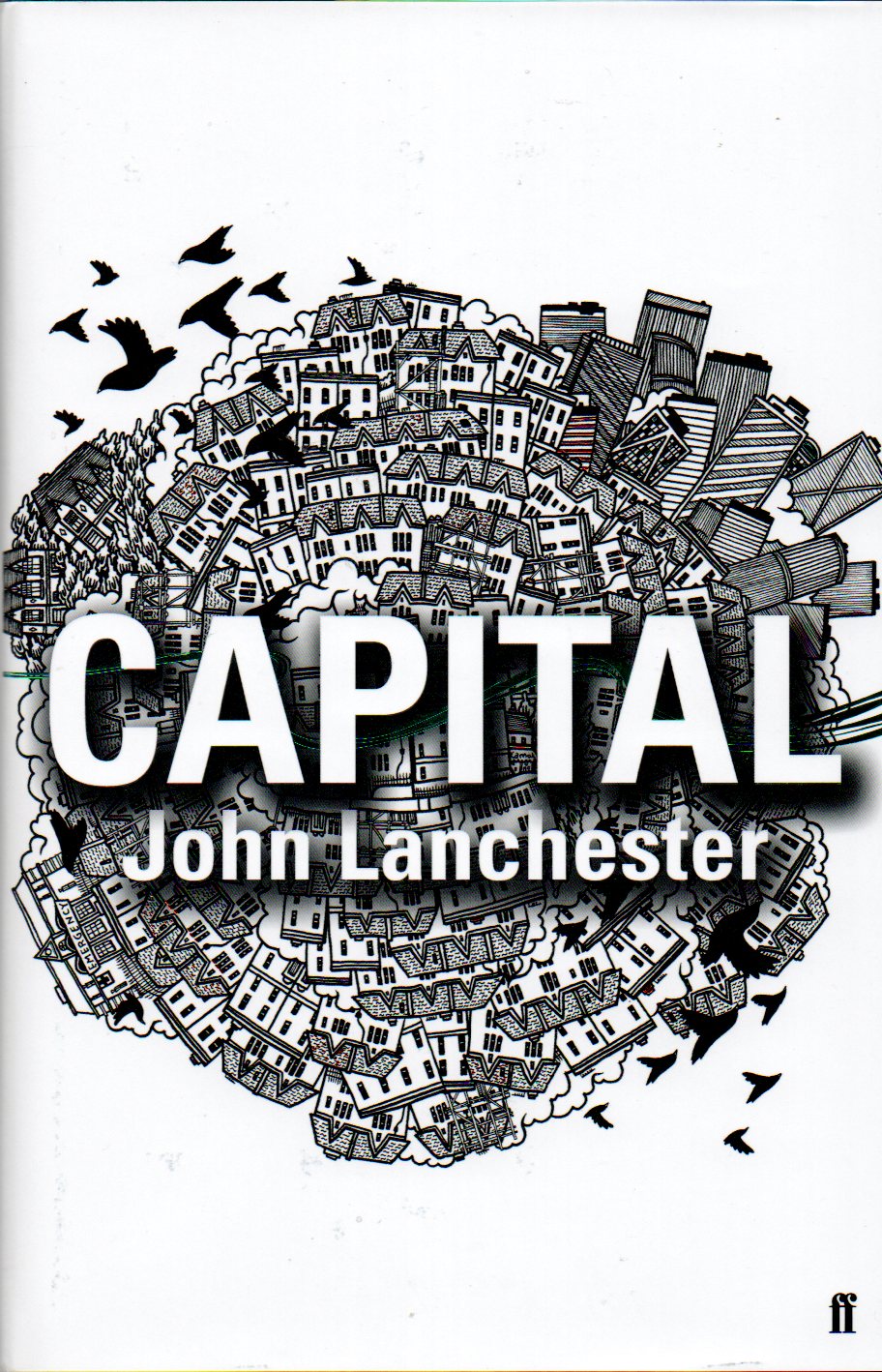
Capital – John Lanchester


A book that my mom read in translation, than found among the remainders in a London bookshop and bought for me. I rarely read contemporary best-sellers – partly because I enjoy feeling different, partly because when they are good (as in this case) they can be captivating, entertaining, and pleasant enough to read, but very rarely great.

Capital is, much like so many recent British novels, about the lives of a number of urban individuals and families from the most diverse backgrounds and how they are brought together by an event or another. Problem is: Lanchester is not Zadie Smith and his story – for catching that it is – ultimately lacks the kind of irony and acuteness that Smith normally has.

Capital hits all the right notes in a way that is so perfect that it looks staged: of course the reader feels warmed by Freddy Kamo’s enthusiasm, Smitty’s memories of his youth with his grandmother, or Zbigniew/Bogdan’s pursuit of Matya – but it often reads as if Lanchester is only ticking boxes and going through the motions. Also, to make sure that the majority of the readers feels happy by the end, all stories either have positive finales or at least finales with a significant hint of hope (the possibility of a post-Mugabe Zimbabwe and redemption for former City alpha-male), maybe with the sole exception of Smitty’s former assistant (quite a secondary and dislikable figure anyway). However, I do hate siding with the majority on anything (and books in particular!) so I will say that I have been entertained by Capital, but was left with little more than that.

That said, maybe, my impressions would have been different had I read this book as we were house-hunting last year and trying to understand the market value of the places we were looking at…

Monday, 26 October 2015

Michael Strogoff – Jules Verne

My grandma taught me how to read when I was 4. By the time I was 5 I was a boring kid reading scientific publications on dinosaurs and wild animals. By the time I was 6 and in elementary school most people around me had also learned how to read, so I stopped and, essentially, didn’t open a book until I was 14.

Because of my long literature-free years, I am now often forced to embarrassingly catch up on books that I wish I had read in my early teens, like Michael Strogoff. I half-heartedly read 20.000 Leagues under the Sea when I was 12 (one of the few books that I was forced to read in that period and, because of the mood I was in, I think it’s best if I don’t write anything about how I felt towards Captain Nemo then), I later loved Around the World in 80 Days, but Michael Strogoff was the Jules Verne book that intrigued me the most (that said, I managed to postpone reading it until now although I had asked for it as a Christmas present probably 10 years ago).

It was a delightful read despite the fact that, more than Around the World in 80 Days, the novel is so extremely dated (its national stereotypes, its depiction of women, nationalism, courage, morality etc.) – but my edition still had the old 19th century illustrations which made me tingly inside, and I must say I actually had goosebumps when Michael carries Nadja towards Irkutsk. It was also interesting to look at how quickly each event was described: with one hit Michael kills a bear, with one jump he runs away and so on and so forth – all those actions are described in one quick line, whereas in a 20th century adventure they would probably last for a few epic pages.

Also, I’ve probably loved the book because it finally gave me an idea of the geography of some of those mysterious territories in the top-right corner of the Risk board…

Friday, 23 October 2015

The Rotters’ Club – Jonathan Coe


A book that my mom tried to persuade me to read for years. All it took for me to read it was for my boss to recommend it…

There are a number of reasons why I particularly enjoyed this novel: being used to Zadie Smith, Hanif Kureishi, Hari Kunzru, etc. it was refreshing for once to read a (relatively) recent light-hearted and socio-political British novel that wasn’t set in London. Also, despite the fact that my political allegiances lie elsewhere (very much so), it was a welcome change to read a novel about the personal growth and the self-doubts of a little Tory (despite the fact that Ben’s lefty friend Doug is clearly my favourite character).  Lastly, a scene in the final pages is set in the Gramercy Park Hotel in New York, a place that was wonderfully quaint and still oozing – between its cracked walls and leaking pipes – of Lou Reed, Bob Dylan and Patti Smith when my dad took us there 20 years ago (before it got refurbished and very much revamped).

From a stylistic point of view, Coe does a great job of alternating registers and viewpoints. His little plot twists leave you disheartened (at the very end of the first part), warm inside (during a dialogue apparently with himself that Ben has mid-way through the second part), giggly (when you discover who is the actual author of some of the most hysterical letters that the editor of a school journal can ever receive), or give you hope for the future of mankind (with Ben’s decision to go home before the end of a disastrous family holiday in Wales).

It’s been a while since I’ve last expressed this trite idea – The Rotters’ Club is clearly not a masterpiece, but hell it’s a really enjoyable read…

Fontamara – Ignazio Silone


Another book stolen from my granddad’s bookshelf. It must have been sitting there for some 40 years. I’m not someone who sees poetry everywhere in the world, but I really find it kind of neat that it smells just like my grandparents’ flat… Clearly, this is another book about Italian Fascism and it is, surprisingly, the one that seems to be best known abroad. Given the recent new evidence published about Silone’s dealings with the Fascist police, I have the feeling I will struggle to be fully objective, but anyway here it goes.

I do realize that Fontamara was published during the “years of consensus” for the Fascist regime  and that Silone’s position was fairly radical and incredibly dangerous at the time (although he published the novel while in exile). However, 80 years on, I am a much bigger fan of Fenoglio’s gritty or Vittorini’s epic anti-fascism than of Silone’s fable-like one.

As I already mentioned a couple of times, I’m not exactly fond of great allegoric portrayals of human nature: I’d be much happier if the evil entrepreneur represented just himself and not the whole of capitalism and its aggressiveness, or if the fickle lawyer was not meant to be a portrayal of the Italian upper-middle class and its acquiescence to Fascism. Also, while the idea of telling the story from the points of view of three members of the same family (a couple and their son) was undoubtedly avant-garde for the period, the fact that the style of the narration doesn’t change when it’s a teenage boy or a middle-aged woman presenting the story makes me question the quality of Silone as a writer.
 
That said, the book is a great display of how in many ways the Fascist revolution was “unrevolutionary”, and how the poor and oppressed remained poor and oppressed. After all that was what my Ph.D. was about, so at least from that point of view I did find the book extremely interesting…

Saturday, 17 October 2015

La Tregua – Primo Levi


I’ve stolen this book from my granddad’s bookshelf. It was a gift for him by my mom some 20 years ago. His memory is really rather wobbly now, I don’t think he’ll realize it’s gone (or, sadly, that he’s ever read it).

I’ve read it because my mother – rightfully, as is sometimes the case! – scolded me for saying that often Levi’s writing is (understandably, obviously) quite humourless. I stand by what I said in relation to books about the holocaust. But La Tregua is more than that. It’s about the long journey home, about the light at the end of the tunnel, about the desire to live. Also, La Tregua was written in the early 1960s, 15 years after Se Questo E’ un Uomo, and I’m sure that this played an important role in the way in which Levi recalled his turbulent days in 1945 and 1946.

Levi’s self-mocking when describing his lack of street smarts is endearing, the plethora of secondary characters with very often stereotypical national quirks is extremely funny (at times actually hilarious), and the never-ending road back to Turin is of such an epic and heroic kind that I am sure McCarthy would love to have written La Tregua. And, clearly, the anecdotes that Levi magisterially recalls in La Tregua are of the kind which can only be lived and told by the chosen people.

Wednesday, 14 October 2015

Saturday – Ian McEwan


I found an autographed hardback copy of the novel on the second-hand bookshelf at my local urban farm. It was selling for 1£. It says a lot about the value of literature these days...

The book is beautifully written. No wonder, it’s McEwan. The book is about rich people and their perfectly imperfect lives. No wonder, it’s McEwan. The book actually annoyed the hell out of me, which is a shame because, after all, it’s McEwan...

I’m not quite sure whether McEwan depicts a Henry Perowne that is irritatingly detached from reality or if that’s actually a reflection of the author’s outlook on life in London (the autobiographical elements in Saturday are clearly many and at times it’s hard to disentangle pure fiction from McEwan’s experiences).

The book annoyed me because Henry Perowne and McEwan seem to mock those who protested against the invasion of Iraq. I did back in the day, I’m quite proud of that, and I’m happy I carried those signs that he seems to find fairly meaningless. It annoyed me because I had little intention of spending half an hour reading about a stupid squash game. It annoyed me because during the squash game one of those supposedly average athletes in their 50s jumps “two or maybe even three feet into the air” (you’re either a real athlete, or you are delusional if you think you can jump that high with a couple of steps). Similarly, you don’t run a half marathon in less than an hour and a half if you’re little more than a casual jogger (trust me on that).

It annoyed me because the book hates on the student halls in Bloomsbury and Fitzrovia where I lived and worked for years. It annoyed me because, protected by his fancy car on Tottenham Court Road, Henry Perowne/McEwan thinks that everyone around him is fundamentally happy (the guy selling The Big Issue? The old lady diving for reduced to clear sandwiches at Tesco? The underpaid McDonald’s staff?). It annoyed me because, for all the medical research he’s had to do to write this book, Perowne’s mom has the same illness that Briony develops in Atonement (which he wrote four years before, without publishing any other novel in the meantime).

The novel’s greatest merit has been that of arousing something similar to a weird nationalist pride in me (something I’ve never possessed and that I hope I’ll get rid of by tomorrow morning). As an unknown Italian archaeologist impregnates Perowne’s flawless daughter, McEwan allows himself to label the Italians as pueri aeterni (eternal teenagers) and says that Italian men won’t get up in the middle of the night for the cries of their teething children. Screw that, I have a right to say those things if I want to. You, rich and pompous foreigner, don’t.

Monday, 12 October 2015

A Weekend with Claude – Beryl Bainbridge

A book that my mom bought on an audacious trip to Fopp, knowing little about Beryl Bainbridge other than the fact that An Awfully Big Adventure is a hell of a good novel.

Despite not being of the same literary significance as An Awfully Big Adventure (although A Weekend with Claude also mentions the same Peter Pan quote), this is a highly enjoyable novel, and one that would deserve something better than a quick comment by the Daily Telegraph on its front cover.

A Weekend with Claude is what The Big Chill would have been had the characters not really liked each other. The multiple viewpoints, oddly enough for me (I’m really not a fan), work quite wonderfully, and the shooting of Shebah is a great addition. I loved the chain of mutual jealousies and mistrust in this circle of friends, although I kind of wish that Edward – the only likeable character and the newest (and short-lived, we presume) entry into the group – was given a chance to speak his mind, either directly or indirectly, both by Bainbridge and by the people around him.