Friday, 10 March 2017

In Cold Blood – Truman Capote

I actually had to wait for my wife and baby daughter to be quite literally on the other side of the planet (Brazil) before I could muster the strength and courage to read this book. And to think that when I was young I thought that Capote had just written Breakfast at Tiffany’s and nothing else…

The opening chapter was, for me, by far the hardest to read – not so much because of the brutality of the scenes (I was already quite familiar with the story), but because I was almost physically sick by the point Nancy’s friend found the first body and couldn’t stop thinking of Bobby Rupp (Nancy’s boyfriend) and what he must have experienced.

The rest of the book didn’t have many surprises, but it did end with the added (and for me really unexpected) drama of the stories of Lowell Lee Andrews, George York and James Latham – and all the people they killed before joining Perry and Dick on the death row – and that so nearly tipped me over the edge.

Friday, 3 March 2017

The House of Spirits – Isabel Allende

Am I being overly harsh or is this book simply not of the same standard as Paula? The answer is that maybe I’ve just completely outgrown magical realism (which is sad, because back in the day I had loved A Hundred Years of Solitude so very much).

I honestly think that, had it not been for Clara’s extra sensory abilities, I would have enjoyed the novel a lot more. And I would have probably also liked it better if the characters weren’t ultimately representations of various social and political groups (and periods) in Chilean history (the roman à clef as a genre often gets a bit on my nerves). And the fact that Allende also openly declares that Blanca never married Pedro Tercero because she didn’t love him enough just stings – the guy deserved better.

But then again, most of this probably applies only to 85% of the book, because from the moment Alba gets arrested the novel gains massively in literary, political and moral weight (although it’s really too bad that Allende picked the allegoric name of Alba/Dawn for the character that is meant to symbolize hope for the future – think outside the box!)

Tuesday, 21 February 2017

The Malayan Trilogy – Anthony Burgess

A book (well, actually three) that my mum gave me back in my teenage years. She asked me all smugly if I knew who Burgess was and, having just discovered Kubrick at the time, I had to disappoint (or impress?) her by saying that yes, I did know he was the guy who wrote A Clockwork Orange. After that pseudo high-brow cultural exchange, neither one of us read the trilogy for a good dozen years.

Turns out that the three books are just awesome. The atmosphere is very similar to that of many of my beloved Graham Greene novels, with a not-so-veiled critique of the white man and the wonders of colonization and “progress”. What I found particularly interesting is that the three books have a very different mood: Time for a Tiger is at times absolutely hilarious (and Nabby Adams and his love/dependence on warm beer is one of the best side-kicks I’ve ever come across), The Enemy in the Blanket is a much deeper exploration of love and envy than I thought I would encounter after reading the first book, and Beds in the East is the book that I would like all my students to read when they study the British decolonization process.

All in all, I probably enjoyed the book so much because Crabbe’s approach to colonialism reflects mine, and also because he goes out with a  bang (or a plop?) 

Una Vita Violenta – Pier Paolo Pasolini


My parents each had a copy of this book when they moved in together back in the 1980s and, thirty years later, realized they had no need for two copies in the same house so gave one of them to me (that said, they’re not even sure whether they read the novel or not!)

I did love Ragazzi di Vita, but I found Una Vita Violenta (which in many ways follows in its footsteps) to be of a whole other calibre. Whereas one grows to like the Riccetto in the former a bit less as the book goes on and he settles within “the system”, I actually fell in love with Tommaso more and more with each page (after feeling the intense desire to strangle him during his football match with kids half his size at the beginning of the book, I just felt the need to protect him from the evils of the world).

Sure, his political path is a bit too allegoric for me, but by the end of the book my nerves were completely shattered. I was glad he did not drown in the flood that hit his old neighbourhood, but the end is really no less devastating (and yet, it is the only way the book could/should have ended in order to be one of the great works of the Italian literature of the last century). 

Thursday, 16 February 2017

Watership Down – Richard Adams

When I rescued this book from the “table of unwanted items” in my building it was more beaten up than Bigwig after his big showdown with General Woundwort. It was worth rescuing it. Not that, unsurprisingly, its state improved after being put in my bike bag and taken to work every day this week!

As an adventure book Watership Down is just great. It’s got tales of heroic bravery, suspense and friendship. From that point of view it ranks up there with Treasure Island, Around the World in 80 Days and The Lost World in terms of children’s (or at least young adults’) literature. The problem, though, is that, even in this case, I could have really done without magic and folklore: I didn’t care for the stories passed down from generation to generation of rabbits, and I would have liked Fiver a lot better had he not had extra-sensory perception!

Sure, only bucks appear to have a prominent role and does take very much the back seat, but I really don’t see it as too much of a problem and I don’t read too much of a macho message into it (maybe because I’m a man!). 

Breakfast of Champions – Kurt Vonnegut

One of my latest Fopp acquisitions (actually strictly speaking my mom bought it for me…). After loving all the other Vonnegut novels and stories that I had read, the most I can say in this case is that Breakfast of Champions, despite being one of his most famous works, is alright (which I think is also how he felt about the novel himself).

Nothing more, nothing less. Alright. The book is not really a novel and neither it’s a long short story, and I can’t somehow push myself to label it a novella (it just doesn’t feel right). So, because of its felt pen drawings and its clear autobiographical traits I’ll just call it a gift that Vonnegut gave himself for his 50th birthday, or maybe a literary way out of (or further into?) a mid-life crisis…

1934 – Alberto Moravia

Well, after being left totally indifferent by Gli Indifferenti I had to read another book by one of Italy’s most famous writers. And after all I did love so many of the movies taken from his works (La Ciociara, Il Conformista and Ieri, Oggi, Domani).

1934 is undeniably interesting, but I still didn’t find it that great a read. While a good literary device, the trick that is played on Lucio makes me suffer (I always empathize too much in these cases!) and I also found it rather improbable. Not to mention the fact that the many scenes of a sexual nature to me read mostly like the unfulfilled desires of a 75-year old man.

I also could have done with fewer philosophical passages on the meaning of life and love and more on the nature of Fascism. Also, I find it interesting that Moravia considers the year 1934 to be the 7th of the Fascist stronghold on power, since most historians would make this start either in 1922 with the March on Rome or in 1926 with the “Leggi Fascistissime”, but maybe he referred to the Grand Council of Fascism becoming the Italian constitutional body in 1928. Pedantic, I know, but probably this is as close to a deep academic point I made in the last two years…

Cities of the Plain – Cormac McCarthy

Up until a couple of weeks ago, I only disliked McCarthy’s books when I found them too gratuitously violent (Blood Meridian and No Country for Old Men). Sadly enough Cities of the Plain proved that on some rare occasions I might not fall in love with McCarthy’s novels because they can also be, well, average.

The prose is still great and the characters interesting if a bit boring in their stubbornness, but I have two problems with this book.

1. Was it all just about capitalizing on the success of All the Pretty Horses and The Crossing? Cause I really saw no need to bring back John Grady and Billy (despite the fact that they are two of the characters that I loved most in history!) and pair them together – I want my cowboys to be allowed to ride on in the sunset and never be seen again at the end of books

2. John Grady survived countless attacks in the Mexican prisons in All the Pretty Horses and then gets essentially destroyed in a knife-fight by his dead lover’s pimp. Now, I understand hating your enemy affects your judgement (thanks Godfather II), but I seriously would have expected more from one of the coolest men ever…

Mr Sammler’s Planet – Saul Bellow

Saul Bellow is probably as underrated a Nobel Prize winner as any, and the fact that my second-hand bookshops very rarely have his books is undeniably a sad sign! But hey, luckily my parents had two copies of this novel (and Skoob near Russell Square had Humboldt’s Gift, which I will hopefully read soon).

Mr Sammler’s Planet is wonderful, witty and deep. It is also typically Jewish and New Yorker, which makes it an instant sell with me. For all the depth and likability of the protagonist, however, the two most interesting characters are the dying Elya (a perfect patient, and surely a very good doctor – if uninterested in his profession) and the stylish and mysterious pickpocket, whose bizarre decision to impress Sammler by showing him his member is for me one of the great creations of American literature. Speaking of great creations of American literature, though, it’s important to remember that nothing here matches Herzog’s graphomania…

And I could talk about Sammler’s experiences in WWII, but the book is ultimately about overcoming those (at least to me), so I won’t. Instead, I’ll say that this book mentions Ferdinand the Bull, without a doubt my favourite story between the ages of 3 and 6. 

Monday, 23 January 2017

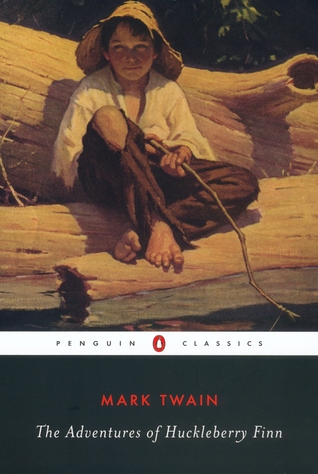
The Adventures of Huckleberry Finn – Mark Twain

A book that I’ve had on my shelf for ages (clearly!). And, to be honest, had I also owned a copy of The Adventures of Tom Sawyer I would have probably started with that (which would have been a bad call, considering that I quickly came to dislike Tom Sawyer in this novel).

Am I at ease with the way in which Jim is portrayed? Not always.

Do I think Huckleberry really escapes civilization? Not fully, just see so many of his moral dilemmas regarding Jim’s future (and past).

Do I think this is a work of art? Absolutely.

Huckleberry Finn combines the sense of adventure of the best Verne, Stevenson and Conan Doyle with what is ultimately a great moral depth (sure, so many of the comments on slavery make – and well they should! – people cringe, but it’s undeniably a step in the right direction for late-19th century white Americans).

But, to go back to my first few lines, I honestly disliked Tom Sawyer a lot – and I think that all the ordeals he made Jim go through in the last few chapters were just too mean, gratuitous and so not funny. So, despite liking Huckleberry Finn so very much I am not going to read The Adventures of Tom Sawyer anytime soon…

Friday, 20 January 2017

The Gambler (and other stories) – Fyodor Dostoevsky


When it comes to buying me books I have fundamentally four categories of friends (from the largest to the smallest): those who don’t even try because they are too scared (I feel your pain, and I apologize for being a snob!), those who try to buy me books and fail miserably, those who ask me what books I want or directly give me book vouchers (always very much appreciated), and those who just buy me books and don’t fail miserably (I salute you). This collection of stories comes from a friend belonging to the last category.

Some of the short stories in the collection I found quite boring (White Nights above all, despite being one of the most well-known works in this book), but others I found absolutely brilliant: A Nasty Story and The Meek One in particular not only don’t show any sign of ageing, but they are also so incredibly touching (I feel no sympathy for the protagonist of the former, and not that much for that of the latter, but plenty of sympathy for the celebrating family and the wife and servant respectively).

The Gambler itself is a wonderful novel(la?) about human weakness – when Dostoevsky describes the main character’s “system” it appears quite clearly that his own system mustn’t have been too different. The one issue I found, however, is that after the bombshell of grandmother’s arrival and her subsequent departure the pace of the novel slowed down too much and I lost a fair bit of interest, regained only in the last few pages with the summary of everyone’s lives given by Astley. So yeah, they probably should have kept on gambling instead of leaving Roulettenburg!!

Monday, 9 January 2017

The Road – Jack London

And exactly four months after my baby’s birth, I am now fully caught up with the books I have been reading lately. This was an old book that my mom passed onto me because they had two copies and were going to donate one to our local library if I wasn’t going to pick it up.

I had never read any Jack London (unless you count children versions of White Fang and The Call of the Wild) and The Road, in particular at the start, just blew my mind. The first couple of sections beat pretty much all the other books on American economic crises that I have read (except for Grapes of Wrath – that remains at the very top, despite the fact that I am aware of the fact that it deals with another recession).

However, after one gets the general idea, the book has a tendency to repeat itself quite frequently (I’m not quite sure how many “blinds” London jumped on in those two hundred pages!). That said, it remains an excellent read, and it is surprisingly humorous for a 19th century collection of anecdotes about hardship and deprivation!

The Virgin Suicides – Jeffrey Eugenides

And with this I can say I have read all of the books that Eugenides has written so far (easy – they are three). This was a Christmas gift from a close friend, and it came in the weirdest edition ever – the size of a small notebook, not quite sure why Picador felt the need for that.

It was undeniably very interesting, and with a literary weight much more considerable than The Marriage Plot, but it doesn’t really come close to Middlesex. Seeing that it was divided in five chapters, I assumed each one of those was going to relate to the suicide of one of the five Lisbon daughters, but three hundred (very short, cause after all it is the size of a notebook) pages go by between the discovery of the first and second suicide.

The suburban setting makes the book an instant sell for me, the curious first-person-plural narrative works really well here, and the moment when the narrators find Bonnie’s body makes your heart drop (despite the fact that it was declared from the start that all five sisters would kill themselves). It is however a shame that, despite the mystery that surrounds the household, Lux’s character is very clearly delineated while the other sisters all blur into one. Also, the fact that the narrators are invited into the house by the last four remaining sisters before they kill themselves makes them look more selfish (and potentially meaner) than what I think they really were. 

The Accidental Woman – Jonathan Coe

And this is the last of the books that I bought myself for Christmas.

Hmpf. It was alright as a read, but that’s pretty much about it. The humour in it wasn’t lacking, it was just not particularly Jonathan Coesque. And most of all, one thing is having an intrusive narrator – but this one was just a tad bit excessive.

Apparently Jonathan Coe wrote this novel while studying for his Masters – it’s nice to see that not all British authors are already great writers since their student years and that Zadie Smith remains very much a unique case!

Friday, 6 January 2017

Diary – Anne Frank

I had never read this book chiefly because I had a wonderful middle-school teacher who had us watch the great 1959 movie (in the same year she had us watch Gillo Pontecorvo’s Kapo, Norman Jewison’s Hurricane, Barry Levinson’s Sleepers, study in depth the Arab-Israeli conflict, and plenty of other things – easily the best teacher I’ve ever had while in Italy).

How does one actually read Anne Frank’s diary? Again a rather problematic philological issue: she wrote it thinking that she would share it with posterity herself, but everyone knows how her life ended and I’m not sure any reader can read the diary without constantly remembering that the SS will eventually breach into the Franks’ hiding place.

Regardless of that, and regardless of how heavily or not the diary/diaries might have been edited, this book remains an exceptional read. It is undeniably extremely well-written, and knowing Anna’s tragic end makes her comments about love appear even more cute (for want of a better term). I am not going to comment on her political acumen, because after all we are talking about a young girl who found herself locked in a flat for two years, but her personal observations  on the attitudes of her family and the other people around them can remain a priceless primary source for any young historian studying the Second World War. Too bad my own students probably don’t even manage to read a book a year.