Showing posts with label Jewish. Show all posts

Friday, 10 February 2023

Here I Am - Jonathan Safran Foer

 Here I Am (novel) - Wikipedia 

To be honest, had it not been for the fact that this was one of the last few novels by authors that I consider readable that were available at the Southwark e-library, I probably wouldn't have read it. But it was there, and very little else was, so I took it out. 

This is not a work of art, not even close. Yet, it's suitably Jewish, humorous, self-deprecating, deep and reflective of our complex web of social relations that it ends up being pleasant company for a few days. Now, if only I could have managed not to constantly think of the Coen brothers' A Serious Man as I read it...

Il Fuoco Amico dei Ricordi - Alessandro Piperno

 Il fuoco amico dei ricordi: (Persecuzione - Inseparabili) (Italian Edition)  eBook : Amazon.co.uk: Kindle Store 

For once an Italian book (actually two, as Persecuzione and Inseparabili are also stand-alone novels) that I truly and unapologetically loved. And also, incredibly, one that I didn't find provincial in comparison to works of similar scope and goals by a number of great American writers. 

The troubles of the Pontecorvos are painfully plausible, the sort of thing that can destroy a family, but also the sort of thing that a group like theirs has the tools to potentially overcome. Except that they don't, and as the situation gets out of control in the first book and a number of issues remain unsolved in the second one, Piperno paints a family picture that reminds the reader of a Mike Leigh movie ("Secrets and lies! We're all in pain! Why can't we share our pain?"). 

A Jewish family saga was always going to be a hit with me, and to think that it took me years between illegally downloading a dodgy PDF of these books, and actually reading it (legally) with my Italian library subscription.

A Tale of Love and Darkness - Amos Oz

 A Tale of Love and Darkness by Amos Oz | Goodreads 

I like Oz's novels, I like Oz's children books, and I was clearly bound to like his own autobiography. 

It's long, and that's undeniable. It also often repeats itself, but that's to be expected with a non-linear timeline for some 500-odd pages. Yet, it's fabulously written, and the history (both the capitalized version, and the family history) depicted in the book is obviously fascinating. I don't think I could have coped with 100 more finely printed pages, but man I'm glad that I've read this book. 

And perhaps I should watch Natalie Portman's movie version too...

Tuesday, 7 February 2023

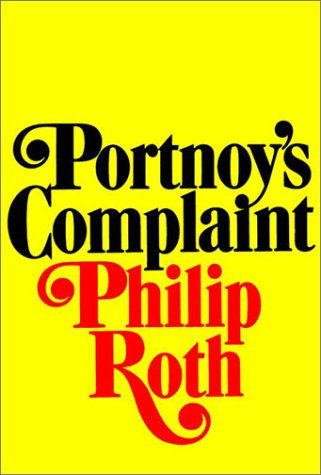
Portnoy's Complaint - Philip Roth

 Portnoy's Complaint - Wikipedia 

And so what?

Philip Roth is one of my favourite authors, yet I had postponed reading Portony's Complaint for years. 

It didn't have the appeal of American Pastoral, or The Human Stain, or pretty much any other book by him. 

I start reading it with a "so what?" attitude, and it just didn't leave me. I didn't find it funny, I didn't find it shocking. I just found it so awfully boring (and, if anything, the complete and absorbing obsession with sex got to be a bit sad quite quickly).

Sunday, 10 June 2018

St Urbain's Horseman - Mordecai Richler


Oh, how long since I had last read a Richler novel. Sure, my former Canadian teachers presented him as an awful human being (years before my time there, he came to give a guest lecture at our school and left everyone rather unimpressed), but in terms of North American Jewish writers for me he's right up there with Roth and Bellow.

St Urbain's Horseman doesn't have the epicness of Solomon Gursky Was Here or the comedy and mystery of Barney's Version, but it remains an impressive book. Large sections of the book are set in a London that I don't find too drastically changed in nearly 50 years. The parts about the legendary horseman are wonderful portraits of Canadian life in the first half of the 20th century, and the idea of him looking for Mengele (though not even the narrator actually believes that, probably) are the work of a genius.

Without the Jewish elements I probably wouldn't have enjoyed this book this much. But the fact is, the Jewish elements are very much there and so, unsurprisingly, this book is a winner for me.

Tuesday, 30 January 2018

Patrimony – Philip Roth


I’ve traded a copy of Dubliners, Pride and Prejudice and Our Man in Havana (of which I had more than one, otherwise I would have never parted with it!) for a copy of this autobiographical work by Roth that had clearly been in contact with quite a lot of water. I did it because Simon, the legendary owner of LSE’s second-hand bookshop Alpha Books recommended this, and he was right.

Patrimony reminded me in many ways, and for obvious reasons, of Alan Bennett’s A Life Like Other People’s, but this book being written by a Jewish author and dealing with his relation with his dad in the American suburbs definitely gives it an edge over Bennett’s memoirs.

The book alternates between the drama of losing a father, the meaning (and emotional and physical cost) of suffering and undergoing surgery, growing old as a son as one’s father grows even older, and finding a way to settle the score on a number of decisions that marked Roth’s own upbringing.

This is a work of genius and brilliance, and something that appears remarkably honest (including Roth’s own admission of thinking of his father’s death in literary and editorial terms from the beginning of his ordeal).

Tuesday, 2 January 2018

My Name is Asher Lev – Chaim Potok


For all the love that I normally give to the farm, Halycon Books in Greenwich, with its current 1£ sale on all its books, might be my new favourite place in the world (and one that I discovered absolutely by chance after a disappointing trip to the Amnesty International book sale in Blackheath). Having had only a few minutes in the shop, I grabbed one of the first books that caught my eye, and man was I pleased.

My Name Is Asher Lev might be the best book I’ve read in 2017. It’s got everything, and a bit more. It’s Jewish (not “just” Philip Roth or Mordechai Richler Jewish – Chaim Potok was a rabbi!), it’s set in New York but with extensive sections in Paris, it’s about art but also about artists, about the perilous balance of an unstable family, and Asher Lev’s life is surrounded by wonderful secondary characters (for me Reb Yudel Krinsky is right up there with Melquiades, and that says a lot).

There is absolutely nothing I would ever dare to criticize about My Name Is Asher Lev – although sadly that means that I am really in no rush to read any other Potok books (and in particular not The Gift of Asher Lev) for fear of spoiling its memory.

Thursday, 16 February 2017

Mr Sammler’s Planet – Saul Bellow

Saul Bellow is probably as underrated a Nobel Prize winner as any, and the fact that my second-hand bookshops very rarely have his books is undeniably a sad sign! But hey, luckily my parents had two copies of this novel (and Skoob near Russell Square had Humboldt’s Gift, which I will hopefully read soon).

Mr Sammler’s Planet is wonderful, witty and deep. It is also typically Jewish and New Yorker, which makes it an instant sell with me. For all the depth and likability of the protagonist, however, the two most interesting characters are the dying Elya (a perfect patient, and surely a very good doctor – if uninterested in his profession) and the stylish and mysterious pickpocket, whose bizarre decision to impress Sammler by showing him his member is for me one of the great creations of American literature. Speaking of great creations of American literature, though, it’s important to remember that nothing here matches Herzog’s graphomania…

And I could talk about Sammler’s experiences in WWII, but the book is ultimately about overcoming those (at least to me), so I won’t. Instead, I’ll say that this book mentions Ferdinand the Bull, without a doubt my favourite story between the ages of 3 and 6. 

Friday, 6 January 2017

Diary – Anne Frank

I had never read this book chiefly because I had a wonderful middle-school teacher who had us watch the great 1959 movie (in the same year she had us watch Gillo Pontecorvo’s Kapo, Norman Jewison’s Hurricane, Barry Levinson’s Sleepers, study in depth the Arab-Israeli conflict, and plenty of other things – easily the best teacher I’ve ever had while in Italy).

How does one actually read Anne Frank’s diary? Again a rather problematic philological issue: she wrote it thinking that she would share it with posterity herself, but everyone knows how her life ended and I’m not sure any reader can read the diary without constantly remembering that the SS will eventually breach into the Franks’ hiding place.

Regardless of that, and regardless of how heavily or not the diary/diaries might have been edited, this book remains an exceptional read. It is undeniably extremely well-written, and knowing Anna’s tragic end makes her comments about love appear even more cute (for want of a better term). I am not going to comment on her political acumen, because after all we are talking about a young girl who found herself locked in a flat for two years, but her personal observations  on the attitudes of her family and the other people around them can remain a priceless primary source for any young historian studying the Second World War. Too bad my own students probably don’t even manage to read a book a year. 

Saturday, 17 October 2015

La Tregua – Primo Levi


I’ve stolen this book from my granddad’s bookshelf. It was a gift for him by my mom some 20 years ago. His memory is really rather wobbly now, I don’t think he’ll realize it’s gone (or, sadly, that he’s ever read it).

I’ve read it because my mother – rightfully, as is sometimes the case! – scolded me for saying that often Levi’s writing is (understandably, obviously) quite humourless. I stand by what I said in relation to books about the holocaust. But La Tregua is more than that. It’s about the long journey home, about the light at the end of the tunnel, about the desire to live. Also, La Tregua was written in the early 1960s, 15 years after Se Questo E’ un Uomo, and I’m sure that this played an important role in the way in which Levi recalled his turbulent days in 1945 and 1946.

Levi’s self-mocking when describing his lack of street smarts is endearing, the plethora of secondary characters with very often stereotypical national quirks is extremely funny (at times actually hilarious), and the never-ending road back to Turin is of such an epic and heroic kind that I am sure McCarthy would love to have written La Tregua. And, clearly, the anecdotes that Levi magisterially recalls in La Tregua are of the kind which can only be lived and told by the chosen people.