Friday, 26 May 2023

Leviathan - Paul Auster


With my most sincere apologies to 4 3 2 1 , I think this is the Paul Auster novel to end all Paul Auster novels. 

It is the first Auster's novel I had heard of (possibly the first that my parents read?), but, not being as ubiquitous in all second-hand bookshops as The New York Trilogy, also one that I hadn't touched until the Westminster library kindly gave me access to the e-book. 

Besides the traditional Auster trademarks (chance, mystery, fortuitous crossings of metaphorical paths) what particularly struck me of this novel is how relevant to today's world it still feels. Perhaps, after all, America and its identity (crisis) hasn't changed that much since the end of the Cold War...

Il Colibrì - Sandro Veronesi


Granted, my parents had warned me (I had just forgotten about it, but hey...), yet I was expecting more from Veronesi. Not sooo much more, but at least a little more. 

This book is light as its titular hummingbird. And I don't mean that as a good thing. The long protracted story of a pretty uninteresting main character left me rather untouched. The sappy final scenes of love, forgiveness and hope openly annoyed me. 

At most, this is the sort of book that I think one should read over the span of a couple of afternoons at the beach. Except that I don't like beaches, so I don't think this book really has any space in my life, and will have very little space in my memory. 

La Traversata Notturna - Andrea Canobbio


I guess that when you don't have many ideas, you can write an autobiographical book. 

I guess that when you aren't the best of writers, you can borrow from other authors' approaches and styles (hello Perec!). 

And I guess that when you have interesting sources and artefacts (the family heirlooms pictured in the book are often the most interesting parts), you might as well use them. 

This is actually an OK book; I'm glad I've read it as it's an interesting perspective on a city - Turin - that I know quite well. I just think that it really shouldn't be considered one of the best Italian books of 2022, but since that's apparently the case, mala tempora currunt

Cassandra - Christa Wolf

Why did I have to spend years being taught - and being made to absolutely hate - ancient Greek grammar, instead of spending more time actually learning their (hi)stories?

Seriously, had a teacher ever thought of making me read this book (instead of memorizing μῆνιν ἄειδε θεὰ Πηληϊάδεω Ἀχιλῆος and repeating it like a parrot!) I would have actually quickly grown to like - and later most likely to love - Greek mythology. 

Instead, it took my 36 years to get closer to the life, troubles, thoughts and loves of some of the most fascinating characters ever produced by the human imagination. My daughters (aged 3 and 6 now) ask to be read stories from a children's version of The Odyssey before bed and won't have to study ancient Greek unless they really, really want to - who knows how that will work out!


Life: A User's Manual - Georges Perec


One of my dad's favourite books, and one that he has re-read recently. 

While I can understand why it was popular "back then", I really don't think it has aged that well. The idea of short stories and anecdotes held together by a red thread (in this case the building itself and some of the people who live/have lived there) has been done a lot, and I find many contemporary authors' approaches (Strout above all) much better. 

Style above everything - much like with many French writers of the period - works wonders for many readers, just not me in this case. 


Moon Palace - Paul Auster


The one time in my life I had to request a renewal of a library book loan (it took me more than two weeks to read it!) and it was a Paul Auster novel...

Testament to the fact that we had a lot going on (family holidays, in part, and a huge kitchen refurb waiting for us back home), but also to the fact that this wasn't my favourite Auster book. 

Had it not been for the fact that I've read most of his other works, I would have probably enjoyed Moon Palace a lot more, but (un?)fortunately I have read most of his other works, and had already come across much better renditions of his traditional "cultured and troubled Columbia student is confused and tossed around by chance and mysterious fortuitous encounters". 

Wednesday, 24 May 2023

Lessons - Ian McEwan


Now here's an author (like Ali Smith) who seems more unable than me to let Brexit go, and this is saying a lot. 

And here's an author (like Ali Smith) who probably tries to pack too much in too few pages. The story of Roland and Miss Cornell, for me, would have been enough. The persistence of his memory of her throughout his life, and her unexpected brief return, would have made this a great novel. 

Turning the book into a brief history of Britain from WWII to today as seen through the eyes of one person, on the other hand, was stretching it a bit. Even when I find myself agreeing with most of McEwan's points about British politics and society, I don't really see the need to read about them. They are not surprising, they are not particularly engaging. Not for me at the very least. 

A shorter novel on the frenzy, trauma, and confusion caused (?) by Miss Cornell would have ranked among McEwan's finest. Instead, I consider this a great "intro to the current British divisions" for my mum, along the lines of some of Ali Smith's recent books and Jonathan Coe's Middle England. With the added bonus of having large passages set in Suffolk (where we were coincidentally holidaying as I was reading the book) and mentioning Mick Jagger's stint as an LSE student. 

A Little Life - Hanya Yanagihara


I've read this novel from cover to cover. And I consider this an accomplishment. 

I found it pretentious, gratuitous, and self-absorbed. 

And whenever its author was short of ideas, guess what, she was ready to throw in some more violence. After a while, I was so inoculated to this escamotage that the only reaction it could elicit from me was a shrug. 

Also, priests and social care workers who abuse children. Now that's thinking outside the box, and not the oldest (and cheapest) trick in the book at all...

Luckily, when you are really scraping the bottom of the barrel, you can always kill off half of the characters in a road crash. On the plus side, they were all rather unlikeable in the first place, so I didn't really mourn their loss. 

Tuesday, 21 February 2023

Summertime - J.M. Coetzee

 SummertimeCoetzee.jpg 

I was in need of a wonderful Coetzee book after the disappointment of the two "Jesus" books, and I got exactly what I needed thanks to the (limited) offer of the Southwark e-library. 

I don't think there is anything wrong with a bit of self-celebration, in particular for an author as famously reclusive as Coetzee, and the idea of telling a fictionalized story of his own life through the eyes of people he interacted with is just great. 

What's a bit more (well, more than a bit) on the bizarre/morbid side of things is that in the novel John Coetzee is supposed to have died, and that's the reason why the story of his life is being put together with the help of other people and extracts from his writings. But hey, possibly a bit creepy to be writing while thinking about yourself as dead, but it seems to have worked for him!

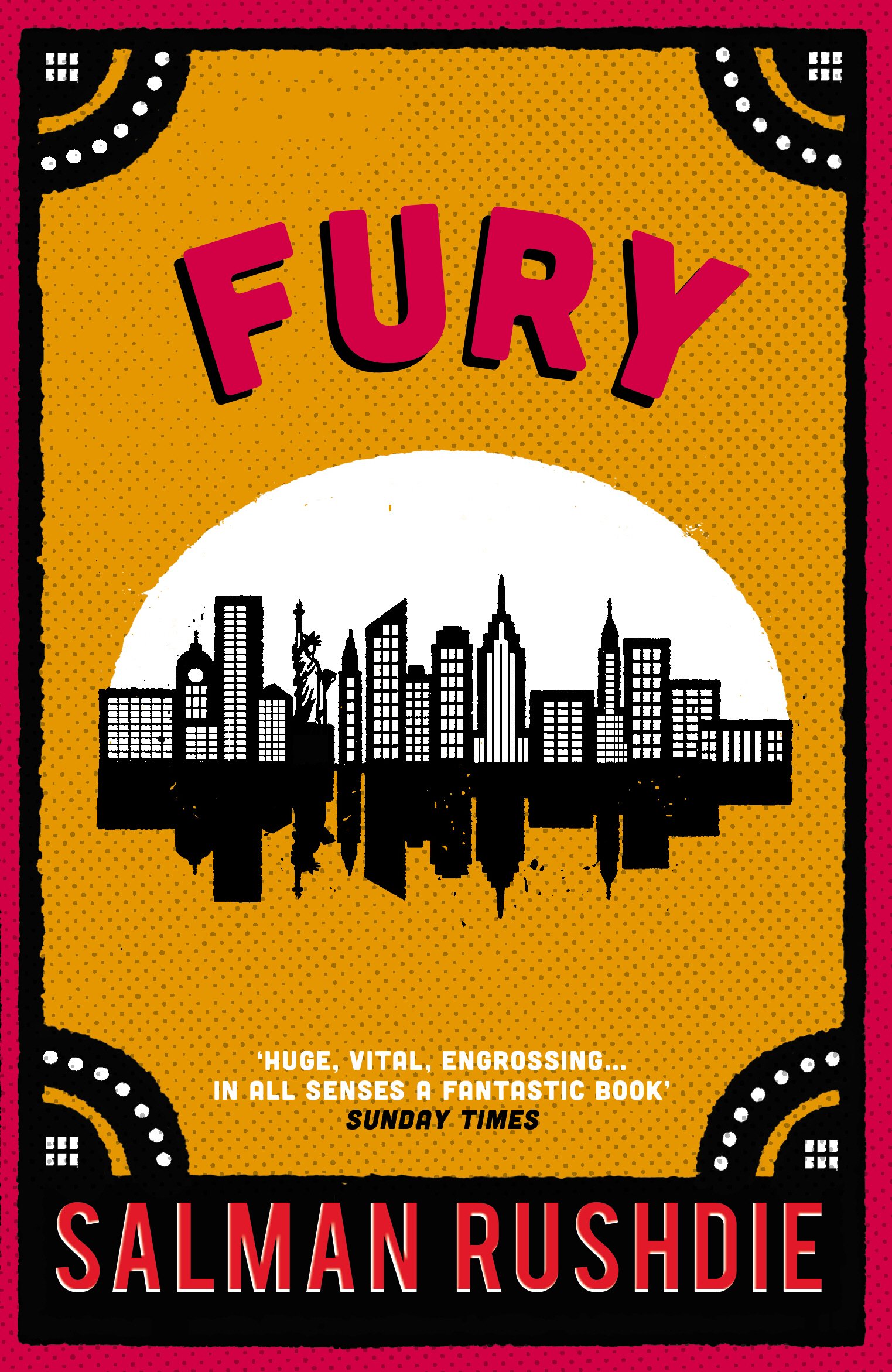
Fury - Salman Rushdie

 Fury: Amazon.co.uk: Rushdie, Salman: 9780099421863: Books 

Another one of those books that I don't remember well (just a few weeks after having read it) and that have left me more with a vague feeling than with any specific recollections. This can't be a good sign, either for the book or for my growing forgetfulness...

Out of the few images that I can recall are the terrifying picture of a father looking at his wife and child sleeping with a knife in his hand, the creation of a doll called Little Brain (that I kept on mis-reading as Little Britain, probably another not-so-good sign), and a series of more and more problematic intercontinental phone calls. 

I actually don't even remember whether the main character ends up returning home or not, which again can't be a good thing. And I've by now decided that it's a problem with the book, and not with my memory.

The Porcupine - Julian Barnes

 The Porcupine: Amazon.co.uk: Barnes, Julian: 9780099540144: Books 

More enjoyable than Flaubert's Parrot, less enjoyable than most other books by Julian Barnes; for me, at the very least. 

This is another book with which there's nothing wrong: it's well-written, it's interesting (if not excessively original) and it's an easy (though perhaps verging too closely towards the effortless) read. 

But there are plenty of other books dealing with the Soviet bloc and its systems, often written by authors who were on the other side of the Iron Courtain for long parts of the Cold War, a I generally like them better (except for Kundera's novels, but I've already professed my dislike for him).

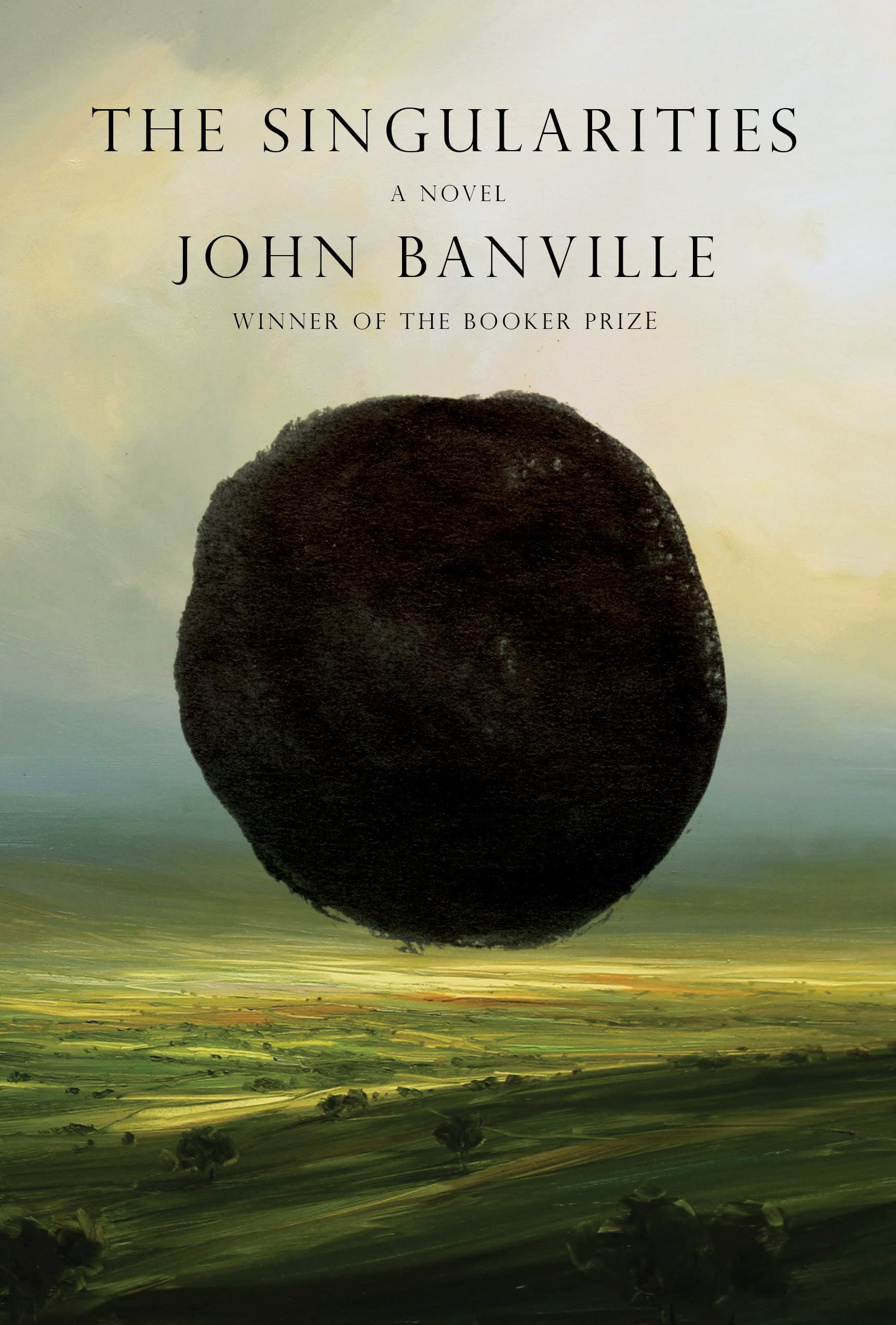
The Singularities - John Banville

 The Singularities: John Banville: Amazon.co.uk: Banville, John:  9780525655176: Books 

I've only read a couple of Banville's books, and I think that to make the most of this novel one ought to be much more familiar with the author's body of work (with apologies to Alex Clark of The Guardian who claims that neophytes will enjoy the book just as much). 

I did catch the allusions to Shroud, and those pages made my interest peak, but besides that I struggled with a book where beautiful prose is omnipresent but action is ultimately lacking (particularly surprising considering the criminal past of the first character to enter the novel). 

And I was also left wondering if having a novel ending without answering (m)any of its open-handed questions is a deliberate choice or a sign of an author not at his absolute best (though, to be fair, Banville has set the bar quite high for himself!).

Three Floors Up - Eshkol Nevo

 Three Floors Up eBook by Eshkol Nevo - EPUB | Rakuten Kobo United Kingdom 

Three Floors Up was the first book by Eshkol Nevo that I read. Without my mum's insistence, I wouldn't have given him a second chance because I didn't particularly enjoy this novel. 

At a superficial read, I considered it the equivalent of a sub-par Yehoshua book. At a deeper read, with its links to Freudian psychoanalysis, I found it pretentious and excessively symbolic and allegorical. 

Of the three floors, the only one I'd honestly try to peek into would be the first, with the over-protective father determined to find out the truth about what happened to his sister despite the risk of ruining everyone's lives; the second floor left me uninterested, and the third one actually kind of annoyed me with the judge appearing as a self-styled deus ex machina of the Israeli street protests.

Almarina - Valeria Parrella

 ALMARINA" l'ultimo libro di Valeria Parrella - Quarta Parete Roma 

Yet another book that I picked out of the long list of recent Premio Strega finalists. There is absolutely nothing wrong with it: it's quite well-written, it's current, it touches upon obviously important themes. And it's not engaging. 

I perhaps thought so little of this book because its main character is struggling with her unfulfilled hopes in a way that I find quite trivial, or because her decision to help Almarina get on her feet feels like the superficial action of the most stereotypical do-gooder (in her defense, Parrella does talk about it with more than a hint of criticism). 

At the end of the day, though, this book also highights a huge limitation that I have as a reader: I have to like a novel's main characters if I am to like the novel itself.

Flaubert's Parrot - Julian Barnes

 Flaubert's Parrot (Vintage International): Amazon.co.uk: Barnes, Julian:  9780679731368: Books 

Had this been a book about a figure that I find more interesting, my opinion of it would most likely be different. My lack of fascination for Maupassant is ultimately mirrored by my lack of fascination for Flaubert, and this no doubt affected my judgement. 

While it's obviously written with the usual inventiveness typical of Barnes, Flaubert's Parrot didn't leave a lasting impression on me. Though, I have to admit that, reading again its synopsis now, I found his invectives against literary critics (and academic literary critics above all) to be pretty much spot on. 

Possibly my least-favourite Barnes novel, but still most likely better than 94% of the things that get published.